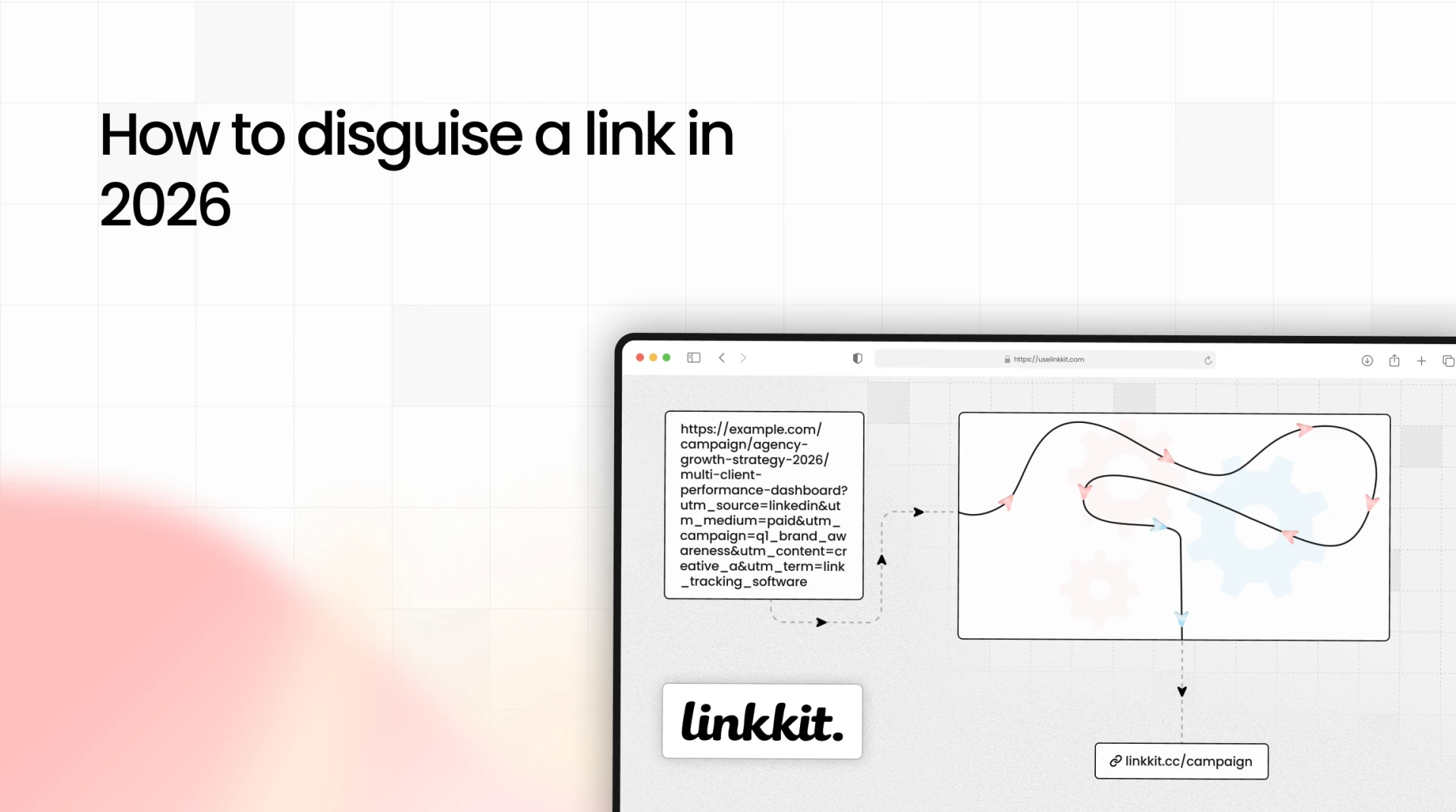

In 2026, link presentation is no longer a minor formatting choice, it’s a strategic marketing decision.
When marketers search for “how to disguise a link,” they’re rarely trying to hide something malicious. Instead, they want to:
- Make long URLs cleaner
- Remove visible tracking clutter
- Increase click-through rates
- Strengthen brand consistency
- Maintain structured analytics
Modern link disguising is about clarity and organization, not deception.
This guide explains how ethical link disguising works today, when to use it, how it impacts SEO, and how marketers can implement it properly without harming trust or search visibility.
What Does It Mean to Disguise a Link?
In modern marketing, disguising a link means transforming a long, parameter-heavy URL into a clean, branded short link while preserving tracking and attribution behind the scenes.
For example:
Before
example.com/product-launch?utm_source=facebook&utm_campaign=q3
After
go.yourbrand.com/launch
The destination remains identical.
The difference lies in presentation, structure, and analytics control.
Link disguising today typically involves:
- Branded short domains
- Custom DNS configuration
- Human-readable slugs
- Structured click tracking
- Proper 301 or 302 redirects
The goal is improved user experience, not hidden intent.
Why Link Disguising Matters More in 2026
1. Affiliate Marketing Transparency
Affiliate links are often long and complex. When shared directly, they can reduce trust and click-through rates.
A branded short link improves credibility and shareability, especially across social platforms and email campaigns.
2. Campaign Attribution Without Clutter
Performance marketing depends on tracking. But UTM parameters can make URLs look unprofessional and overwhelming.
Instead of exposing tracking strings publicly, marketers now rely on structured link management platforms to organize campaigns internally while keeping shared links clean.
3. Brand Trust & Recognition
Generic shorteners can look suspicious.
Branded short domains reinforce familiarity. When users repeatedly see links from your own domain, it strengthens trust signals across channels.
Consistency increases confidence.
Ethical Link Disguising vs. Deceptive Cloaking
It’s important to distinguish between responsible marketing optimization and misleading practices.
Ethical Link Disguising
- Redirects directly to the intended page
- Uses proper HTTP status codes
- Complies with advertising and affiliate policies
- Preserves user trust
- Avoids interstitial spam pages
Deceptive Cloaking
- Redirects to unrelated or hidden destinations
- Violates affiliate agreements
- Inserts forced ads
- Damages brand credibility
- Risks search penalties
Long-term growth depends on transparency.
Step-by-Step: How to Disguise a Link the Right Way
Step 1: Use a Structured Link Management Platform
Basic URL shorteners are no longer sufficient for serious campaigns.
Modern marketers rely on structured platforms that allow:
- Custom domains
- Campaign grouping
- Workspace management
- Device & geo tracking
- Click-level reporting
For example, platforms like Linkkit allow teams to create branded short links while organizing campaigns in a clean analytics dashboard without exposing messy tracking parameters publicly.
The key isn’t just shortening, it’s structuring.
Step 2: Set Up a Custom Domain
Instead of:
short.ly/abc123
Use:
go.yourbrand.com/offer
Benefits include:
- Higher perceived trust
- Improved brand recall
- Better campaign consistency
- Reduced suspicion in paid ads
Custom domains typically require DNS configuration but significantly elevate professionalism.
Step 3: Create Human-Readable Slugs
Readable slugs improve click behavior.
Use:
- /launch
- /review
- /summer-sale
- /offer
Avoid:
- /x9kL82
- /redirect21
Clear URLs reduce friction and align with user expectations.
Step 4: Track Performance Transparently
A properly disguised link should still collect actionable insights:
- Total clicks
- Unique visitors
- Device breakdown
- Geographic data
- Referral sources
This transforms links into structured data assets rather than simple redirects.
Tracking should enhance strategy, not compromise user clarity.
Does Link Disguising Affect SEO?
URL shortening alone does not directly improve rankings.
However, structured link management can indirectly support SEO through:
- Better user experience
- Higher engagement rates
- Stronger brand signals
- Consistent attribution tracking
Best practices:
- Use 301 redirects for permanent links
- Avoid redirect chains
- Maintain fast resolution speeds
- Ensure destination relevance
Search engines prioritize transparency and user alignment. Ethical link disguising does not harm SEO when implemented correctly.
When Should You Disguise a Link?
Link disguising is especially useful when:
- Running paid ad campaigns
- Managing affiliate promotions
- Posting links in bios
- Sending email newsletters
- Coordinating influencer campaigns
- Operating across multiple brands
In performance marketing environments, link structure becomes a competitive advantage.
Common Mistakes to Avoid
Overusing Redirect Layers
Multiple redirects slow down load time and harm trust.
Hiding Intent
Users should reasonably understand the destination.
Ignoring Policy Compliance
Affiliate networks and ad platforms may require disclosure.
Using Unbranded Shorteners for Core Campaigns
Generic links reduce long-term brand value.
The Bigger Picture: Links as Marketing Infrastructure
In 2026, links are not just navigation tools. They are:
- Attribution anchors
- Conversion triggers
- Branding touchpoints
- Performance measurement units
Marketers who treat link management strategically gain clearer analytics, stronger brand recognition, and scalable campaign systems.
Ethical link disguising is about improving structure, not hiding information.
Final Thoughts
“How to disguise a link” no longer means masking something.
It means:
- Improving clarity
- Enhancing trust
- Structuring analytics
- Scaling campaigns responsibly
Modern marketers don’t just shorten URLs.
They brand them.
They organize them.
They optimize them.
Clean links build credibility.
Credibility builds clicks.
Clicks build sustainable growth.










Sign in to leave a comment.