
Europe Protein-Based Sports Drinks Market Trends & Summary
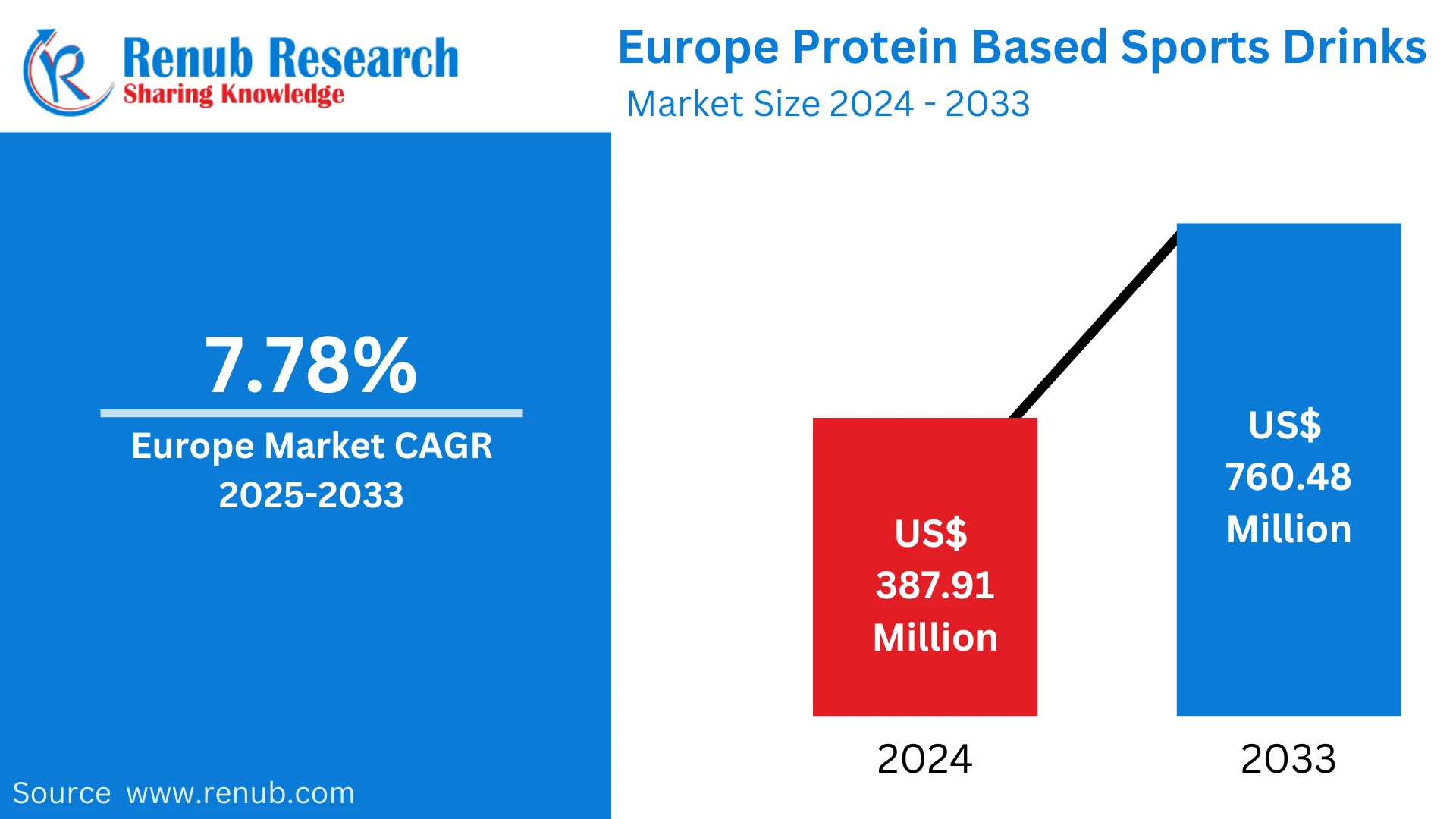
The Europe Protein-Based Sports Drinks Market is projected to grow from approximately US$ 387.91 million in 2024 to US$ 760.48 million by 2033, achieving a compound annual growth rate (CAGR) of 7.78% from 2025 to 2033. This market is primarily driven by the increasing demand for protein-enriched hydration, the convenience of ready-to-drink formats, the rising popularity of fitness and active lifestyles, and a growing awareness of muscle recovery and rehabilitation.
Market Overview
The market for protein-based sports drinks in Europe has been steadily expanding as consumers seek functional beverages that enhance muscle recovery, performance, and hydration. These drinks are particularly favored by athletes, fitness enthusiasts, and individuals with active lifestyles. Typically, they contain hydration and electrolytes along with essential protein to support muscle repair and recovery. The heightened focus on health and wellness has fueled demand for beverages that offer both hydration and nutritional benefits, driven by consumers' growing health consciousness and preferences for products that promote muscle growth and recovery.
Innovation in the protein-based sports drinks market is also contributing to growth. Manufacturers are responding to diverse consumer preferences by creating a wide range of flavors, formulas, and plant-based protein options. As consumers increasingly seek natural, low-calorie, and low-sugar products, healthier versions of these drinks have emerged. Additionally, the convenience of ready-to-drink protein beverages appeals to busy consumers. With the ongoing rise in protein supplement use in fitness and wellness routines, the market for protein-based sports drinks in Europe is expected to continue its upward trajectory, meeting consumer demands for both performance and overall health.
Significant changes are also occurring in the market due to evolving consumer preferences and environmental considerations. Manufacturers are increasingly focusing on sustainable packaging options, reflecting the industry's impressive recycling rates. In 2022, Europe recycled 73% of aluminum beverage cans and 85.5% of steel packaging. In response to this environmental initiative, companies have introduced post-consumer recycled (PCR) PET bottles and are exploring bio-based alternatives. The trend toward smart packaging, which utilizes recyclable materials and innovative designs, caters to environmentally conscious consumers while maintaining product integrity.
The region's strong fitness culture and heightened health awareness significantly influence the market. By June 2023, approximately 10.7 million people—around 13% of the population—were actively working out in gyms in Germany alone. This fitness craze has prompted manufacturers to create tailored formulations that address different training regimes and recovery needs. To appeal to a wide range of consumer preferences, businesses are experimenting with functional ingredients by combining protein with natural flavors such as turmeric, ginger, and honey. They are also launching sugar-free and low-calorie options. Many of these formulations include protein shakes specifically designed to enhance fitness outcomes.
Request a free sample copy of the report: https://www.renub.com/request-sample-page.php?gturl=europe-protein-based-sports-drinks-market-p.php
Market Dynamics
Market Drivers and Key Innovations
The European protein-based sports drinks market is driven by several key factors. Increasing health awareness, along with a growing number of fitness enthusiasts and professional athletes, has heightened the demand for protein-enriched beverages that support muscle recovery, endurance, and overall wellness. The rising adoption of active lifestyles, coupled with the expansion of gym memberships and sports participation, further fuels market growth. Additionally, there is a growing preference for plant-based proteins and clean-label products, reflecting a broader consumer shift towards natural, sustainable, and allergen-friendly options.
Key innovations significantly shape the market landscape. Manufacturers are creating advanced formulations that enhance taste, texture, and digestibility while incorporating diverse protein sources such as pea, rice, and soy, catering to vegan and lactose-intolerant consumers. Innovations in flavor profiles, including exotic and natural fruit blends, aim to attract a broader consumer base. Packaging innovations, such as eco-friendly materials and convenient single-serve formats, enhance product appeal and usability. Moreover, digital platforms and personalized nutrition technologies enable brands to engage consumers more effectively, offering tailored product recommendations based on individual fitness goals and dietary preferences. Together, these innovations drive consumer engagement and market expansion in the competitive European sports drinks sector.
Market Challenges
- High Product Pricing: Protein-based sports drinks often come at a premium price compared to regular beverages, limiting accessibility for price-sensitive consumers and hindering mass market penetration.
- Intense Competition: The market faces fierce competition from both established global brands and emerging local players, as well as alternative nutritional products like protein bars and supplements, which can dilute market share.
- Regulatory Compliance: Diverse and stringent regulations across European countries related to product labeling, health claims, and ingredient safety can increase compliance costs and slow down new product launches.
- Consumer Skepticism: Some consumers remain skeptical about the health benefits and ingredient authenticity of protein-based sports drinks, particularly regarding artificial additives or sweeteners, which may impact trust and adoption.
- Taste and Palatability Issues: Despite formulation improvements, some protein drinks still struggle with taste and texture, deterring repeat purchases, especially among casual consumers.
- Supply Chain Disruptions: Fluctuations in the availability of raw materials, particularly for plant-based proteins, along with global supply chain challenges, can impact production costs and product availability.
Market Opportunities
- Rising Demand for Plant-Based Proteins: The growing vegan and flexitarian populations in Europe create opportunities for sports drinks made from plant-based proteins like pea, soy, rice, and other alternatives.
- Expansion of E-Commerce Channels: The increasing trend towards online shopping allows brands to reach wider audiences, particularly younger, digitally-savvy consumers, boosting sales and brand visibility.
- Product Innovation in Flavors and Formulations: Developing unique, natural, and exotic flavor profiles alongside improved formulations can attract new customers and encourage repeat purchases.
- Clean Label and Natural Ingredients: There is a growing consumer preference for products with transparent labeling and minimal additives, offering opportunities to introduce clean-label sports drinks.
- Personalized Nutrition: Advances in technology enable personalized nutrition solutions tailored to individual fitness goals and dietary needs, enhancing consumer engagement and loyalty.
- Increasing Health and Fitness Awareness: Rising participation in sports, fitness activities, and wellness programs fuels demand for functional beverages that support performance and recovery.
Analysis of the Protein-Based Sports Drinks Market in Europe
Spain
Spain leads the European protein-based sports drinks market, capturing approximately 26% of the regional market value in 2024. This dominant position is bolstered by a strong fitness culture, with nearly 20% of both men and women actively maintaining gym memberships. The market's strength is further enhanced by a comprehensive network of supermarket chains, such as Mercadona, Carrefour, Caprabo, and Eroski, which provide widespread access to protein shakes. These retailers have played a crucial role in promoting innovative products, particularly those that blend functional ingredients with natural flavors like turmeric, ginger, and honey. There's also a notable shift towards health-conscious consumption, with manufacturers introducing low-calorie and sugar-free options to meet the needs of consumers with specific dietary requirements. As Spanish consumers increasingly focus on post-workout recovery and muscle maintenance, the demand for protein supplement drinks has surged, particularly among fitness enthusiasts and amateur athletes.
Turkey
Turkey is emerging as the fastest-growing market in the European protein-based sports drinks sector, projected to achieve approximately 12% annual growth from 2025 to 2033. This remarkable growth is driven by a fundamental shift in consumer behavior, as traditional sugar-sweetened beverages are increasingly being replaced by functional sports nutrition drinks. The market's expansion is especially prominent in urban areas where fitness awareness and health consciousness are on the rise. Turkish consumers show a strong preference for metal packaging, which is favored for its durability and eco-friendly characteristics. Significant innovation in product formulations is occurring, with manufacturers introducing a variety of protein sources and functional ingredients to cater to diverse consumer preferences. Local retailers are essential to market development, implementing targeted marketing strategies and competitive pricing structures to attract health-conscious consumers.
Germany
Germany's protein-based sports drinks market is performing robustly, driven by a strong fitness culture and growing health consciousness among consumers. The market's vitality is highlighted by the presence of over 11 million active gym members, representing approximately 14% of the total population. German consumers particularly favor whey protein drinks, reflecting the country's status as Europe's leading whey protein manufacturer. The market is characterized by significant product innovation, with manufacturers focusing on clean-label products and sustainable packaging solutions. German retailers have successfully implemented loyalty programs tailored to fitness enthusiasts, which create a strong connection between consumer lifestyle choices and product offerings. The distribution network in Germany is highly developed, incorporating both traditional retail channels and emerging digital platforms to enhance product accessibility.
United Kingdom
The United Kingdom's protein-based sports drinks market is characterized by sophisticated consumer preferences and strong integration of digital retail. The market benefits from high internet penetration, with over 65 million users and an average daily social media usage of 115 minutes per user, facilitating robust online sales growth. British consumers show a distinct preference for innovative product formulations, particularly those that provide a dual benefit of hydration and nutrition. The market has evolved significantly, with distribution strategies increasingly focused on e-commerce platforms in addition to traditional retail channels. Major retailers are actively promoting sugar-free and low-calorie variants, responding to the growing health consciousness among British consumers. Market dynamics are further influenced by strong brand presence and effective marketing campaigns, particularly through digital channels and social media.
Other European Countries
The protein-based sports drinks market in other European nations, including France, Italy, the Netherlands, Belgium, and Russia, exhibits diverse growth patterns shaped by unique local preferences and consumption habits. These markets vary in their levels of fitness awareness and approaches to health and wellness. In France, the market is particularly influenced by a strong sports culture and sophisticated consumer preferences, while Italy is seeing a growing acceptance of functional beverages among fitness enthusiasts. The Netherlands and Belgium show an increasing interest in innovative protein formulations and sustainable packaging solutions.
Request customization in the report: https://www.renub.com/request-customization-page.php?gturl=europe-protein-based-sports-drinks-market-p.php
Recent Developments
- May 2024 – Health & Wellness Trends: Growing consumer understanding of the health benefits of sports drinks, including improved hydration and energy replenishment, is driving demand across all market segments.
- June 2024 – Product Trends: Companies are focusing on functional ingredients and low-sugar formulations in their sports drinks to appeal to a wider range of consumers.
- July 2024 – Regulatory Trends: The European Food Safety Authority (EFSA) has supported new health claims regarding sports drink consumption to enhance product authenticity and assure consumers of their benefits.
- September 2024 – Sustainability Initiatives: Businesses are adopting greener practices, including eco-friendly packaging and sustainably sourced ingredients, to meet consumer demand for environmentally friendly products.
- March 2025 – Technology Advances: Innovations in formulation technology are improving the performance of sports drinks, leading to increased consumption among both professional athletes and recreational users.
Europe Protein-Based Sports Drinks Market Segmentation
By Product Type
- Ready-to-Drink
- Powdered Drinks
- Concentrates
By Source
- Animal-Based Protein
- Plant-Based Protein
By Packaging Type
- Bottles
- Tetra Packs
- Cans
- Sachets & Pouches
By Distribution Channel
- Online Retailers
- Supermarkets & Hypermarkets
- Convenience Stores
- Specialty Stores
- Pharmacies & Drug Stores
- Direct Sales
By Application
- Pre-Workout Drinks
- Post-Workout Drinks
- Meal Replacement Drinks
- Endurance Drinks
By Country
- Belgium
- France
- Germany
- Italy
- Netherlands
- Russia
- Spain
- Turkey
- United Kingdom
- Rest of Europe
Key Players Analysis
The key players in the market are analyzed from five perspectives:
- Overview
- Key Personnel
- Recent Developments
- Revenue
Notable Key Players:
- All in Nutrition GmbH
- Come Ready Foods LLC
- Farmers Co-operative Dairy Limited
- Millenium Group
- Nestlé S.A.
- NuLabs
- PepsiCo, Inc.
- Protein2o Inc.
- The Vita Coco Company Inc.
- Vyomax Nutrition Limited
About the Company:
Renub Research is a Market Research and Consulting Company. We have more than 15 years of experience especially in international Business-to-Business Researches, Surveys and Consulting. We provide a wide range of business research solutions that helps companies in making better business decisions. We partner with clients in all sectors and regions to identify their highest-value opportunities, address their most critical challenges, and transform their businesses. Our wide clientele comprises major players in Healthcare, Travel and Tourism, Food Beverages, Power Energy, Information Technology, Telecom Internet, Chemical, Logistics Automotive, Consumer Goods Retail, Building, and Construction, Agriculture. Our core team is comprised of experienced people holding graduate, postgraduate, and Ph.D. degrees in Finance, Marketing, Human Resource, Bio-Technology, Medicine, Information Technology, Environmental Science, and many more.
Contact Us:
Company Name: Renub Research
Contact Person: Rajat Gupta
Phone No: (D) +91-120-421-9822 (IND)
Email: [email protected]
























Sign in to leave a comment.