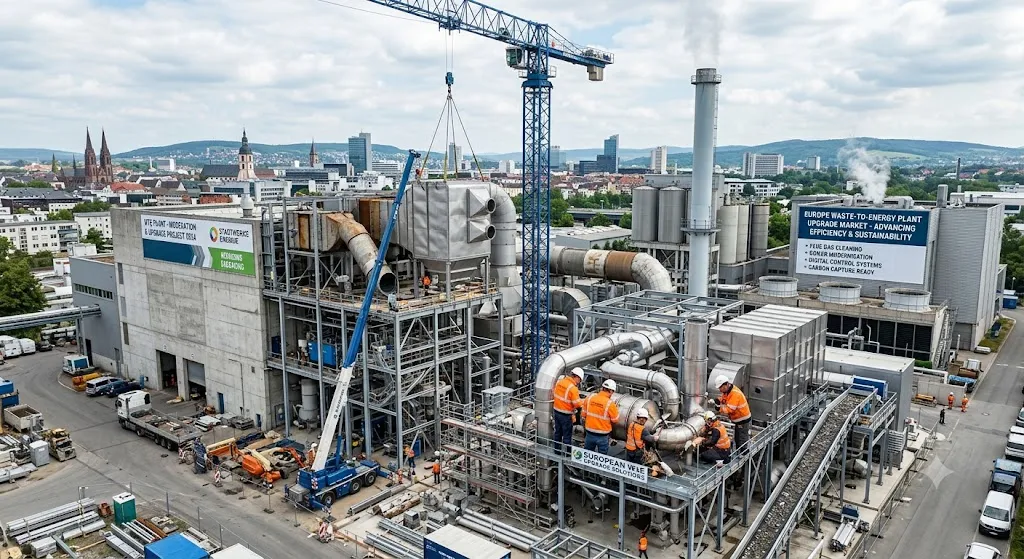

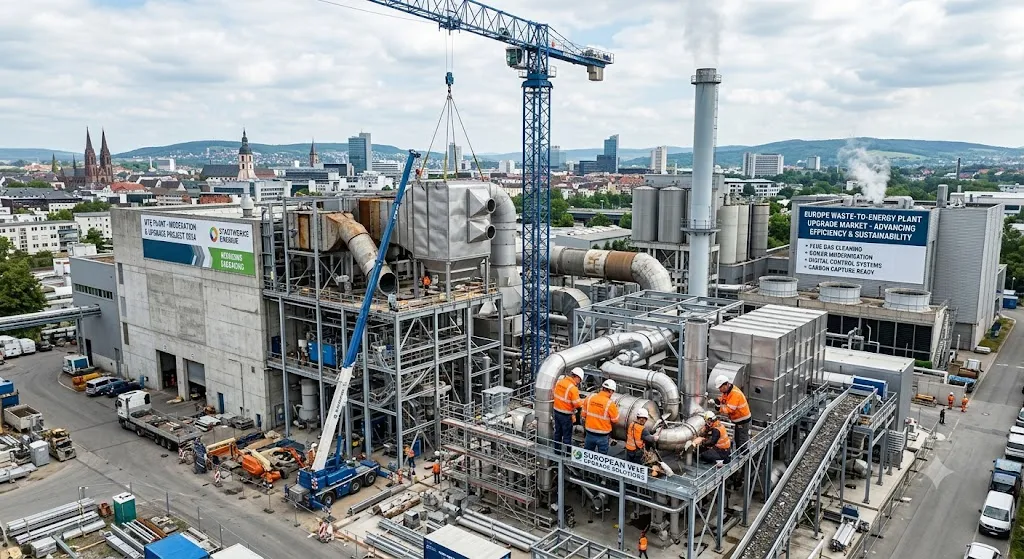
Modernizing waste-to-energy facilities can be a complex engineering challenge, but it also creates an opportunity to rethink how existing infrastructure contributes to Europe's waste and energy systems. Operators are increasingly examining whether targeted upgrades can improve plant performance, extend asset life, and strengthen compliance while avoiding the cost and disruption associated with building entirely new facilities.
A central area of attention is plant reliability. Repeated failures in critical equipment can reduce availability and increase maintenance expenses. Upgrading pumps, conveyors, boilers, turbines, electrical equipment, instrumentation, and control systems can address recurring weaknesses. Modern components can also provide better monitoring and diagnostic capabilities, making maintenance more predictable.
Combustion technology deserves particular attention because stable thermal processing influences the performance of the entire facility. Improved grate systems, combustion controls, air distribution, and feeding mechanisms can help operators respond to changes in waste characteristics. Better control of combustion conditions may support more consistent energy recovery and reduce process variability.
Emissions treatment is another major modernization pathway. Advanced systems can improve the removal and monitoring of pollutants while supporting more precise reagent use. Upgrades may include filtration equipment, gas cleaning technologies, monitoring instruments, and automated controls. Integrating these components effectively is essential because environmental performance depends on the interaction of multiple process stages.
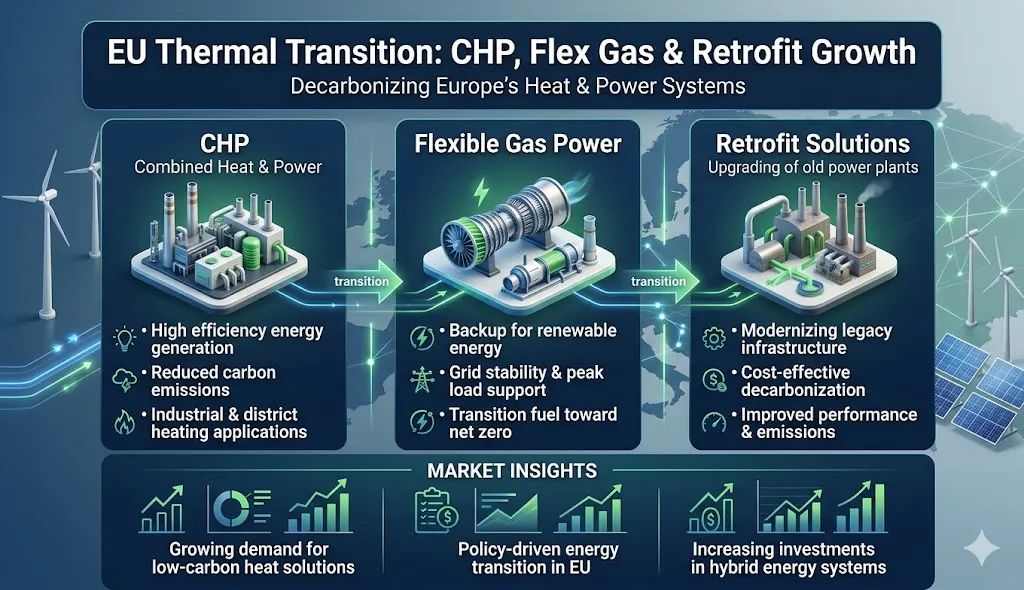
Energy efficiency can provide an additional return on modernization investment. Boiler improvements may increase steam production, while turbine refurbishment can improve electricity generation. Heat recovery systems can potentially supply district heating networks or industrial users. Where local demand exists, expanding heat utilization can increase the overall value obtained from residual waste.
Digitalization is changing plant management. Modern industrial control systems can collect large volumes of operational information and present it through centralized dashboards. Analytics can help identify inefficiencies, abnormal equipment behavior, and maintenance priorities. Remote monitoring may also support specialist assistance without requiring experts to be physically present for every diagnostic task.
Workforce capability is closely connected to digital modernization. New systems require operators and maintenance teams to understand updated controls, interfaces, and procedures. Training should therefore be incorporated into project planning rather than treated as an afterthought. Knowledge transfer can improve adoption and help organizations capture the full benefits of new technologies.
The commercial opportunity described by Europe Waste-to-Energy Plant Upgrade Market Size extends across equipment suppliers, engineering companies, automation specialists, environmental technology providers, and service organizations. Market participants can compete by offering measurable improvements in efficiency, availability, emissions performance, or lifecycle cost. Integrated contracts may become more attractive when operators prefer a single partner for multiple modernization requirements.
Project timing is especially important. Many facilities cannot remain offline for long periods because they provide essential waste treatment capacity. Upgrade work must therefore be scheduled around planned outages and coordinated with procurement, construction, testing, and commissioning. Modular installation strategies can sometimes reduce the duration of disruption.
Financing can determine whether technically attractive projects move forward. Operators may prioritize investments with clear payback, regulatory necessity, or immediate reliability benefits. Phased modernization can allow facilities to address the most urgent requirements first and plan additional improvements as budgets become available.
Looking ahead, European waste-to-energy plants will increasingly need to operate as flexible infrastructure within broader circular economy and energy systems. They must accommodate changing residual waste, comply with environmental standards, optimize energy production, and maintain dependable service.
The strongest modernization strategies will therefore combine engineering, digitalization, environmental management, and lifecycle planning. By upgrading critical systems instead of relying solely on replacement, operators can preserve valuable infrastructure while improving its contribution to modern waste management. The result can be facilities that are cleaner, more efficient, more reliable, and better prepared for changing conditions across Europe's energy and waste landscape. This supports.
























Sign in to leave a comment.