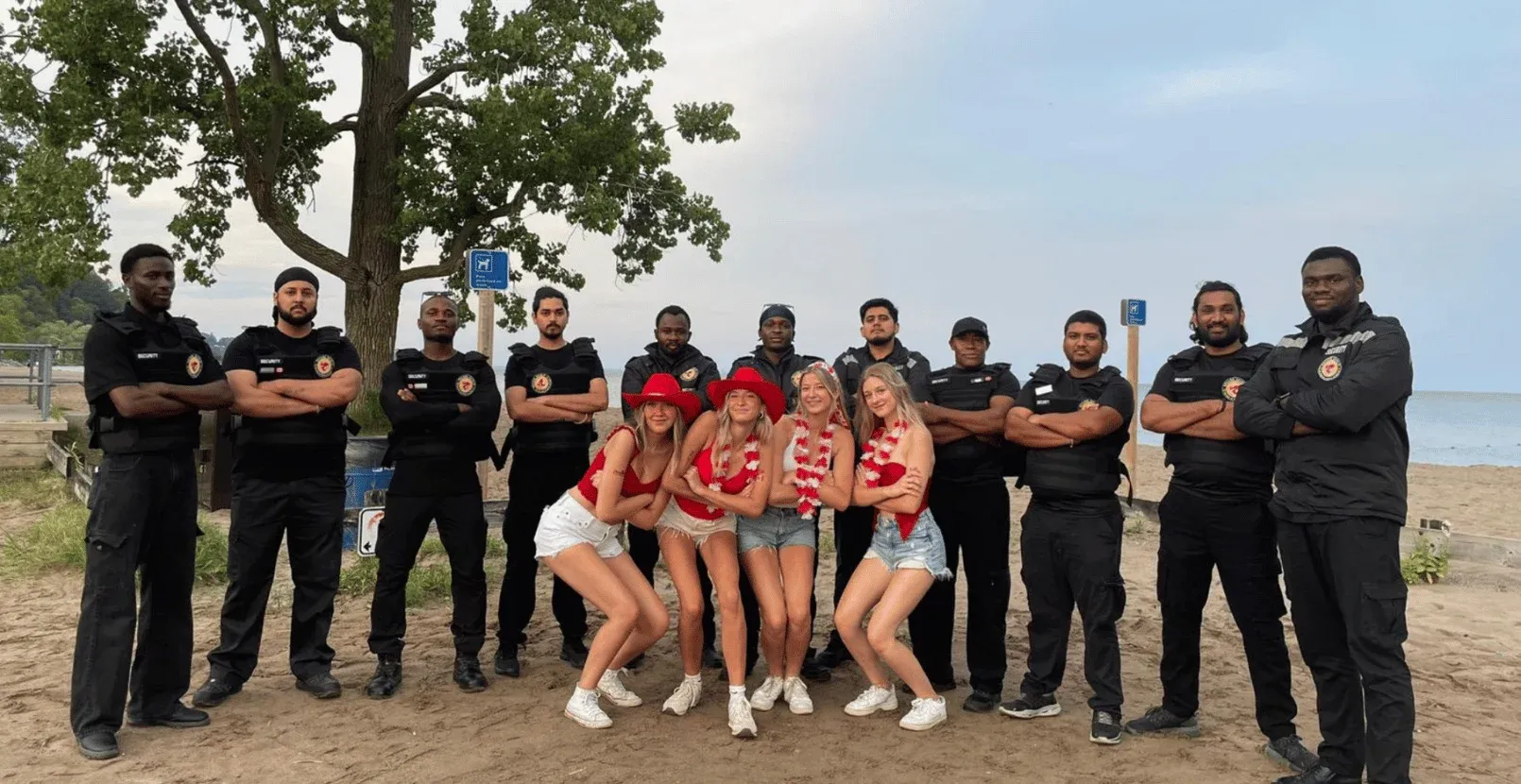

Most event organizers think about security too late. They finalize the venue, lock in the catering, confirm the performers, and then — somewhere near the end of the checklist — they start asking about guards. By that point, corners get cut. A few guards are hired without much vetting, assigned without much briefing, and sent to manage a situation they don't fully understand. When something goes wrong, and it does go wrong, people ask why there wasn't a plan. There usually wasn't a plan because nobody treated security as something that needed one.
What Event Security Services Actually Cover
People assume event security is just a person standing near a door. That's not wrong, but it's not the whole picture either. Professional event security services cover a range of operations that work together:
- Access control — managing who gets in, who stays out, and how credential checks happen at every entry point
- Crowd management — controlling movement, preventing bottlenecks, and keeping guest flow safe throughout the venue
- VIP and executive protection — discreet, close-range security for high-profile attendees, performers, or executives
- Emergency response — trained protocols for medical incidents, fire situations, or security threats that require immediate action
- Post-event security — protecting the venue, staff, and equipment during teardown, which is often when incidents happen
Each of these requires trained personnel, not just people with a uniform. Guards need to know how to read a crowd before it becomes a problem, not just after.
Why the Size of Your Event Doesn't Matter as Much as You Think
There's a common assumption that small events don't need professional security. A corporate dinner, a product launch, a private birthday party — the thinking is that these are low-risk situations. They're not automatically low-risk. A small guest list at an upscale venue can attract theft or unauthorized access. A private party with alcohol can escalate quickly without crowd management. A corporate event with executives in attendance has VIP protection requirements whether the organizer thinks so or not. The risk isn't purely about headcount. It's about the venue, the guest profile, the nature of the event, and the potential consequences if something goes wrong. Good event security services factor all of this in before a single guard is assigned.
Why a Toronto Security Company Has a Genuine Advantage
Hiring security through a Toronto security company that actually operates in the city isn't a small detail. It matters more than most clients expect. Local security firms know the venues. They've worked the Rogers Centre, private gallery spaces in the Financial District, outdoor festivals along the waterfront. They know where the entry points are, where crowds tend to pile up, and where communication breaks down between event staff and security personnel. A company without that local context is working from scratch on your event day. That's a problem. Beyond venue familiarity, local firms have relationships with Toronto's municipal guidelines, understand permit requirements, and can coordinate with local law enforcement when needed. That coordination is something remote or national firms often can't manage as efficiently.
The Role of Mobile Patrol Security at Events
Mobile patrol security is underused at events, and that's a genuine gap in how most organizers plan. Static guards cover fixed points. They're necessary, but they can't watch everything. Mobile patrol security provides coverage across areas that don't have a permanent post — parking lots, perimeter fencing, loading docks, outdoor areas adjacent to the venue. At larger events, this matters significantly. A vehicle doing regular sweeps around a venue's exterior catches problems that static guards inside never see — unauthorized vehicle access, loitering near restricted areas, or individuals casing the perimeter. For multi-building venues or outdoor events, mobile patrol security is often the only way to maintain consistent coverage without massively inflating headcount. It's also a visible deterrent. A patrol vehicle moving through a parking area communicates that the property is monitored. That visibility alone reduces opportunistic incidents.
What a Pre-Event Security Assessment Looks Like
Any professional event security company should offer a pre-event assessment before they give you a quote. If they don't, that's a red flag. A proper assessment covers:
- A physical walk-through of the venue to identify entry and exit points
- Identification of high-risk zones — areas where incidents are more likely or consequences are higher
- Guest flow mapping to prevent crowd bottlenecks
- Emergency evacuation planning specific to that venue
- Coordination with venue management on communication protocols
This is not a generic checklist. It should be specific to your event, your venue, and your guest profile. Security companies that skip this step are selling you bodies, not protection.
What Poor Event Security Actually Costs
The financial argument for professional event security services is straightforward, even if people don't often frame it that way. An incident at your event creates liability. If a guest is injured during a crowd surge that wasn't managed, the event organizer carries responsibility. If a VIP attendee is harassed or assaulted because no one was protecting restricted access, the fallout extends far beyond the event itself. Insurance claims, legal costs, reputational damage — these are the real costs of cutting security budgets. Against that, the cost of hiring a qualified security guard services team is modest. The math isn't complicated. There's also the less obvious cost: the event experience itself. Guests who feel unsafe or who encounter chaotic, unmanaged entry procedures leave with a negative impression of your event regardless of everything else you got right.
How to Choose the Right Event Security Company
A few things actually matter when evaluating providers:
- Licensing — Guards in Ontario must hold a valid licence from the Ministry of the Solicitor General. Ask for proof. Don't accept vague answers.
- Experience with similar events — A company that mostly does retail loss prevention is not the same as one with active experience managing concert crowds or corporate galas.
- Custom planning — If a company quotes you without asking specific questions about your venue, guest profile, or risk level, they're not customizing. They're templating.
- Communication — How quickly do they respond? How clearly do they explain their approach? That quality of communication before the contract reflects how they'll operate during the event.
- 24/7 availability — Events don't run on a 9-to-5 schedule. Your security company shouldn't either.
The Bottom Line
Event security isn't optional and it isn't a box to check. It's a function that requires actual planning, actual expertise, and a company that knows what it's doing in the specific city and venue where your event happens. If you're organizing an event in Ontario and you haven't settled this yet, the time to start is before the event, not after something goes wrong. Secure Shield Security provides event security services across Ontario, with experience ranging from private corporate functions to large-scale public events. They're reachable at +1 (226) 978-7406 or [email protected].

























Sign in to leave a comment.