
Enterprise networks are becoming increasingly complex as organizations adopt cloud computing, remote work, interconnected applications, and hybrid IT environments. While these technologies improve flexibility and productivity, they also create new opportunities for cybercriminals to exploit compromised accounts, vulnerable applications, and excessive access permissions. Traditional network security measures may struggle to prevent threats from spreading once an attacker gains access to an internal system.
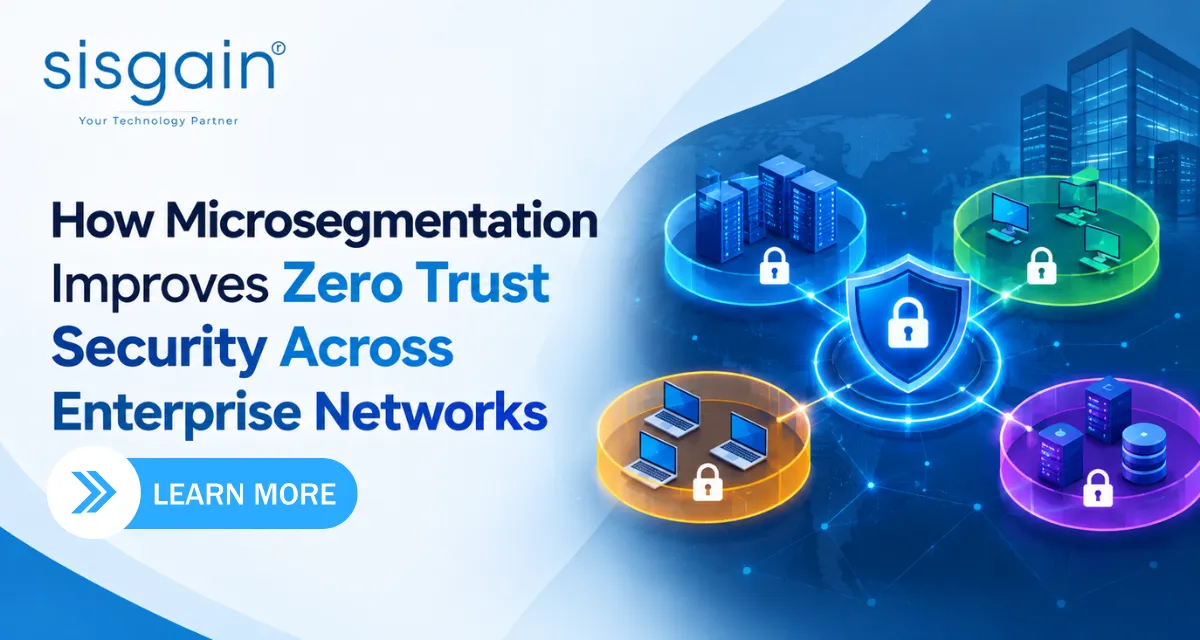
Microsegmentation helps address these challenges by dividing networks into smaller, isolated security zones and controlling communication between workloads, applications, and sensitive resources. When combined with Zero Trust principles, it helps organizations reduce unnecessary access, limit lateral movement, and strengthen their overall security posture. Understanding this relationship is essential for businesses seeking to protect critical systems without unnecessarily disrupting daily operations.
Key Takeaways
- Microsegmentation limits lateral movement: It restricts communication between systems, helping contain threats within specific network segments.
- Zero Trust strengthens access control: Every access request is evaluated according to identity, permissions, context, and security policies.
- Granular policies protect sensitive assets: Organizations can apply stricter controls to critical applications, databases, and confidential information.
- Implementation requires planning: Asset discovery, dependency mapping, policy testing, and continuous monitoring help reduce operational risks.
- Layered security improves resilience: Microsegmentation works alongside identity management, endpoint protection, and threat detection.
Understanding Microsegmentation in Enterprise Network Security
What Is Microsegmentation?
Microsegmentation is a network security approach that divides an IT environment into small, logically separated segments. Each segment has its own access rules that determine which users, applications, workloads, or services can communicate with one another.
Unlike broad network boundaries, microsegmentation enables organizations to apply more granular security policies around individual workloads or groups of related resources. For example, a company can restrict a customer-facing web application from directly accessing financial databases unless a specific, authorized communication path is required.
These controls help minimize unnecessary connections and reduce the potential impact of a security incident.
How Microsegmentation Differs From Traditional Network Segmentation
Traditional segmentation typically separates networks into larger zones, such as corporate offices, guest Wi-Fi, and data centers. Although this approach remains useful, systems within the same zone may have broader connectivity than their business functions require.
Microsegmentation introduces more detailed controls based on application requirements, workload behavior, identity, and other relevant security attributes.
This approach allows enterprises to:
- Restrict communication between individual applications and workloads.
- Apply different security policies to sensitive and non-sensitive systems.
- Reduce unauthorized access between internal network resources.
- Improve visibility into application communication patterns.
What Is Zero Trust Security and Why Does It Matter?
Zero Trust is a security model based on the principle that access should never be granted automatically simply because a user or device is connected to an internal network. Instead, access decisions should be based on appropriate verification and authorization.
A Zero Trust strategy generally incorporates identity verification, least-privilege access, device security, continuous monitoring, and context-aware policies.
Common Security Gaps in Traditional Enterprise Networks
Many organizations still depend on perimeter-focused security controls. These controls help defend against external threats but may not adequately restrict communication between internal systems after an attacker compromises an account or device.
Common security gaps include:
- Excessive permissions that provide users or applications with unnecessary access.
- Unrestricted communication between workloads.
- Inadequate monitoring of internal network activity.
- Weak separation between business-critical and general-purpose systems.
- Delayed detection of suspicious activity.
Zero trust cybersecurity solutions help organizations address these gaps by enforcing access policies that verify requests and restrict permissions according to defined security requirements. Microsegmentation strengthens this approach by controlling which resources can communicate after access has been granted.
How Microsegmentation Strengthens Zero Trust Security

1. Restricting Lateral Movement Across the Network
Lateral movement occurs when an attacker uses an initially compromised system to reach other devices, applications, or servers within an environment. Without appropriate internal restrictions, a single security incident can develop into a much larger breach.
Microsegmentation limits this risk by enforcing rules between network segments and workloads. If an attacker compromises a workstation, for example, segmentation policies can prevent that workstation from communicating directly with a sensitive database or administrative server.
This containment capability helps reduce the potential spread of ransomware, unauthorized access, and other malicious activity.
2. Enforcing Least-Privilege Access Between Applications
The principle of least privilege requires each user, application, and service to receive only the permissions necessary to perform its intended function.
Microsegmentation applies this principle to network communication. Rather than allowing broad connectivity, organizations can define specific rules for approved application interactions.
For example, an e-commerce platform might require its web server to communicate with an application server, while database access is restricted to the services that genuinely need it.
These policies reduce unnecessary exposure and make unauthorized communication easier to identify.
3. Improving Visibility Into Network Traffic
Effective security depends on understanding how systems communicate. However, complex enterprise environments can contain undocumented dependencies, legacy applications, and unexpected connections.
Microsegmentation tools can help organizations map communication patterns, identify unusual traffic, and evaluate whether existing access rules reflect actual business requirements.
When integrated with security monitoring platforms, these insights can help teams investigate suspicious connections and refine policies over time.
4. Protecting Critical Data and High-Value Assets
Financial records, customer information, intellectual property, and business-critical applications require appropriate protection against unauthorized access.
Microsegmentation allows organizations to isolate these assets and enforce stricter communication rules around them. Even if another part of the network is compromised, properly configured segmentation can limit the attacker's ability to reach protected resources.
This approach is particularly valuable in environments where sensitive databases interact with multiple applications and business services.
5. Securing Hybrid and Multi-Cloud Environments
Many enterprises operate workloads across on-premises data centers, public clouds, private clouds, and SaaS platforms. Maintaining consistent security policies across these environments can be challenging.
Microsegmentation can help organizations establish more granular controls around workloads and application connections across supported environments. When combined with identity-aware access policies and centralized monitoring, it contributes to a more consistent Zero Trust strategy.
Implementation depends on the organization's infrastructure, available security tools, and application requirements.
The Connection Between Microsegmentation and Identity Security
Why Identity Verification Alone Is Not Enough
Identity verification confirms that a user or service meets specified authentication requirements. However, a successfully authenticated identity should not automatically receive unrestricted access to internal resources.
For example, an employee may legitimately access a business application but have no operational reason to connect directly to its underlying database. Microsegmentation adds another layer of control by restricting unnecessary network communication.
This combination helps organizations enforce access decisions at both the identity and network levels.
Managing Risks From Compromised Credentials
Stolen passwords, compromised service accounts, and misused privileged identities can create significant security risks. Attackers may use these credentials to access systems beyond the original point of compromise.
An effective security strategy combines strong authentication, least-privilege permissions, monitoring, and network restrictions to limit these opportunities.
Identity security breach management is also important when suspicious identity activity occurs. Organizations need processes for detecting compromised accounts, investigating access patterns, revoking unauthorized sessions, and coordinating incident containment. Microsegmentation can complement these activities by restricting the network paths available to compromised systems.
Best Practices for Implementing Microsegmentation
Successful implementation requires more than creating network boundaries. Organizations must understand their infrastructure, identify legitimate communication requirements, and introduce policies carefully.
1. Identify Critical Assets and Map Dependencies
Begin by discovering applications, workloads, databases, users, and network connections. Mapping dependencies helps teams understand which communication paths are essential and which may represent unnecessary exposure.
2. Prioritize High-Risk Systems
Start with sensitive databases, critical business applications, privileged administration systems, or other high-value assets. A risk-based approach helps organizations focus resources where segmentation can provide meaningful protection.
3. Define Clear Access Policies
Establish rules based on documented business requirements. Specify which systems may communicate, what services are permitted, and which connections should be denied.
4. Test Policies Before Enforcement
Incorrect rules can interrupt legitimate application traffic. Use monitoring and testing to validate policies before enforcing restrictions across production environments.
5. Integrate Monitoring and Incident Response
Collect relevant logs, review policy violations, and establish procedures for investigating unusual connections. Security teams should understand how segmentation controls support incident response and threat containment.
6. Review Policies Regularly
Enterprise environments change as applications are updated, workloads move, and business requirements evolve. Regular reviews help keep segmentation policies accurate and effective.
Common Microsegmentation Challenges
Despite its benefits, microsegmentation can introduce operational complexity when implemented without sufficient preparation.
Common challenges include legacy applications, undocumented dependencies, incomplete asset inventories, and policies that are too restrictive or too permissive. Organizations may also struggle to maintain consistent rules across multiple cloud platforms and on-premises infrastructure.
A phased implementation can help manage these challenges. Teams should document dependencies, test changes, establish clear policy ownership, and review the operational impact before expanding segmentation across the enterprise.
How Microsegmentation Works With Broader Cybersecurity Controls
Microsegmentation is most effective when integrated into a broader security architecture rather than treated as a standalone solution.
Organizations can combine segmentation with identity and access management, endpoint detection, vulnerability management, threat intelligence, and security information and event management systems.
Integrated cyber security solutions can help coordinate these controls by improving threat visibility, supporting incident investigation, and strengthening access governance. For example, endpoint monitoring may identify suspicious behavior, while segmentation policies restrict the affected workload's communication with critical systems.
Together, these measures create multiple layers of defense and help organizations respond more effectively to evolving threats.
Measuring the Effectiveness of Microsegmentation
Organizations should evaluate microsegmentation through measurable security and operational indicators rather than relying solely on the number of segments created.
Useful metrics include:
- Reduction in unnecessary network connections.
- Percentage of critical assets covered by appropriate segmentation policies.
- Number of unauthorized communication attempts detected.
- Time required to investigate and contain suspicious activity.
- Frequency of policy violations and configuration errors.
- Impact on application performance and business operations.
These measurements help security teams identify gaps, demonstrate progress, and adjust policies as the enterprise environment evolves.

Conclusion
Microsegmentation strengthens Zero Trust security by restricting unnecessary communication, enforcing least-privilege access, and helping contain threats within defined network boundaries. It is particularly valuable for enterprises managing complex infrastructure, sensitive data, and interconnected applications.
However, its effectiveness depends on accurate asset discovery, well-defined access policies, continuous monitoring, and regular reviews. When integrated with identity security, endpoint protection, and broader cybersecurity controls, microsegmentation helps organizations reduce attack exposure and build a more resilient enterprise security architecture.
For businesses pursuing a Zero Trust strategy, the priority should be to identify critical assets, understand legitimate communication requirements, and implement granular controls in carefully planned stages. This approach supports stronger security while helping maintain operational continuity.
Frequently Asked Questions
1. What is microsegmentation in Zero Trust security?
Microsegmentation is a network security approach that divides an IT environment into smaller security zones and controls communication between workloads, applications, and systems. It supports Zero Trust by limiting unnecessary access and reducing the risk of lateral movement.
2. How does microsegmentation improve Zero Trust security?
Microsegmentation strengthens Zero Trust security by enforcing granular access policies, restricting unauthorized network communication, protecting sensitive assets, and limiting the spread of cyberattacks across enterprise networks.
3. What is the difference between network segmentation and microsegmentation?
Traditional network segmentation divides networks into larger zones, such as departments or data centers. Microsegmentation provides more granular control over individual workloads, applications, and services, allowing organizations to enforce more specific security policies.
4. How does microsegmentation prevent lateral movement?
Microsegmentation restricts communication between systems according to predefined security policies. If an attacker compromises a device or application, these restrictions can prevent unauthorized connections to other workloads, servers, and sensitive databases.
5. Is microsegmentation necessary for Zero Trust architecture?
Microsegmentation is not mandatory for every Zero Trust implementation, but it is an important capability for controlling communication between workloads and limiting unauthorized access within enterprise environments.





















Sign in to leave a comment.