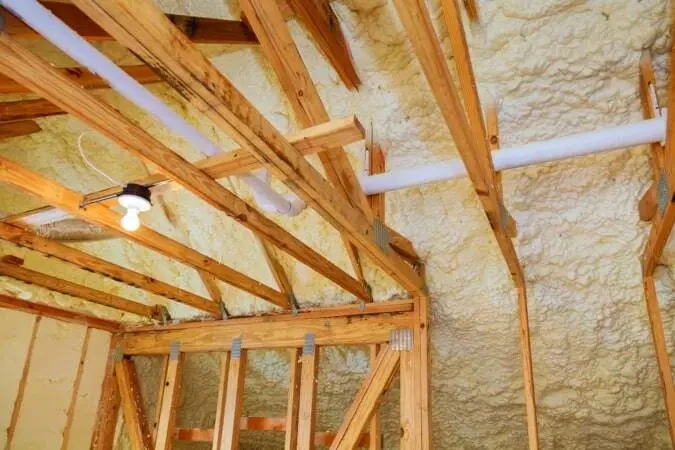
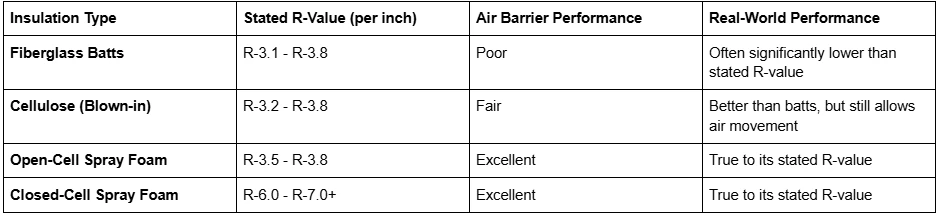
When homeowners research insulation, the term "R-value" comes up constantly, and for good reason. R-value is the standard measure of an insulation's ability to resist the flow of heat, and a higher R-value means better thermal performance. Spray foam insulation contractor are known for having excellent R-values, but it's important to understand that there are two distinct types of spray foam, each with its own R-value and unique properties. Closed-cell spray foam offers a very high R-value of around R-6 to R-7 per inch, while open-cell spray foam provides a more moderate R-value of about R-3.5 to R-3.8 per inch.
However, the R-value of spray foam is only part of what makes it such a high-performance material. Its ability to also act as an air barrier means that its real-world effectiveness often far exceeds that of other insulations with a similarly stated R-value. This guide, with insights from building science experts, will break down what R-value means for both types of spray foam and why it's a critical but incomplete piece of the home performance puzzle.
The Two Types of Spray Foam and Their R-Values
The R-value of spray foam is determined by the structure of the tiny gas-filled bubbles, or "cells," that make up the foam.
Closed-Cell Spray Foam: High R-Value and a Multi-Purpose Barrier
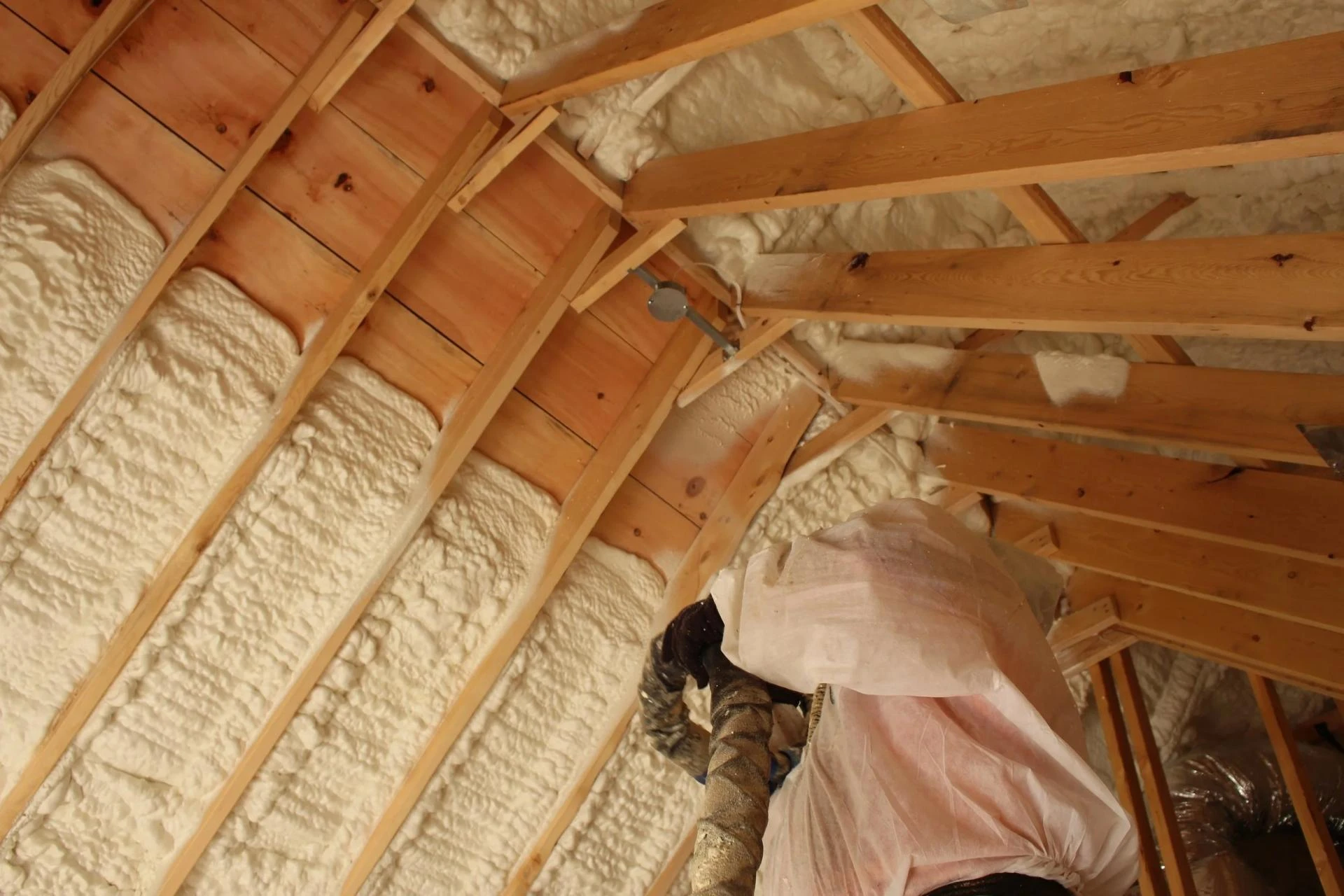
Closed-cell spray foam has a dense, rigid structure made up of tiny, completely sealed cells. These cells are filled with a specialized gas, known as a blowing agent, which is much more effective at resisting heat transfer than air. This is what gives closed-cell foam its exceptionally high R-value, typically ranging from R-6 to R-7 per inch.
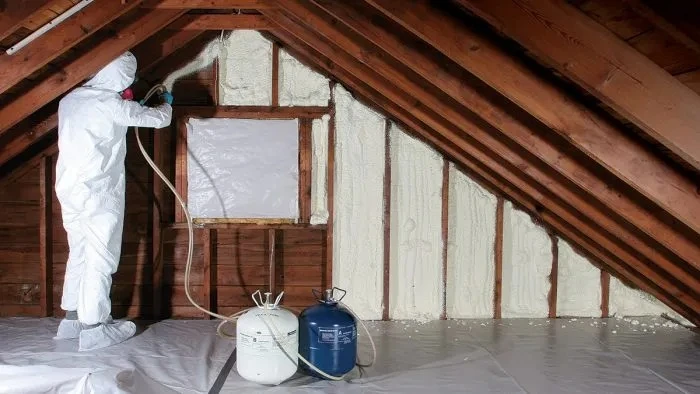
This high R-value per inch means you can achieve a very high level of insulation in a relatively thin layer. This makes it an ideal choice for applications where space is limited, such as in 2x4 wall cavities or in cathedral ceilings where you want to maximize headroom. In addition to its thermal resistance, the closed-cell structure also makes the foam waterproof and impermeable to water vapor, allowing it to function as a complete air, moisture, and vapor barrier in one product.
Open-Cell Spray Foam: Moderate R-Value and Excellent Air Sealing
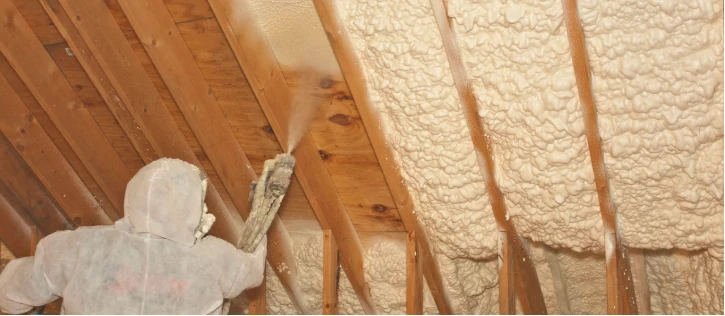
Open-cell spray foam has a lighter, softer, and more flexible structure. The cells are intentionally left open, so they are filled with air rather than a specialized blowing agent. This results in a lower density and a more moderate R-value, typically in the range of R-3.5 to R-3.8 per inch.
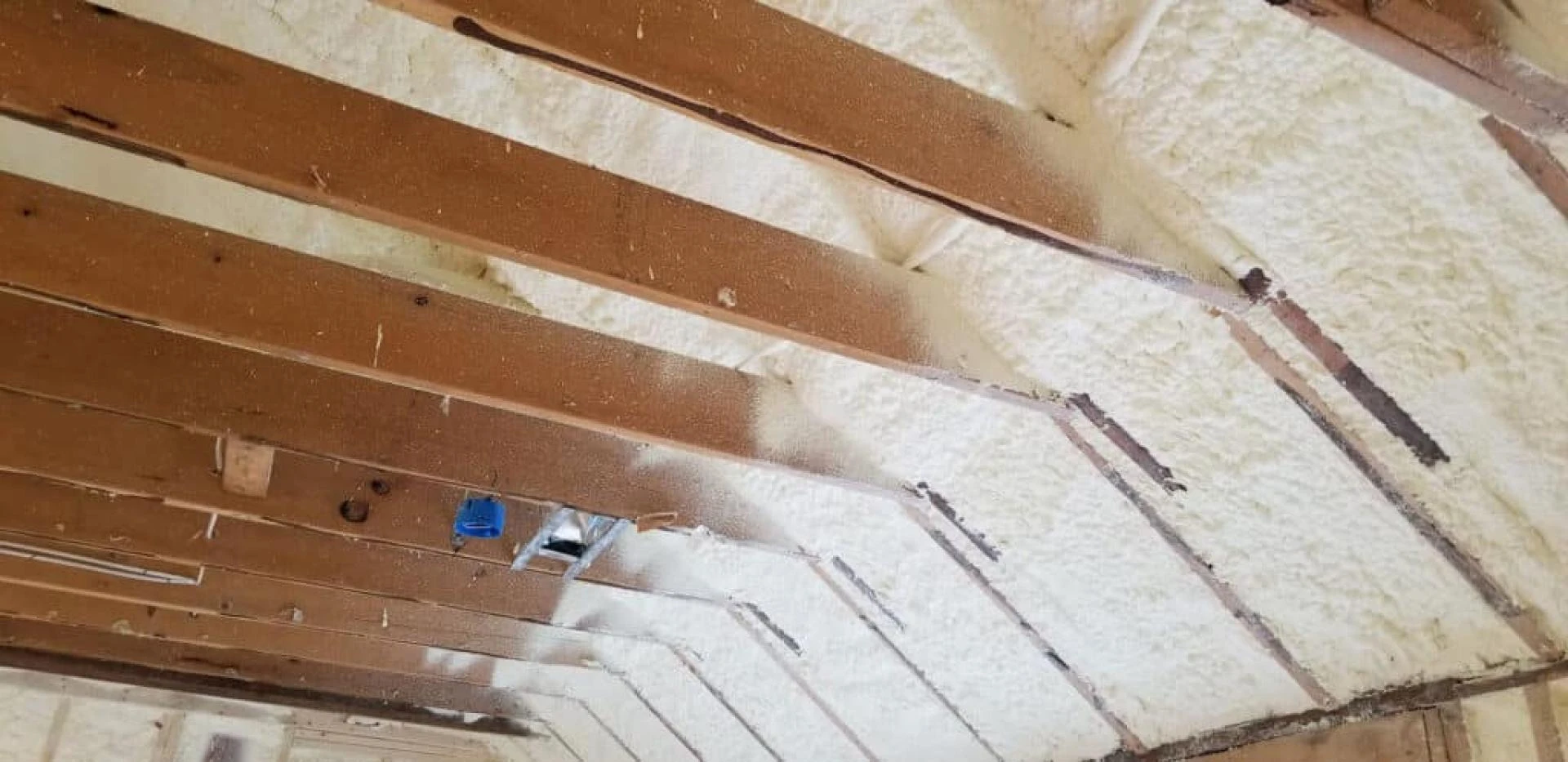
While its R-value is lower, open-cell foam is still an excellent insulator and, most importantly, it is a superb air barrier. It expands dramatically upon application, filling every gap and crack to stop the air leakage that is a major source of energy loss. It is also an excellent sound absorber, making it a great choice for media rooms or walls between bedrooms. Because it is less dense, it also has a lower installed cost than closed-cell foam.
Why R-Value Alone Can Be Misleading
The standard R-value test is conducted in a controlled lab environment. It only measures an insulation's ability to resist conductive heat transfer (heat moving through a material). It does not measure its ability to stop convective heat loss (heat carried by moving air).
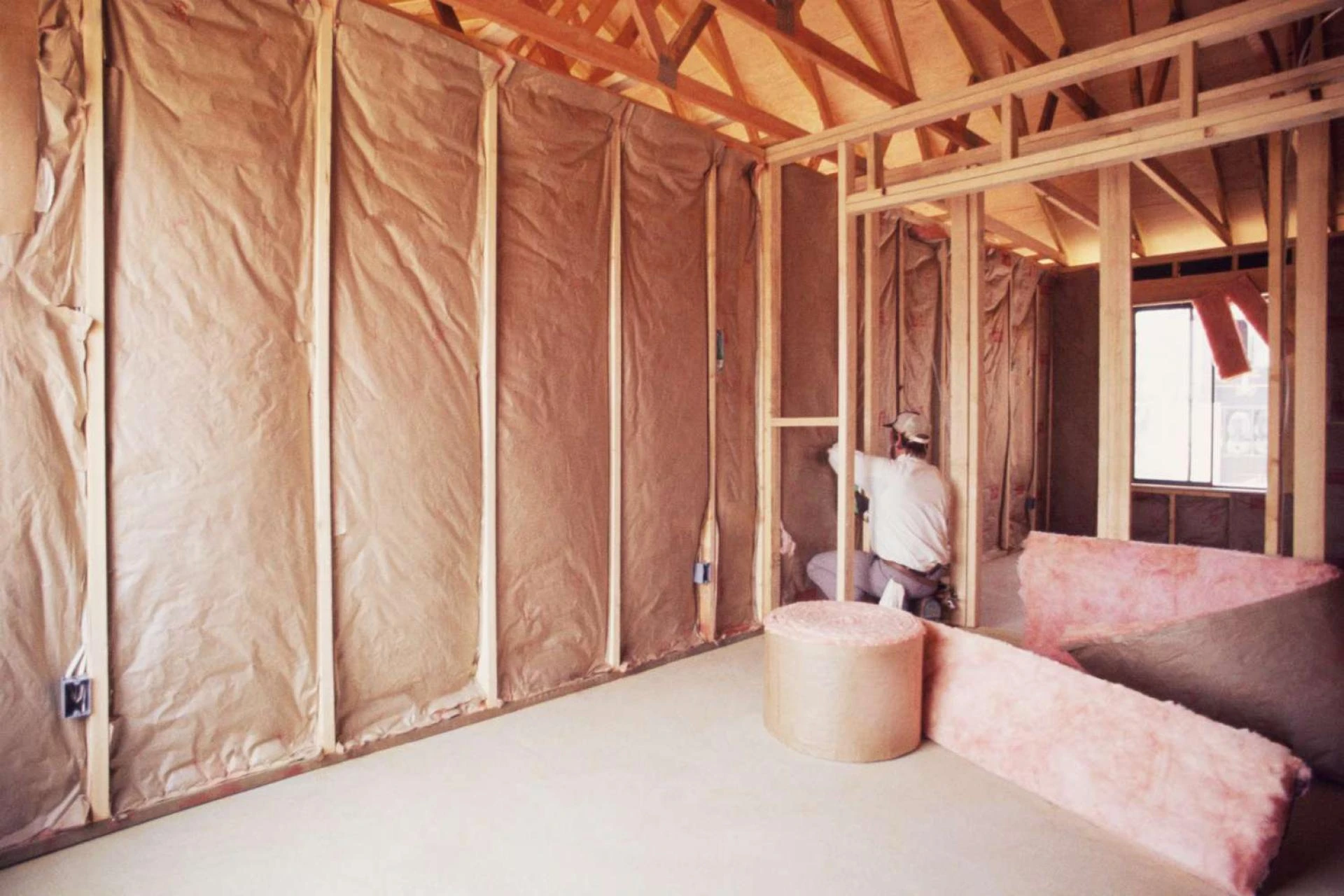
This is a critical distinction. In a real-world home, a significant amount of energy is lost through air leakage. Traditional insulation materials like fiberglass may have a high stated R-value on the package, but if they are installed with gaps or if they don't stop air movement, their effective R-value in the real world is much, much lower.
This is where spray foam's dual function as an insulator and an air barrier becomes so important. By stopping the convective heat loss from air leakage, spray foam ensures that you are actually getting the full, stated R-value that you paid for. An R-13 wall insulated with spray foam will almost always outperform an R-13 wall insulated with fiberglass batts because the spray foam wall does not have the hidden energy loss from drafts and air infiltration.
Bonus Tip: A home's overall thermal performance is determined by the "whole-wall" R-value, which accounts for the insulating value of the sheathing, drywall, and wood framing. Because wood studs have a very low R-value (about R-4 for a 2x4), they create "thermal bridges" that allow heat to bypass the insulation. Spray foam's ability to air seal the entire cavity helps to minimize the negative impact of this thermal bridging.
R-Value and Performance Comparison
Choosing the Right R-Value for Your Home
The Department of Energy provides recommendations for insulation R-values based on climate zones. The higher the R-value, the better the thermal performance. A professional insulation contractor will be familiar with the local building codes and can recommend the right R-value for your specific application, whether it's an attic, wall, or crawl space.
With spray foam, you have the flexibility to achieve these targets in different ways. For example, to achieve an R-value of R-20 in a wall cavity, you could use about 5.5 inches of open-cell foam or just over 3 inches of closed-cell foam. The choice will depend on the available space, your budget, and whether you also need the moisture-blocking properties of closed-cell foam.
Bonus Tip: In an attic, the most cost-effective high-performance solution is often a "hybrid" approach. A contractor can apply a thin layer of closed-cell spray foam directly to the attic floor to create a complete air and vapor barrier, and then cover it with a thick layer of less expensive blown-in insulation to achieve a high total R-value.
Key Factors to Remember About R-Value
- It's a Measure of Resistance: R-value only measures one type of heat transfer. A high R-value is great, but it's not the only factor in a home's energy efficiency.
- Air Sealing is Just as Important: The ability of your insulation to stop air leakage is critical to its real-world performance.
- Look at the Whole System: Don't get hyper-focused on one number. A well-insulated and air-sealed home is a system where all the components work together to provide comfort and efficiency.
- Trust a Professional: A certified insulation contractor can perform the calculations and recommend the right product and R-value to meet your performance goals and your local building codes.
Frequently Asked Questions
Does spray foam lose its R-value over time?
When installed correctly, both open-cell and closed-cell spray foam are highly stable and are designed to maintain their R-value for the life of the building. Some very minor aging can occur in the R-value of closed-cell foam over many decades, but this is well understood and accounted for in the product's long-term thermal resistance (LTTR) ratings.
Can I have too much R-value?
From a performance standpoint, there's no such thing as too much insulation. However, there is a point of diminishing returns where the cost of adding more insulation outweighs the additional energy savings you will get. A professional can help you find the sweet spot for your home and budget.
Is a higher R-value always better?
All else being equal, yes. But it's important to compare apples to apples. An R-13 fiberglass batt in a leaky wall will not perform as well as an R-13 spray foam application in that same wall. The R-value number must be considered in the context of the material's other properties.
What R-value do I need for my attic?
This depends on your climate zone, but for most parts of the country, modern building codes recommend attic R-values in the range of R-38 to R-60.
R-Value and Beyond
Understanding R-value is an important part of making an informed decision about your home's insulation. For spray foam insulation experts, the high R-values of both the open-cell and closed-cell products are a significant advantage. But the true power of the material comes from combining that thermal resistance with its unmatched ability to create a complete air seal, delivering a level of real-world performance that other insulations simply cannot match.
Get a Professional R-Value Consultation
The best way to determine the right R-value and insulation type for your home is with a professional assessment. An expert can evaluate your home's current condition, understand your goals, and provide a clear, data-driven recommendation.
LMC Insulation team has deep expertise in building science and a full range of modern insulation materials. They can help you design a high-performance insulation system tailored to your home and budget. To schedule a consultation, contact them at [email protected] or call (479) 351-6175.
Reviewer: Samuel Harris has worked across various roles in spray foam insulation over 11 years. His review focused on how businesses can better present their services to both new and returning clients.

























Sign in to leave a comment.