

Run your hand across a stone wall sometimes. Feel that? The bumps, the cool patches, the rough edges that catch the light just right. That's not just a wall. That's texture doing all the talking, no words needed, great for the visuals.
Here's the thing about stone cladding. It's the first thing people notice. Before your furniture. Before your art. Before anything else in the room. A stone wall sets the tone the second someone walks in.
So, let's get into it. What actually goes into choosing the right one.
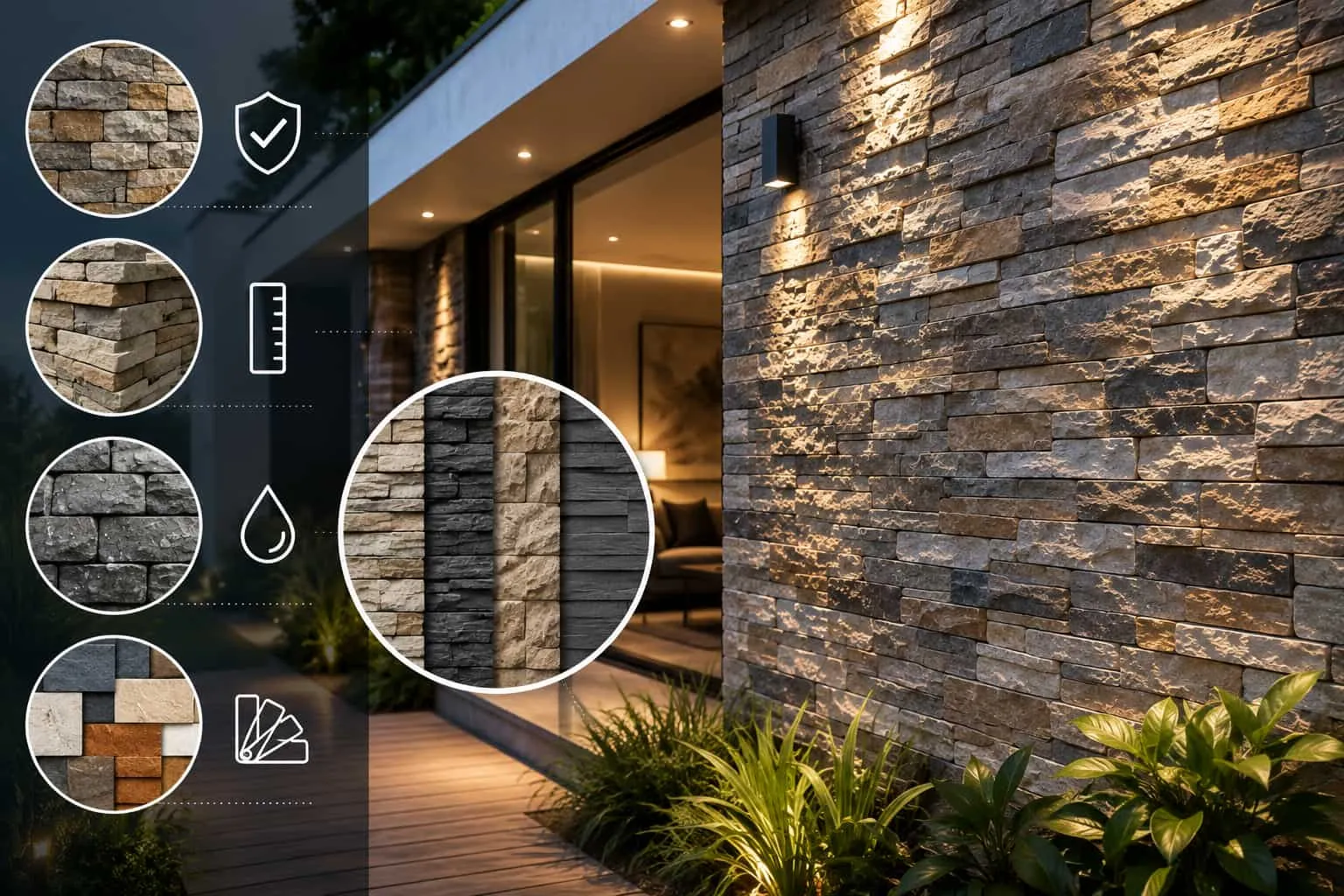
Quick theory bit (promise, it's short)
Stone wall cladding is basically a thin layer of natural or engineered stone fixed onto a wall. It's not structural. It's decorative. Think of it as dressing up a plain wall without the weight (or cost) of full stone construction.
Two popular styles dominate right now: modular walling and loose stone wall designs. Modular walling uses uniform, interlocking panels such as clean lines, consistent sizing, easy to install. Loose stone wall styles go the opposite direction. Random shapes, organic layout, more of a natural look. Both have their place. It just depends on the vibe you are looking for.
Factors to Look for When Choosing Wall Cladding
The look of the wall is important but it’s not the only factor you need to consider. Other factors like edges, lighting and finish also matter.
Edges
The important detail everyone skips. Most people focus on the stone itself and forget the edges completely. Big mistake.
- Chiselled edges add a rugged, old-world feel. Great for feature walls that want attention.
- Bullnose edges are soft and rounded. Safer around high-traffic areas like hallways or outdoor spaces.
- Straight-cut edges suit modular walling perfectly. Sharp, tidy and modern look.
The edge finish changes the entire personality of your wall. A chiselled edge whispers rustic retreat. A straight edge is more about minimalism and chic look.
Surface Finish
Run your fingers over different stone surfaces and you'll notice something. They all tell a different story.
Natural cleft surfaces are rough, uneven and full of character. Light catches every ridge differently throughout the day. Honed finishes are smooth and matte, quiet, understated, easy to live with. Polished surfaces reflect light beautifully, adding a touch of luxury.
A loose stone wall usually leans natural cleft or split-face. It gives that natural, relaxed and organic look and goes well with landscape. Modular walling, on the other hand, often pairs with honed or lightly textured surfaces to keep that clean, structured look intact.
Lighting
This can be a game-changer. Here's something most people don't think about until it's too late. Lighting can make or break a stone wall.
Uplighting from the base throws dramatic shadows upward. Great for feature walls, especially with textured or loose stone styles every groove gets its moment. Downlighting is softer, more even, better suited for modular walling where you want consistency, not drama.
A few quick rules:
- Warm light (2700K–3000K) brings out earthy stone tones beautifully.
- Cool light can wash out natural warmth so use according to your space.
- Grazing light (mounted close, angled across the surface) makes texture pop like nothing else.
Where to Actually Use It
Not every space calls for stone cladding and that's okay. But here's where it genuinely shines:
- Living room feature walls: Gives that instant warmth and character to the space.
- Outdoor entertaining areas: It is weather-resistant and full of texture making it visually appealing.
- Home entryways: It gives a classic first impression to your visitors.
- Fireplace surrounds: It is a classic pairing and gives that rustic feel and adds cosy vibe to the space.
Modular walling tends to suit indoor feature walls and commercial spaces where consistency matters. A loose stone wall feels more at home outdoors or in spaces that look for raw, earthy, laid-back aesthetic.
So, Which One's Right for You?
Well, there's no wrong answer here. It comes down to what your space is asking for.
Want clean, modern, low-fuss install? Modular walling's your mate. Chasing something raw, textured, full of natural character? A loose stone wall will do the heavy lifting. Either way, the details matter more than people think. So, look for details like edges, finish and lighting that shape the mood. The application decides whether your wall becomes the focal point or a plain wall.
Take your time with it. A stone wall isn't something you redo every year. Choose the finish that still feels right five years from now, not just the one that looks good in photos today.
Disclaimer: The information provided in this blog is to the best of our knowledge and intended as a general guide. We recommend confirming all details based on your specific project requirements before execution.






















Sign in to leave a comment.