

The Budha Dal stands as one of the oldest and most respected Sikh warrior organizations, carrying forward a centuries-old legacy of martial excellence, spiritual discipline, and protection of the Panth. Its journey—from its origins during the early Sikh Gurus to its present-day role—reflects the evolution of Sikh sovereignty, identity, and community defence.
1. Origins: The Foundation of the Sikh Martial Spirit (Era of Guru Hargobind Sahib Ji)
The roots of Budha Dal can be traced back to the transformation of the Sikh community under Guru Hargobind Sahib Ji (1595–1644). After the martyrdom of Guru Arjan Dev Ji, the Guru emphasized two essential principles:
- Miri: temporal authority
- Piri: spiritual authority
Guru Hargobind Sahib Ji organized Sikh warriors into a trained fighting force known as the Akal Sena. This marked the birth of the Sikh martial tradition that would eventually shape Budha Dal.
2. Expansion Under Guru Gobind Singh Ji (1666–1708)
The formal structure and identity of Budha Dal emerged strongly during the era of Guru Gobind Singh Ji. With the creation of the Khalsa in 1699, the Guru introduced:
- Shastar Vidya (martial arts)
- Code of conduct
- Discipline, courage, and readiness to defend dharam
To organize the Khalsa army, the Guru divided the force into:
- Budha Dal – Veterans, senior warriors, guardians of tradition
- Tarna Dal – Younger, agile fighters for active missions
Budha Dal’s role became clear:
to preserve Sikh values, protect dharam, uphold justice, and maintain military readiness.
3. Budha Dal in the 18th Century: Guardian of the Panth
The 1700s were turbulent for Punjab and the Sikh community. During this century:
- Mughal and Afghan rulers attempted to suppress Sikhs.
- Sikhs were forced into jungles and mountains.
Budha Dal, under leaders like:
- Baba Binod Singh Ji
- Baba Deep Singh Ji
- Nawab Kapur Singh Ji
- Jassa Singh Ahluwalia Ji
became the primary defensive force, safeguarding Gurudwaras, scriptures, and the community.
They preserved:
· Martial training
· Daily nitnem and maryada
· Akal Takht traditions
Budha Dal also played a major role in the Sarbat Khalsa gatherings, guiding Panthic decisions.
4. Post-Maharaja Ranjit Singh Era & British Period
After Maharaja Ranjit Singh’s rule ended, Punjab witnessed chaos and British rule. Budha Dal:
- Continued maintaining Sikh maryada
- Protected shrines before SGPC was formed
- Preserved cultural and religious practices
During colonial restrictions, Budha Dal warriors kept the martial heritage alive, ensuring that the traditions of the Khalsa Panth did not fade.
5. 20th Century: Reorganization and Challenges
In the 1900s, with political movements and changes in Sikh governance:
- SGPC took control of many historical Gurdwaras.
- Budha Dal retained its independent identity and martial tradition.
- The Dal continued training warriors, maintaining weapons, horses, and battalions.
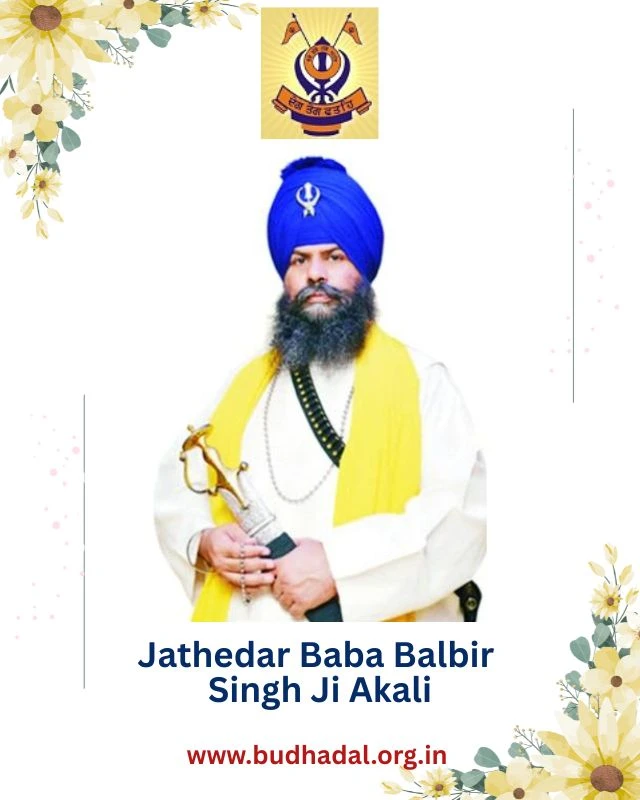
Strong Jathedars in the 20th century kept Budha Dal’s influence intact.
6. Budha Dal in the Modern Era
Today, Budha Dal remains:
A Custodian of Sikh Martial Culture
Budha Dal continues to train Sikhs in:
- Shastar Vidya
- Horse riding
- Weapons handling
- Traditional combat skills
A Preserver of Sikh Rehat Maryada
The Dal follows traditional maryada, including:
- Akal Purakh ki Fauj identity
- Daily nitnem
- Blue bana and dumala
- Respect for shastar (weapons)
A Symbol of Panthic Unity
Budha Dal plays a role during:
- Nagar kirtans
- Gurpurab events
- Security of historical sites
- Humanitarian aid and community service
7. Present Day Role and Significance
Even today, Budha Dal stands as:
· A living link to the Guru-era Khalsa traditions
· A reminder of Sikh martial roots
· A guardian of Sikh cultural identity
Its existence reflects the Sikh principle:
to live in devotion, but stay ever-prepared to defend righteousness.
Conclusion
From the battlefields of the 17th century to the cultural landscape of modern Punjab, Budha Dal has evolved but never strayed from its core purpose: preserving the Khalsa spirit of bravery, discipline, and spirituality. It remains an unforgettable force in Sikh history—a bridge between ancient traditions and contemporary identity.
This blog "Evolution of Budha Dal: From Origins to Present Day" was originally published Here.


























Sign in to leave a comment.