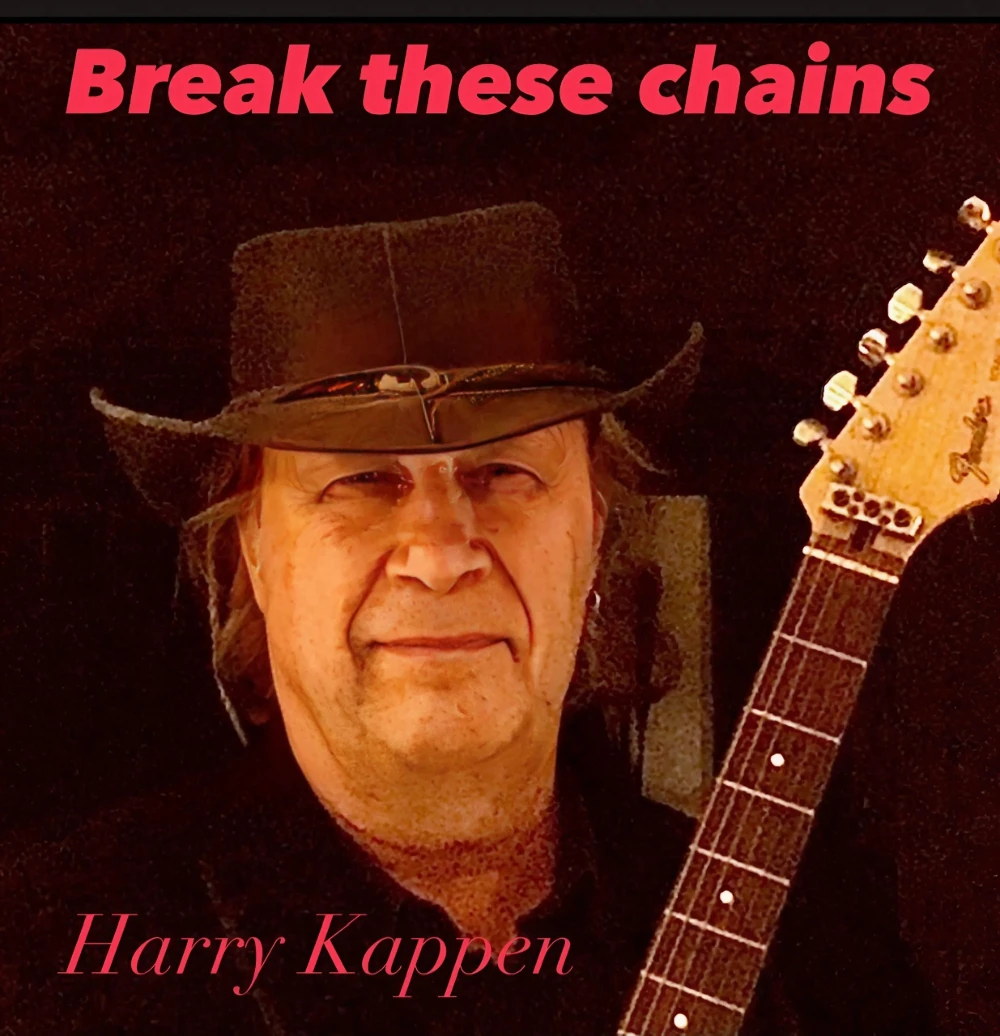

In an era where social media outrage burns hot and fast but rarely sticks, some artists are cutting through the noise the old-fashioned way—through songs that say something. Not just hooks and hashtags, but protest anthems, power ballads, and lyrical manifestos that push back against the dysfunction, dishonesty, and disillusionment that define modern life. At the heart of this musical resistance stands Dutch musician and music therapist Harry Kappen, whose latest single, “Break These Chains,” lands like a clenched fist to the moral gut.
Kappen’s track, released April 10th, isn’t just a piece of rock music—it’s a warning flare. Channeling his inner troubadour and activist, he laces biting lyrics over raw guitar riffs to confront the rise of disinformation, political gaslighting, and the crumbling bedrock of truth. “You may not justify what’s wrong / Repeating lies don’t count,” he sings with weary conviction, capturing the anxiety of a society trapped in echo chambers. It’s not performative rebellion—it’s lived-in, real-world urgency from someone who works with at-risk youth by day and pours truth into his chords by night.
https://www.youtube.com/watch?v=nwn7W6uQhtY
Kappen joins a long line of musicians who have weaponized song as political expression. From Bob Dylan’s “Masters of War” to Rage Against the Machine’s entire catalog, the idea that music should challenge the status quo is nothing new. But in 2025, as political systems wobble under the weight of extremism and media distortion, these messages feel less like relics of protest past and more like blueprints for modern dissent.
Artists across genres are picking up the mantle. H.E.R.’s Grammy-winning “I Can’t Breathe” became a protest anthem in the wake of George Floyd’s murder, while Run the Jewels lit a fire with “walking in the snow,” calling out systemic racism with unflinching precision. In the indie world, singer-songwriters like Ani DiFranco and Laura Jane Grace continue to use their platforms to speak truth to power, proving that political songwriting isn't just reserved for arena rockers or headline grabbers.
What sets Kappen apart, however, is the intimate connection between his music and his career as a music therapist. He doesn’t just observe pain—he helps people move through it. That connection to human struggle gives songs like “Break These Chains” a different kind of gravitas. When he asks, “Where are the angels?” it doesn’t feel rhetorical. It feels like the voice of someone still searching, still believing that music can do more than just distract—it can heal, warn, and ignite.
And there’s something deeply subversive in that optimism. In a climate where apathy is often safer than action, choosing to speak out—through melody and meaning—is itself a radical act. Musicians like Kappen remind us that even in an age of algorithms and 30-second content cycles, songs can still change people. Not with virality, but with truth.
In the end, music has always been a mirror. Sometimes it reflects our joy, our heartbreak, or our desire to escape. But when wielded by artists like Harry Kappen, it reflects something deeper: our conscience. And in 2025, that might be the most powerful sound of all.


























Sign in to leave a comment.