
Introduction:
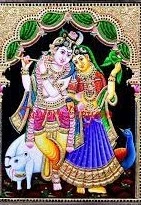
Tanjore paintings, originating from the culturally rich soil of Tamil Nadu, India, stand as a testament to the intricate craftsmanship and spiritual essence embedded in traditional art. In this exploration, we delve into the opulent tapestry of Tanjore paintings, tracing their historical roots, unravelling the artistic techniques, and appreciating their contemporary resonance.
The Historical Threads:
Dating back to the 16th century, Tanjore art finds its origins in the town of Thanjavur. Rooted in the cultural and religious ethos of South India, these paintings initially adorned the walls of temples, narrating tales from Hindu epics and showcasing divine deities.
Craftsmanship Unveiled:
At the heart of Tanjore art lies a meticulous craftsmanship process. Artists employ a unique technique called "gesso work," creating a raised surface using a mixture of chalk powder or zinc oxide. This provides the canvas with a textured foundation, a crucial element in the intricate detailing that follows.
Colours that Speak:
Vibrant and symbolic, the colours used in Tanjore paintings carry profound meanings. The artists utilise a palette that not only captures the eye but also conveys emotions and spiritual nuances. Each hue plays a role in creating a visual symphony that resonates with the divine themes depicted.
The Lustrous Gold Leaf:
A hallmark of Tanjore art is the generous use of gold leaf. This precious element elevates the paintings, symbolising divinity and prosperity. The application of gold leaf isn't merely ornamental but a spiritual representation, invoking a celestial aura around the subjects.
Themes Woven in Tradition:
Tanjore paintings traditionally depicted scenes from Hindu epics like the Ramayana and Mahabharata, portraying gods, goddesses, and legendary figures. However, the art form has gracefully evolved, embracing contemporary themes while retaining its cultural essence. Artists now explore botanical motifs, abstract representations, and diverse subjects, adding new threads to the traditional weave.
Global Resonance:
Beyond the boundaries of South India, Tanjore paintings in Chennai have garnered international acclaim. Collectors and art enthusiasts worldwide appreciate the unique blend of tradition, craftsmanship, and spirituality that these artworks embody.
Preservation and Legacy:
Preserving Tanjore paintings requires a delicate balance of environmental conditions to ensure the longevity of the materials, especially the gold leaf. Many of these artworks, often treated as family heirlooms, pass down through generations, contributing to the legacy of this timeless art form.
Conclusion:
As we navigate through the rich weave of Tanjore paintings, we find a harmonious blend of tradition and innovation. From the historical tapestry of South India to the global appreciation they receive today, these artworks continue to enchant, providing a glimpse into the cultural, spiritual, and artistic tapestry of the land where they originated.








Sign in to leave a comment.