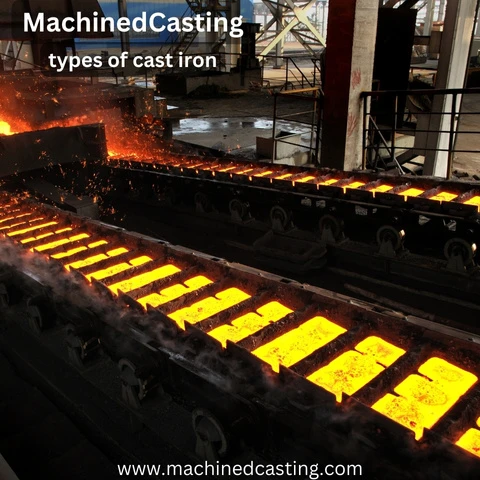

Cast iron, with its rich history and versatility, has been a staple in manufacturing, construction, and cooking for centuries. From classic cookware to intricate industrial components, types of cast iron, each with its unique properties and applications. In this guide, we delve into the diverse world of cast iron, exploring its types, characteristics, and uses.
Gray Cast Iron: Gray cast iron is one of the most common types of cast iron, prized for its excellent machinability and damping capacity. Its graphite flakes within the metal matrix give it its characteristic gray appearance. This type of cast iron finds extensive use in automotive components, pipes, and machine bases due to its ability to absorb vibration and reduce noise.
White Cast Iron: White cast iron, unlike its gray counterpart, contains carbon predominantly in the form of cementite. This results in a harder, more brittle material with minimal ductility. While less common in industrial applications, white cast iron is crucial in wear-resistant applications such as mill liners, grinding balls, and abrasive components.
Ductile Cast Iron: Also known as nodular or spheroidal graphite iron, ductile cast iron boasts enhanced mechanical properties compared to gray cast iron. Its spherical graphite nodules impart greater ductility and toughness, making it ideal for applications requiring strength and impact resistance. Ductile cast iron finds use in automotive parts, gears, crankshafts, and hydraulic components.
Malleable Cast Iron: Malleable cast iron undergoes a unique heat treatment process, known as annealing, which transforms its brittle structure into one with improved ductility and machinability. This type of cast iron combines the benefits of both gray and ductile varieties, making it suitable for applications requiring both strength and formability, such as pipe fittings, valve bodies, and decorative elements.
Compacted Graphite Iron: A relatively recent addition to the family of cast irons, compacted graphite iron exhibits a microstructure intermediate between gray and ductile cast iron. Its graphite particles are shorter and thicker than those in gray iron but not as spherical as those in ductile iron. This unique microstructure provides a balance of properties, including high strength, thermal conductivity, and excellent machinability. Compact graphite iron finds application in cylinder blocks, brake rotors, and heavy-duty machinery components.
Applications and Considerations: The choice of cast iron type depends on various factors, including mechanical requirements, casting complexity, and cost considerations. Engineers and manufacturers must carefully evaluate these factors to select the most suitable type for their specific application.
Furthermore, proper heat treatment and alloying elements play significant roles in determining the final properties of cast iron components. Understanding these factors is crucial for achieving the desired performance and longevity of cast iron parts.
Conclusion: Cast iron, with its array of types of cast iron and properties, continues to be a cornerstone material in diverse industries worldwide. From the classic charm of gray iron cookware to the high-performance demands of automotive and industrial applications, cast iron remains an indispensable material cherished for its durability, versatility, and time-tested reliability. By understanding the nuances of each cast iron type and its applications, engineers and manufacturers can harness the full potential of this enduring material.



























Sign in to leave a comment.