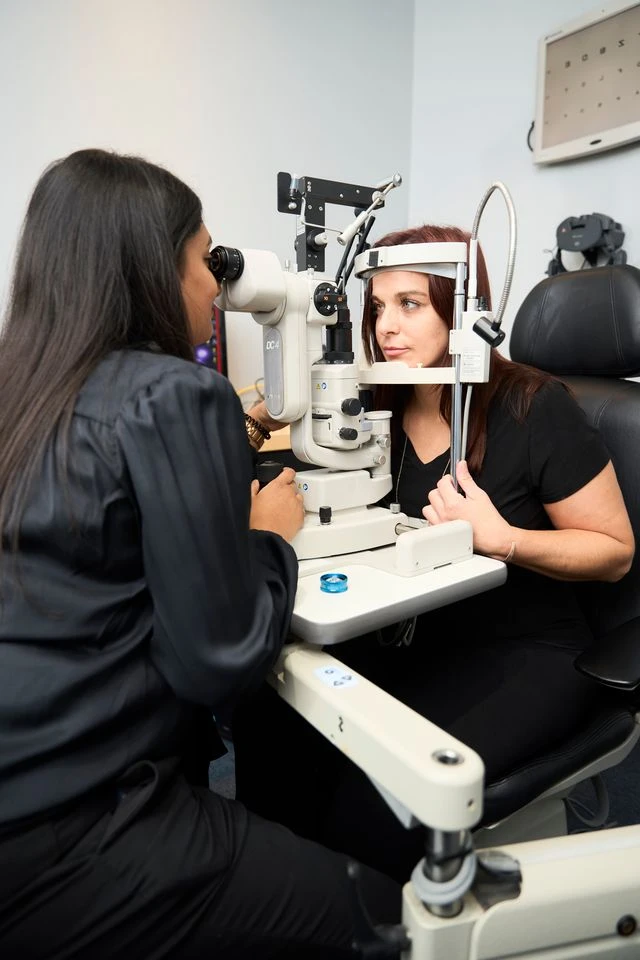

Are you wondering what happens during an eye exam?
Regular eye exams are crucial for maintaining good vision and detecting potential eye problems early on. A comprehensive eye check-up is a thorough evaluation of your vision and overall eye health.
Today, we\'ll dive into the details of what to expect, how to prepare, and how to understand the entire eye exam process. Get ready to have all your questions answered as we guide you through this essential routine in an easy-to-understand way.
Keep reading below for an engaging breakdown of this important appointment that should be a part of your regular healthcare routine.
Part I: Before The Exam
#1 Preparing for your eye exam
Before your eye exam, your doctor will want to know about any existing health conditions and medications you\'re taking. This is because certain medical issues and drugs can potentially impact your eyes and vision.
Being upfront about your medical history ensures your eye doctor has a complete picture for accurate diagnosis and treatment. If you wear contact lenses, you\'ll likely need to remove them prior to the appointment, as they can interfere with some of the tests.
It\'s also best to avoid wearing eye makeup like mascara and heavy face makeup on the day of your exam, as these can obstruct your doctor\'s view and affect the results of certain evaluations.
#2 Frequency of eye exams based on age and risk factors
How often you should get an eye exam depends on your age and whether you have any risk factors for eye diseases.
For most healthy adults, an eye exam every two years is recommended. Children should have their first comprehensive exam around 6 months old, then again at age 3 and before starting school.
Seniors over 60 may need annual exams to monitor for age-related conditions like cataracts and macular degeneration.
Those with medical issues like diabetes, high blood pressure, or a family history of eye problems may require more frequent check-ups to catch any vision changes early.
#3 Choosing an eye care professional
When choosing an optometrist, it\'s important to consider their qualifications, experience, and location. Reading patient reviews can also help you gauge their expertise and the quality of care they provide.
Take these factors into account to find the right eye care professional for your needs.
Part II: During The Exam
#1 Vision Testing
During your eye exam, your vision will be thoroughly evaluated through a series of tests. The visual acuity test is a familiar one, where you\'ll be asked to read from an eye chart to measure how clearly you can see at various distances.
This helps determine if you have any refractive errors like nearsightedness or farsightedness.
The refraction test takes this a step further by using a phoropter instrument to precisely determine the lens prescription needed to correct your vision. Your eye doctor will have you look through different lenses and provide feedback until the perfect prescription is found.
They may also assess your color vision by having you identify patterns or numbers made up of various colored dots to check for any color blindness.
#2 Eye Focusing and Movement
In addition to testing your vision clarity, your eye doctor will evaluate how well your eyes focus and move together as a team.
The cover test involves covering one eye at a time while you focus on a target, allowing the doctor to check for proper eye alignment and detect issues like strabismus (crossed eyes).
#3 Eye Health Evaluation
Beyond vision testing, a comprehensive portion of your eye exam will be dedicated to evaluating the overall health and function of your eyes.
The pupil reaction test checks if your pupils are dilating and constricting properly in response to light. Using a slit-lamp microscope, your doctor can magnify and illuminate the front parts of your eye (cornea, iris, lens) to inspect for any abnormalities.
Tonometry is a crucial test that measures your inner eye pressure, which helps detect glaucoma.
Finally, after dilating your pupils with eye drops, your doctor can thoroughly examine the back of your eye (retina, optic nerve) through a dilated eye exam to look for signs of conditions like macular degeneration or diabetes-related damage.
Your eye movements will also be carefully observed as you follow a moving object or light, checking for smooth tracking and good coordination between the eyes.
Remember that these assessments are important for diagnosing conditions that affect focusing ability and eye-teaming skills needed for activities like reading.
Part III: After The Exam
#1 Understanding the results and diagnosis
After your exam, your doctor will clearly explain any vision issues or eye conditions detected. They\'ll ensure you understand the diagnosis and what it means for your eye health and vision.
#2 Discussing treatment options (if needed)
Depending on the findings, treatment options may include corrective lenses like glasses or contacts, medication or eye drops, or surgical procedures for conditions like cataracts or glaucoma. Your doctor will recommend the best approach.
#3 Follow-up appointments and recommendations
Regular follow-up exams will likely be recommended to monitor your vision and eye health. Your doctor will advise how often based on your age, conditions, and risk factors. They may also provide lifestyle recommendations to support your eye care.
Conclusion
Overall, regular eye exams are crucial for maintaining good vision and overall eye health.
If you haven\'t had a comprehensive eye exam recently, now is the time to schedule one.
Take charge of your eye health and make it a priority. Schedule an appointment today at Texas State Optical (TSO) Champions!
TSO Champions is located at 5774 Cypress Creek Pkwy, Houston, TX.
Let\'s keep our eyes healthy and see the world clearly!




























Sign in to leave a comment.