

F&O expiry days are known for sharp price swings and unpredictable momentum. These days can be highly rewarding but also risky, especially for traders without a clear plan. In this article, you’ll learn how to approach expiry day volatility with logic, discipline, and strategic insight to help you trade smartly.
Why F&O Expiry Day is So Volatile
On the last Thursday of each month, futures and options contracts come to an end. This expiry leads to traders unwinding their positions and institutions rolling over contracts to the next month. The result is sudden buying or selling pressure, which fuels wild intraday swings.
Key factors that contribute to volatility include:
- Position Adjustments: Traders close or adjust positions in both futures and options.
- High Volumes: Increased participation creates wide intraday ranges.
- Option Greeks at Play: Rapid changes in delta and gamma impact pricing sharply.
This unique mix makes expiry day very different from regular trading sessions.
Smart Expiry Day Trading Strategies
1. Read the Option Chain Data Carefully
One of the best ways to understand expiry behaviour is by examining option chain data. Look at the strikes with the highest open interest — they often act as intraday support or resistance zones. For instance, if there isa large open interest buildup at a particular call strike, it may limit the upside on that day.
Traders use the Nifty option chain to identify these clues and plan their trades accordingly.
2. Avoid the First Market Move
The opening 15-20 minutes of expiry day often show fake breakouts or traps. Allow the market to settle and reveal a clear direction before placing any trades. Use this time to analyse price patterns, volume behaviour, and potential range for the day.
3. Use Defined Risk Strategies
While option selling might seem attractive due to rapid time decay, it comes with significant risk. Always use spreads or hedge your positions to reduce potential loss. Protecting your capital should be the priority.
Global Sentiment and Market Cues
Global sentiment has a strong impact on how Indian markets behave on expiry days. Monitoring global futures like Gift Nifty helps traders anticipate early trends, especially if U.S. markets make sharp moves overnight. Watching Gift Nifty live today can give early clues about gap-ups or gap-downs in the Indian indices.
Key Mistakes to Avoid During Expiry
- Overtrading: Many traders fall into the trap of taking too many trades. Focus on quality setups only.
- Ignoring Open Interest Trends: Skipping data analysis may lead to wrong entries.
- Lack of Exit Plan: Traders often freeze during fast moves. Always define stop-loss and target levels beforehand.
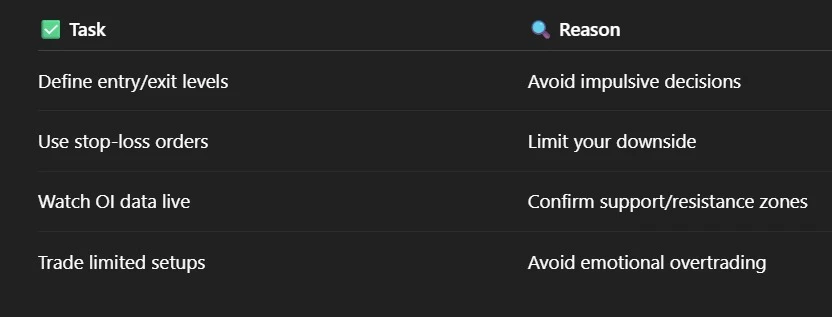
Expiry Day Risk Management Checklist
Final Thoughts
Trading on the F&O expiry day requires more than just chart reading. It demands a data-backed approach, proper timing, and a controlled mindset. By using tools like the NSE option chain and keeping an eye on global indicators, you can manage the volatility smartly and avoid common traps.
Looking for more trading insights and real-time updates? Stay connected with Nifty Trader for data-driven analysis and expiry-specific tools to support your decision-making on volatile days.
FAQs
Q1: Why is expiry day more volatile than usual?
Because traders unwind or shift their positions, leading to sudden buying and selling pressure.
Q2: What time of day is safest to trade on expiry?
Midday sessions are often more stable. Avoid opening and closing hours for directional trades.
Q3: Should beginners trade on expiry day?
Not without preparation. It’s better to observe a few expiries before actively trading them.
Q4: Is option selling better than buying on expiry?
Selling works due to time decay but carries a higher risk. Use spreads or hedges to limit exposure.































Sign in to leave a comment.