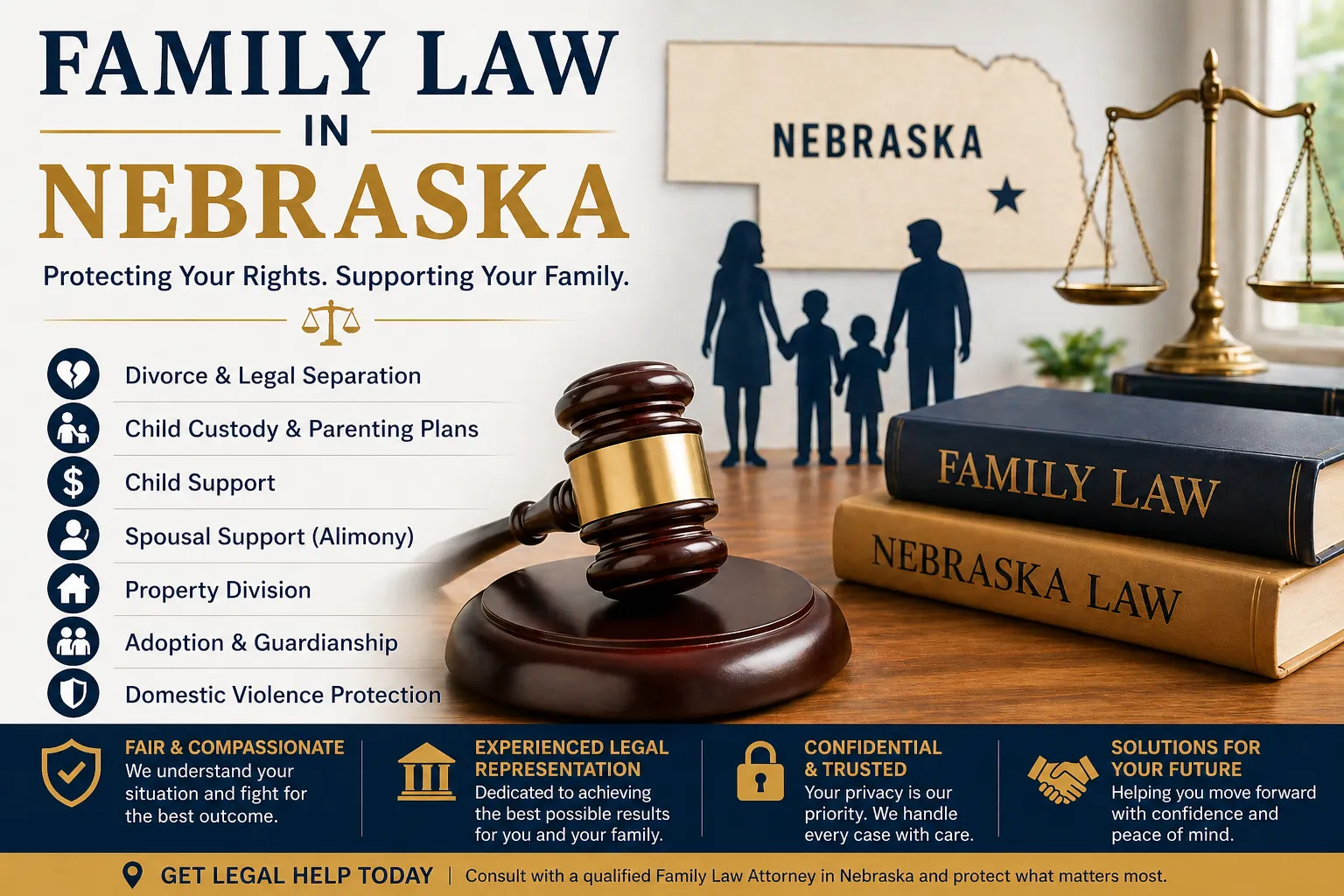

Family-related legal issues can be emotionally challenging and legally complex. Whether you are dealing with divorce, custody disputes, or financial arrangements, understanding Family Law in Nebraska is essential. These laws are designed to ensure fairness, protect individual rights, and prioritize the well-being of children involved in family disputes.
In this guide, we’ll explore the most important aspects of Family Law in Nebraska and how they impact individuals and families.
Understanding the Scope of Family Law in Nebraska
Family Law in Nebraska governs legal matters that involve family relationships. These include marriage, divorce, child custody, child support, adoption, guardianship, and protection from domestic violence.
The Nebraska court system aims to resolve disputes in a fair and balanced manner. Judges consider multiple factors to ensure that outcomes are just and in the best interests of all parties involved.
Legal Separation vs. Divorce
Many people confuse legal separation with divorce, but they are different under Family Law in Nebraska.
- Legal Separation: Couples remain legally married but live separately.
- Divorce: The marriage is legally dissolved.
Legal separation may be preferred for religious, financial, or personal reasons. However, both processes involve decisions regarding property division, custody, and support.
Child Custody Laws in Nebraska
Child custody is one of the most sensitive areas of Family Law in Nebraska. Courts focus on what is best for the child rather than the preferences of the parents.
Factors Considered by Courts:
- The child’s relationship with each parent
- Stability of the home environment
- Mental and physical health of both parents
- The child’s needs and overall well-being
Nebraska often encourages joint custody arrangements where both parents share responsibilities, provided it benefits the child.
Parenting Plans and Visitation Rights
A parenting plan is a critical component of Family Law in Nebraska. It outlines how parents will share responsibilities and time with their child after separation or divorce.
A well-structured parenting plan includes:
- Visitation schedules
- Decision-making responsibilities
- Holiday and vacation arrangements
Courts may require mediation to help parents create a mutually acceptable plan.
Financial Responsibilities: Child and Spousal Support
Financial stability is a key focus of Family Law in Nebraska. Courts ensure that children and dependent spouses are financially supported.
Child Support:
Child support is calculated based on both parents’ income, custody arrangements, and the child’s needs. It is mandatory and enforceable by law.
Spousal Support:
Spousal support may be granted depending on factors such as:
- Length of the marriage
- Financial dependency
- Earning capacity of each spouse
The goal is to ensure fairness and financial balance after separation.
Property Division and Asset Protection
Under Family Law in Nebraska, property division follows the principle of equitable distribution. This means assets are divided fairly, though not necessarily equally.
Key Considerations:
- Contributions of each spouse
- Duration of the marriage
- Financial circumstances of both parties
Marital property includes assets acquired during the marriage, while personal property remains with the original owner unless otherwise decided.
Domestic Violence and Legal Protection
Family Law in Nebraska also provides protection for individuals facing domestic violence. Victims can seek protection orders to ensure their safety and prevent further harm.
These legal protections may include:
- Restraining orders
- Temporary custody arrangements
- Exclusive use of the home
The law prioritizes safety and provides immediate legal remedies in such situations.
Adoption and Guardianship Laws
Adoption is another important area covered under Family Law in Nebraska. It allows individuals or couples to legally become parents to a child.
The process involves:
- Background checks
- Legal documentation
- Court approval
Guardianship, on the other hand, gives a person legal responsibility for a minor or dependent individual when parents are unable to do so.
Why Legal Guidance is Important
Navigating Family Law in Nebraska without professional help can be overwhelming. Each case is unique, and legal procedures can be complicated.
Benefits of Hiring a Family Law Attorney:
- Clear understanding of legal rights
- Proper handling of documentation
- Strong representation in court
- Better negotiation outcomes
An experienced attorney can help reduce stress and ensure that your case is handled effectively.
Conclusion
Family Law in Nebraska plays a vital role in resolving family disputes and protecting individual rights. From divorce and custody to financial support and adoption, these laws provide a structured framework for handling sensitive matters.
Understanding your rights and seeking professional legal assistance can make a significant difference in the outcome of your case. Whether you are planning ahead or dealing with a current issue, having knowledge of Family Law in Nebraska empowers you to make informed and confident decisions.

































Sign in to leave a comment.