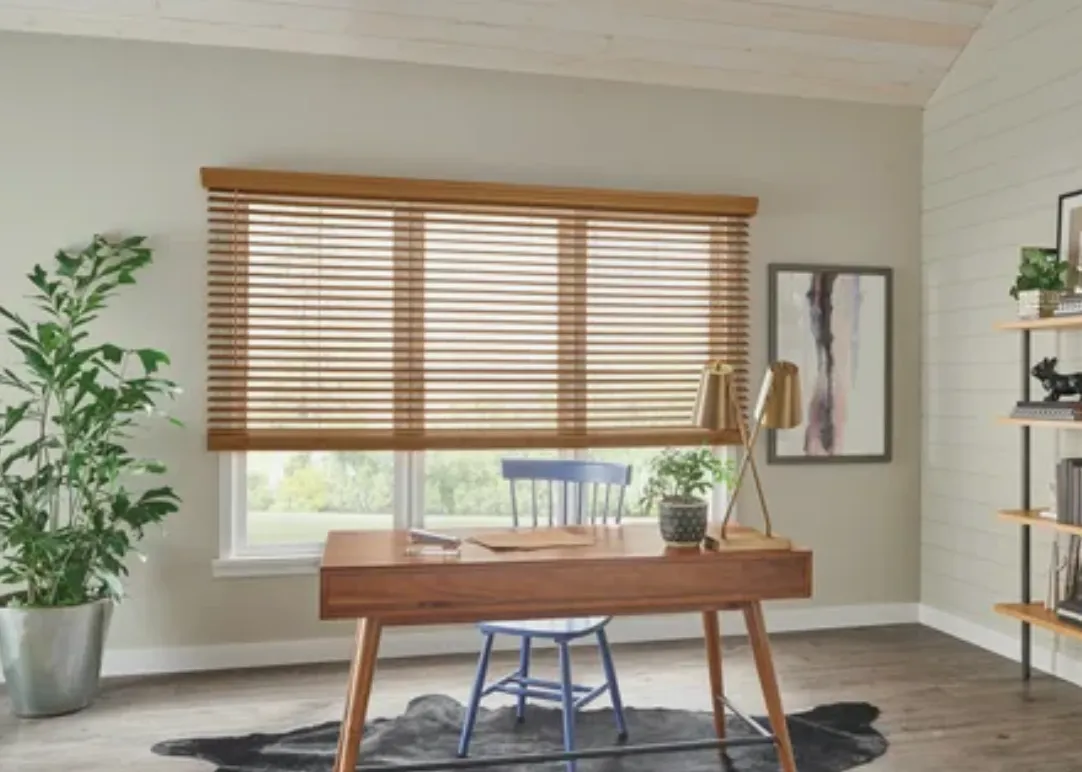

When you start shopping for new blinds, one of the first decisions you run into is faux wood versus real wood. They look similar on a showroom display, the names sound almost interchangeable, and both show up in homes everywhere. But they're not the same product, and the differences matter once the blinds are actually hanging in your windows.
Picking between them comes down to a handful of practical factors. Cost, durability, looks, and where in the house the blinds are going. Once you see how each one performs on those points, the choice for your home usually becomes pretty clear.
What Each One Is Made Of
The names give away the basic difference, but it's worth being specific.
Real wood blinds are made from natural wood, usually basswood, which is light and stable. The slats are cut, sanded, and finished with stain or paint. They have genuine wood grain and the natural character that comes with it.
Faux wood blinds are made from composite materials, PVC, or a combination of the two. The slats are molded to look like wood, with grain patterns and finishes that copy natural stains and painted wood. From a few feet away, most people can't tell them apart from the real thing.
The difference in material is what drives every other difference between them.
The Cost Difference
Cost is usually the first thing people compare, and it's a real gap.
Faux wood blinds typically run 30 to 50 percent less than real wood blinds of similar quality. For a single window the difference might not feel huge, but across a whole house it adds up to a significant amount of money.
Why Real Wood Costs More
Real wood is a natural material with more involved sourcing and manufacturing. The wood has to be selected, milled, and finished carefully. That process costs more, and the price reflects it. You're paying for a genuine natural product.
Where Faux Wood Saves
Faux wood is manufactured from engineered materials at a lower cost. You get the look of wood for a smaller price tag, which is why it's the budget-friendly choice for most homeowners covering multiple windows.
How They Handle Moisture and Heat
This is where the two really separate, and it's the deciding factor for a lot of rooms.
Real Wood & Humidity
Real wood reacts to its environment. In humid conditions it can absorb moisture, swell, and warp over time. Heat and direct sun can also affect the finish. In dry rooms this is not a problem, but in kitchens, bathrooms, and humid climates, real wood can struggle.
Faux Wood Shrugs It Off
Faux wood ignores moisture and heat. It won't warp, crack, or peel in a steamy bathroom or a hot, sunny window. That stability is the main reason faux wood has become so popular. You can put it anywhere in the house without worrying about the conditions. In a humid climate, that single advantage often decides the whole question, because real wood is fighting the environment every day while faux wood simply isn't.
The Look & Feel
Both look good, but there are differences worth knowing.
Real Wood's Natural Character
Real wood has genuine grain and a warmth that's hard to copy exactly. Up close, in a well-lit room, real wood has a depth and character that some homeowners really want, especially in formal spaces like studies, dining rooms, and traditional living rooms.
Faux Wood's Convincing Copy
Faux wood has come a long way. The grain is printed or embossed into the slat, and the finishes are realistic. From across a room, it looks like wood. Up close, a discerning eye might tell the difference, but for most homes and most rooms, faux wood looks more than good enough.
Weight
Real wood is lighter than faux wood. On very large windows, faux wood's extra weight can make the blinds a little harder to raise and lower, and very wide blinds may need extra support. For standard windows, the weight difference is not an issue.
Durability Over Time
Both can last a long time, but they age differently.
Real wood, kept in the right conditions, holds up well for years and has a finish that can sometimes be touched up. In the wrong conditions, it ages faster.
Faux wood is tougher against bumps, knocks, and rough handling. It doesn't mind moisture or sun. In high-traffic homes, kids' rooms, and humid spaces, faux wood tends to keep looking good longer because nothing in the environment is working against it. That said, real wood that lives in the right conditions can look beautiful for a very long time, so durability is less about which material is stronger and more about matching the material to the room it's going in.
Which One for Which Room
The smartest approach is to think room by room rather than picking one for the whole house.
Best Rooms for Real Wood
Living rooms, bedrooms, dining rooms, studies, and home offices. These are dry rooms where real wood's natural character can shine without moisture working against it.
Best Rooms for Faux Wood
Kitchens, bathrooms, laundry rooms, sunrooms, and any room in a humid climate. Faux wood handles the moisture and heat that would damage real wood. It's also a smart pick for kids' rooms and busy households because of its durability.
A Mixed Approach
A lot of homeowners use both. Real wood in the formal, dry rooms where its look matters most, and faux wood in the wet rooms and high-use spaces. Choosing finishes that coordinate keeps the house feeling consistent even with two materials in play.
Maintenance
Faux wood is the easier of the two to maintain. A dusting keeps it looking good, and a damp cloth handles a deeper clean. Nothing about moisture worries it.
Real wood needs a bit more care. Dusting is fine, but you have to be careful with water because moisture can damage the finish over time. It's not difficult, just something to keep in mind.
Making the Call for Your Home
There's no single winner here. Real wood is the choice when you want genuine natural character and the rooms are dry. Faux wood is the choice when you want durability, moisture resistance, and a lower price, which covers most rooms in most homes. For a lot of households, faux wood ends up being the practical default, with real wood reserved for the rooms where its look earns the extra cost.
The best way to decide is to see the products in person and talk through your specific rooms with someone who knows the difference. If you're in the Greater Houston area and want a clear, no-pressure comparison for your own windows, reach out to Kim Van Wieren at Gulf Coast Blind & Shutter. After nearly three decades of measuring and installing both materials across the region, he can walk you through which one fits each room in your house and why. Give the shop a call and set up a time to go over your options.
The Bottom Line
Faux wood and real wood blinds both have a place. The decision comes down to your budget, your rooms, and how much the genuine wood look matters to you. Real wood brings natural character to dry, formal spaces. Faux wood brings durability and moisture resistance at a lower price, which makes it the versatile pick for most of the house. Think room by room, see the products for yourself, and you'll land on the right mix for your home.



























Sign in to leave a comment.