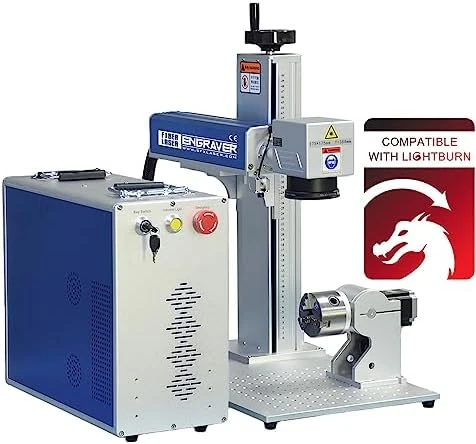

In today's industrial landscape, efficiency and precision are paramount. One technology that stands at the forefront of marking and engraving solutions is the fiber laser marking machine. This advanced tool utilizes fiber laser technology to achieve high-contrast marking on a variety of materials with unparalleled accuracy and speed.
Understanding Fiber Laser Marking Machines
1. How Fiber Laser Marking Machines Work: Fiber laser marking machines operate by using a laser beam to create permanent marks on surfaces. Unlike traditional methods, fiber lasers produce markings by directly altering the material's surface properties through rapid heating and cooling cycles, ensuring durability and clarity of the mark.
2. Applications Across Industries:
Automotive: Used for part traceability, component labeling, and aesthetic engraving on automotive parts.Medical: Vital for marking surgical instruments, medical devices, and implants with serial numbers, barcodes, and logos.Electronics: Essential in PCB marking, semiconductor labeling, and consumer electronics engraving.Aerospace: Ensures part identification, compliance marking, and serial numbering on aerospace components.Tooling and Manufacturing: Ideal for tool marking, product branding, and mold identification in manufacturing processes.Key Features and Benefits
1. Speed and Efficiency: Fiber lasers operate at high speeds, significantly reducing marking time per unit compared to traditional methods. This efficiency translates into increased productivity and reduced operational costs.
2. Precision and Versatility: These machines offer unparalleled precision, capable of producing intricate designs, small fonts, and complex patterns with micron-level accuracy. They can mark on various materials including metals (steel, aluminum, titanium), plastics, ceramics, and certain composites.
3. Low Maintenance and Operational Costs: With a solid-state design and no consumables other than electricity and cooling, fiber laser marking machines have low maintenance requirements, making them cost-effective over their lifespan.
Choosing the Right Fiber Laser Marking Machine
1. Consider Material Compatibility: Ensure the machine supports the materials you work with, considering their composition, surface finish, and desired marking depth.
2. Marking Speed and Throughput: Evaluate the machine’s marking speed in relation to your production requirements to maintain optimal throughput.
3. Software and Interface: User-friendly software with robust design capabilities and easy integration into existing workflows is crucial for seamless operation.
4. Support and Training: Opt for suppliers that offer comprehensive training and reliable technical support to maximize uptime and operational efficiency.
Future Trends and Innovations
1. Integration with IoT and Industry 4.0: As manufacturing embraces digital transformation, fiber laser marking machines are increasingly integrated with IoT platforms for real-time monitoring, predictive maintenance, and data-driven insights.
2. Advances in Marking Techniques: Continuous advancements in laser technology are expanding the capabilities of fiber lasers, including color marking, deeper engraving capabilities, and enhanced readability of marks.
Conclusion
The fiber laser marking machine represents a pivotal technology in modern manufacturing and industrial processes. Its ability to deliver precise, durable markings on a wide range of materials makes it indispensable across various sectors. As technology continues to evolve, these machines will play a vital role in meeting the demands of efficiency, sustainability, and quality in production environments worldwide. Whether you are in automotive, medical, electronics, aerospace, or general manufacturing, investing in a fiber laser marking machine can elevate your marking capabilities to new heights of excellence and reliability.
























Sign in to leave a comment.