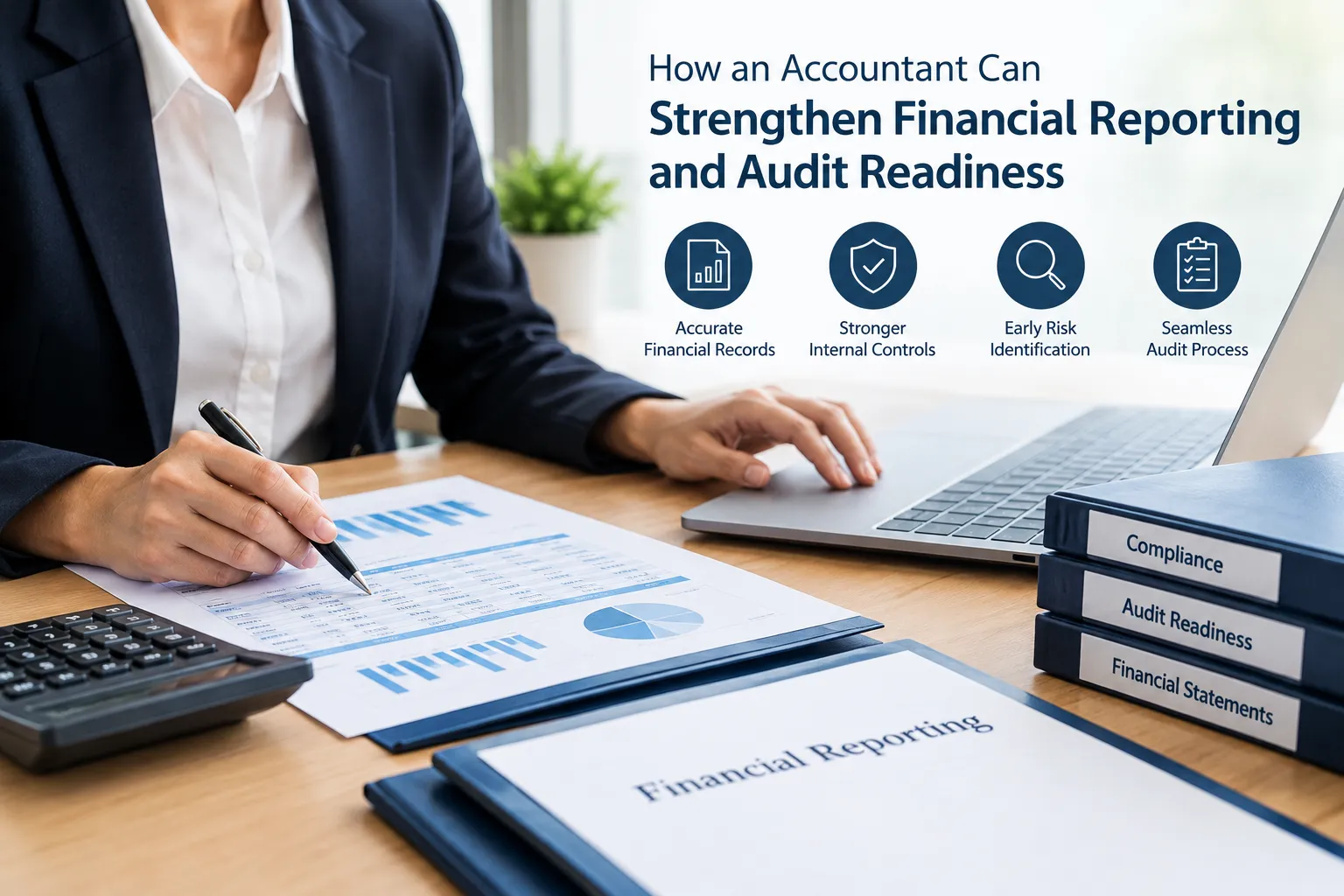

For many businesses, accounting is viewed as a back-office function focused on recording transactions, preparing tax returns, and balancing the books. But as a company grows, the role of an accountant becomes much more strategic.
Reliable financial information affects nearly every important business decision. Owners use financial statements to understand performance, lenders use them to evaluate financing requests, investors rely on them when assessing opportunities, and boards may use them to oversee financial health. When the underlying information is incomplete, inconsistent, or difficult to verify, those decisions become more challenging.
This is where professional financial reporting and audit solutions can make a meaningful difference. The right accounting support can help organisations improve the quality of their financial information, prepare for external scrutiny, and establish processes that support better decision-making.
For businesses considering an audit, review, or compilation, understanding what an accountant contributes—and when additional assurance may be necessary—is an important first step.
Why Accurate Financial Reporting Matters
Financial statements are more than documents prepared at year-end. They provide a structured view of an organisation's financial position, performance, and cash flows.
According to the AICPA, financial statements are fundamental to evaluating a business's performance and financial strength. The level of CPA involvement can vary depending on whether an organisation needs a compilation, review, or audit.
Accurate reporting can help management:
- Monitor revenue and expenses
- Identify unusual financial trends
- Understand cash-flow requirements
- Evaluate profitability
- Prepare for financing discussions
- Support strategic planning
- Communicate financial information to stakeholders
- Meet requirements established by lenders, investors, or other parties
The value goes beyond simply having numbers that "look right". Financial information should be organised, consistent, supported by appropriate records, and prepared according to the applicable financial reporting framework.
What Does an Accountant Actually Do?
An accountant can support a business at several stages of the financial reporting process.
Organising Financial Information
Before financial statements can be useful, the underlying accounting records need to be properly maintained. An accountant may help classify transactions, reconcile accounts, review supporting documentation, and identify discrepancies.
This foundation is particularly important when a company is preparing for an external financial statement engagement.
Preparing Financial Statements
Accountants can prepare financial statements that present financial information in a structured and understandable format. Depending on the engagement, this may include balance sheets, income statements, statements of cash flows, and related disclosures.
The objective is not simply presentation. Well-prepared statements give decision-makers a clearer view of the organisation's financial position.
Identifying Potential Issues
Regular accounting review can also help identify inconsistencies before they become larger problems.
For example, unexplained changes in gross margins, unusual account balances, unreconciled transactions, or inconsistencies between subledgers and the general ledger may warrant additional investigation.
Finding these issues early can make the year-end reporting process more efficient and reduce surprises during an external engagement.
Understanding Audit, Review, and Compilation Services
One of the most common areas of confusion for business owners is the difference between an audit, review, and compilation.
These services are not interchangeable. They involve different procedures and provide different levels of assurance.
Compilation
A compilation generally involves presenting financial information provided by management in financial statement form. It does not provide assurance on the financial statements.
The AICPA notes that compilations may be appropriate when businesses need financial statements for certain financing or other purposes where assurance is not required.
Review
A review provides limited assurance. The CPA performs inquiry and analytical procedures to determine whether any material modifications appear necessary for the financial statements to conform with the applicable reporting framework.
A review may be useful for an organisation whose stakeholders need more confidence than a compilation provides but do not require a full audit.
Audit
An audit involves substantially more extensive procedures. The CPA obtains an understanding of the organisation and its internal controls, assesses risks of material misstatement, and performs verification and other substantive procedures.
An audit provides reasonable—but not absolute—assurance and results in an auditor's opinion regarding the financial statements.
The appropriate service depends on the organisation's circumstances and the requirements of the parties relying on the financial statements.
How Financial Reporting and Audit Solutions Support Business Growth
Strong financial reporting becomes increasingly important as an organisation becomes more complex.
A growing company may have multiple revenue streams, locations, financing arrangements, departments, or legal entities. Managing these moving parts requires consistent accounting processes and clear financial reporting.
Professional financial reporting and audit solutions can help businesses establish a more reliable financial information process.
1. Better Visibility Into Business Performance
Consistent financial reporting allows management to compare results across periods and identify meaningful trends.
Instead of relying on isolated bank balances or informal spreadsheets, leadership can use structured financial statements to understand revenue, expenses, assets, liabilities, and cash flows.
2. Greater Preparedness for Lenders and Investors
Financial statements may be requested when a company seeks financing, attracts investors, considers a transaction, or undergoes other significant financial events.
The AICPA explains that audits are often appropriate for more complex financing situations, including circumstances involving outside investors or the potential sale or merger of a business.
Having reliable records and an established reporting process can make these situations easier to navigate.
3. Stronger Internal Processes
An accountant can help management recognise weaknesses in accounting workflows before an audit or review begins.
For example, businesses may benefit from clearly documented procedures for:
- Bank reconciliations
- Accounts receivable
- Accounts payable
- Inventory
- Fixed assets
- Payroll
- Expense approvals
- Revenue recognition
- Financial statement preparation
These processes can improve consistency and make financial information easier to support.
How to Prepare for an Audit or Review
An external engagement does not have to become a last-minute scramble.
Businesses can take several practical steps throughout the year to improve readiness.
Keep Records Organised
Maintain invoices, contracts, bank statements, payroll records, loan documents, receipts, and other supporting documentation in an organised system.
Reconcile Accounts Regularly
Bank, credit card, loan, and other balance-sheet accounts should be reconciled consistently rather than waiting until year-end.
Review Significant Changes
Large or unexpected fluctuations in revenue, expenses, assets, liabilities, or margins should be investigated and documented.
Maintain Supporting Documentation
If a financial statement balance is significant, management should be able to explain what it represents and provide appropriate supporting records.
Communicate With the Accountant Early
If the business expects a major transaction, financing event, acquisition, ownership change, or other significant development, discussing it with the accounting team early can help identify potential reporting considerations.
Choosing the Right Accountant for Your Organisation
Not every accounting relationship is the same. Businesses should consider several factors when selecting an accountant or accounting firm.
Relevant Experience
Look for professionals who understand your industry, organisational structure, and financial reporting requirements.
Communication
Financial reporting can involve technical terminology and complex issues. A good accounting relationship should include clear explanations and timely communication.
Technology and Efficiency
Modern accounting technology can help streamline information collection, documentation, reconciliations, and reporting. MMB+CO, for example, states that it uses technology to streamline its audit services and reduce disruption for clients.
A Customised Approach
Businesses have different financial structures and stakeholder requirements. MMB+CO describes its audit approach as customised to the needs and circumstances of each client rather than using a one-size-fits-all process.
Common Mistakes Businesses Should Avoid
Even businesses with experienced internal teams can encounter reporting challenges.
Some common issues include:
Waiting until year-end to reconcile accounts.
This can make errors more difficult to trace and correct.
Treating all financial statement services as the same.
A compilation, review, and audit have different purposes and assurance levels.
Ignoring unusual transactions.
Large or unusual transactions may require additional accounting analysis or documentation.
Relying entirely on spreadsheets.
Spreadsheets can be useful, but businesses should have appropriate controls around financial data and reporting.
Failing to communicate major changes.
Acquisitions, new financing, ownership changes, or significant contracts may affect financial reporting and should be discussed with accounting professionals promptly.
Building a More Reliable Financial Future
Accounting should not begin and end with tax season. For organisations that want dependable financial information, the accounting function can become an important part of their broader business strategy.
A knowledgeable accountant can help establish accurate records, improve reporting processes, identify inconsistencies, and prepare an organisation for a compilation, review, or audit when required.
Professional financial reporting and audit solutions can provide additional structure when financial information needs to be presented to lenders, investors, boards, regulators, or other stakeholders. The right level of service depends on the organisation's objectives, reporting requirements, and the expectations of those relying on its financial statements.
For organisations seeking experienced support, MMB Accounting provides financial audit, review, and compilation services designed around individual client circumstances. Its approach emphasises timely, accurate, and useful financial information while using technology to help streamline the engagement process.























Sign in to leave a comment.