

Introduction
Ireland’s fine dining scene has evolved tremendously over the last two decades. Once known for hearty stews and rustic breads, the country is now home to dozens of Michelin-starred establishments, avant-garde tasting menus, and chefs who rival their European counterparts in skill and vision. Becoming a fine dining chef in Ireland is not just a job—it’s a vocation, a pursuit of perfection, and a celebration of Ireland’s culinary renaissance.
The Rise of Irish Fine Dining
Ireland’s first Michelin star was awarded in the 1970s, but it wasn’t until the 2000s that the fine dining scene began to flourish. Visionary chefs like Ross Lewis, Danni Barry, and JP McMahon brought international attention to Irish kitchens. Today, from Dublin’s Chapter One to Aniar in Galway, fine dining in Ireland is synonymous with innovation, integrity, and terroir.
What Sets a Fine Dining Chef Apart
A fine dining chef is a curator of experiences. Beyond technical skill, they possess creativity, attention to detail, and the ability to transform local ingredients into edible art. Precision in plating, knowledge of seasonal trends, and a keen palate are musts. Many have trained in Paris, London, or Copenhagen and bring that global sophistication back to Irish soil.
But perhaps the greatest asset of an Irish fine dining chef is their connection to the land. Seaweed from Connemara, lamb from Wicklow, sea urchins from Donegal—every plate tells a story of place.
Career Progression and Training
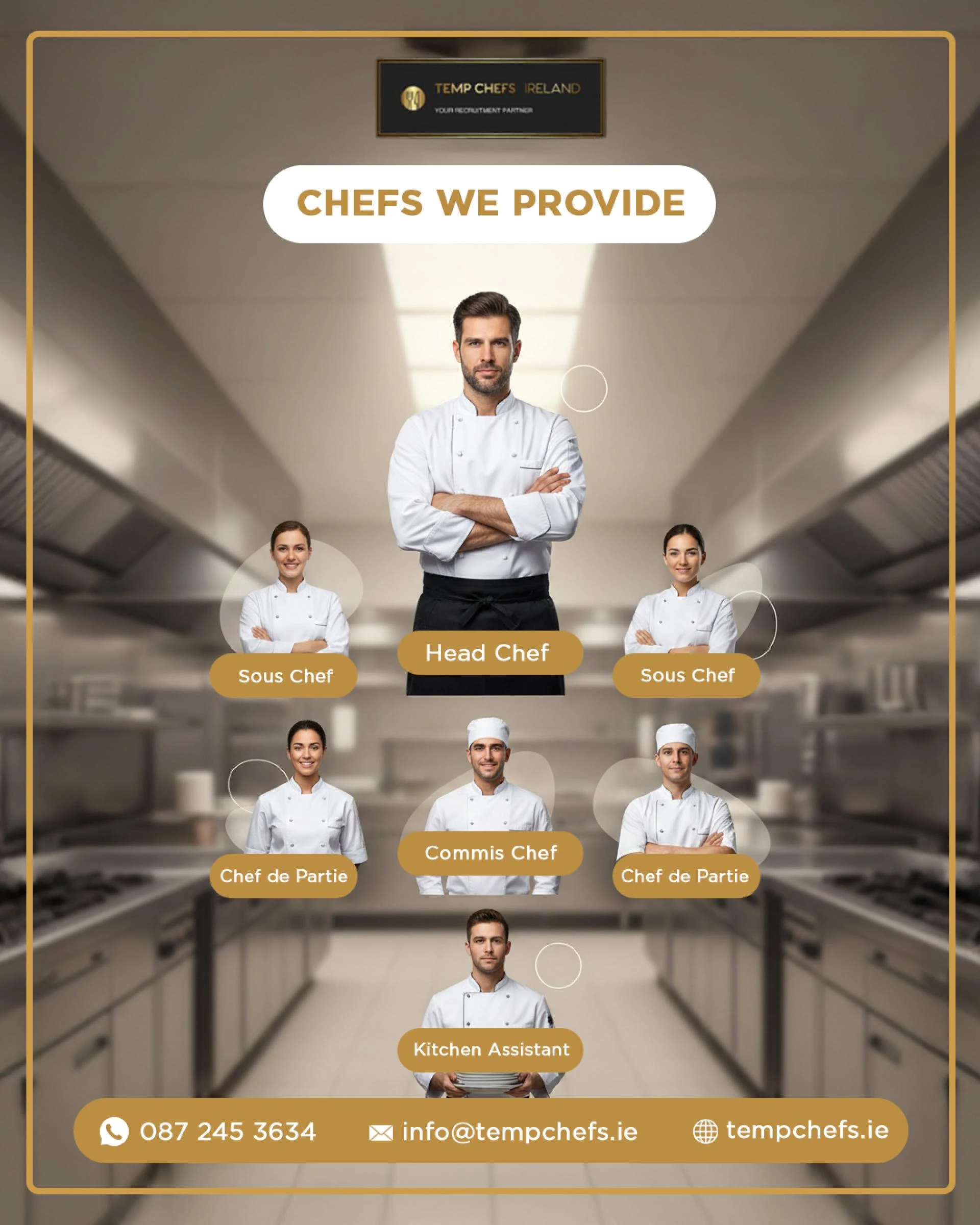
Fine dining chefs often begin their journey in culinary schools like Dublin Institute of Technology, followed by apprenticeships in top restaurants. The climb is steep—commis, demi chef, chef de partie, sous, then head chef—but for those with passion and perseverance, the rewards are worth it.
Continuous learning is a hallmark of the profession. Whether it’s staging at a 3-star kitchen in Spain or attending a fermentation workshop in Oslo, fine dining chefs never stop evolving.
Work Environment and Expectations
The environment in a fine dining kitchen is intense. Long hours, high expectations, and meticulous standards define daily life. But it’s also where bonds are formed, creativity flourishes, and excellence is the norm. The culture is increasingly supportive, with mental health, diversity, and mentorship becoming key priorities in modern kitchens.
Fine dining chefs in Ireland are also more visible today thanks to food festivals, cookbooks, media appearances, and events like Food on the Edge. Many also move into consultancy, restaurant ownership, or teaching, expanding their impact on the industry.
Conclusion
To be a fine dining chef in Ireland is to stand at the crossroads of heritage and modernity. It’s a demanding path, but one that offers immense fulfillment and recognition. As Irish cuisine continues to captivate global audiences, fine dining chefs remain its most passionate ambassadors—turning local into luxury and tradition into taste.























Sign in to leave a comment.