
The Finite Element Method (FEM) is a powerful numerical technique widely used in engineering and applied mathematics for solving complex problems involving structural analysis, heat transfer, fluid dynamics, and various physical phenomena. FEM divides complex systems or structures into smaller, finite elements to approximate and analyze their behavior under different conditions. This method allows engineers and scientists to model, simulate, and optimize designs, predicting how structures or systems will behave under various loads, temperatures, or environmental conditions.
Understanding Finite Element Method (FEM)
Concept and Methodology: FEM involves discretizing a complex system into finite elements, applying mathematical formulations and boundary conditions to solve partial differential equations governing the behavior of the system.
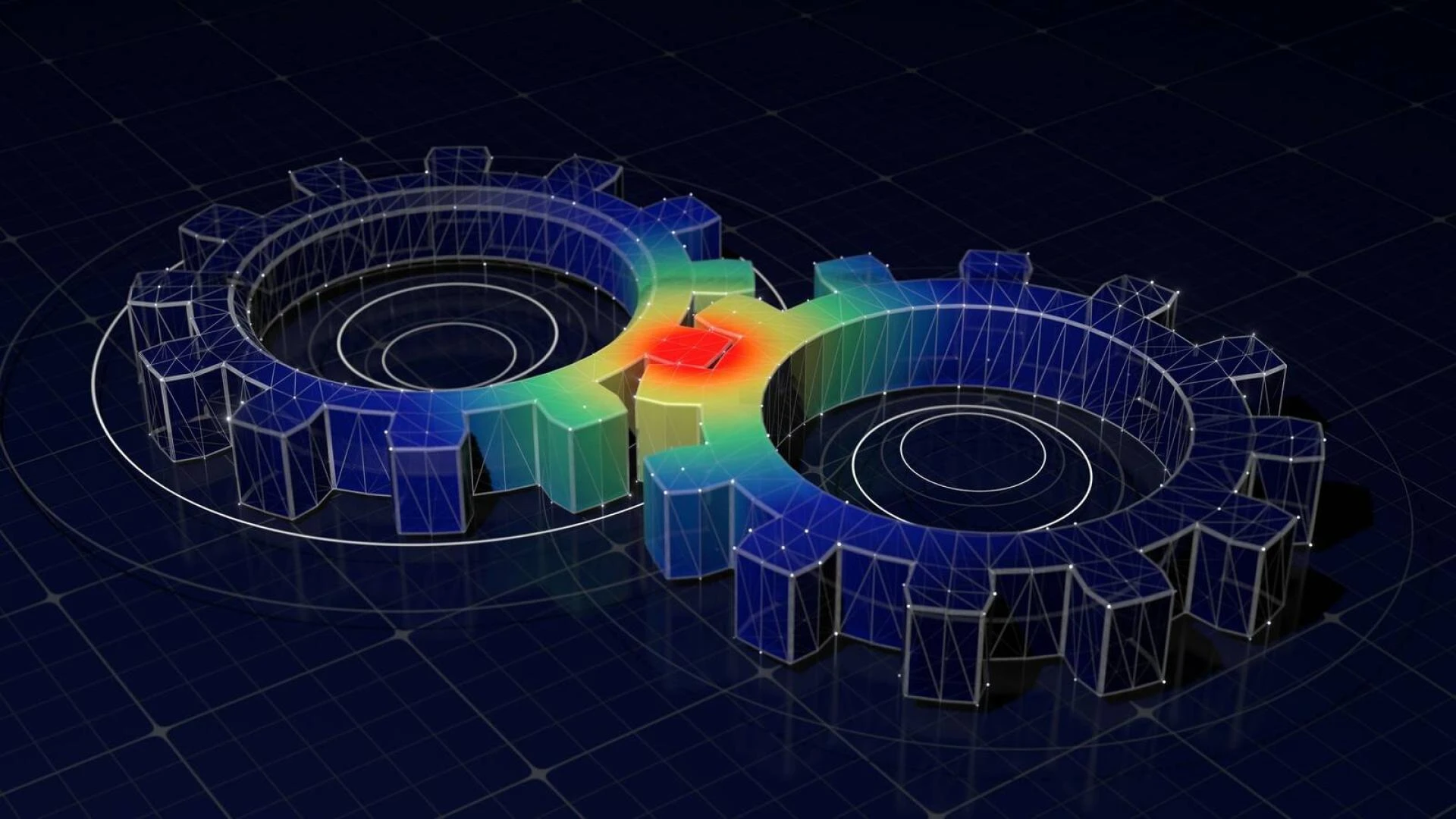
Structural Analysis: FEM is extensively used for structural analysis to determine stresses, strains, deformations, and failure points in mechanical components or systems.
Mathematical Foundations: The method relies on calculus, linear algebra, numerical analysis, and variational methods to solve complex equations representing physical behavior.
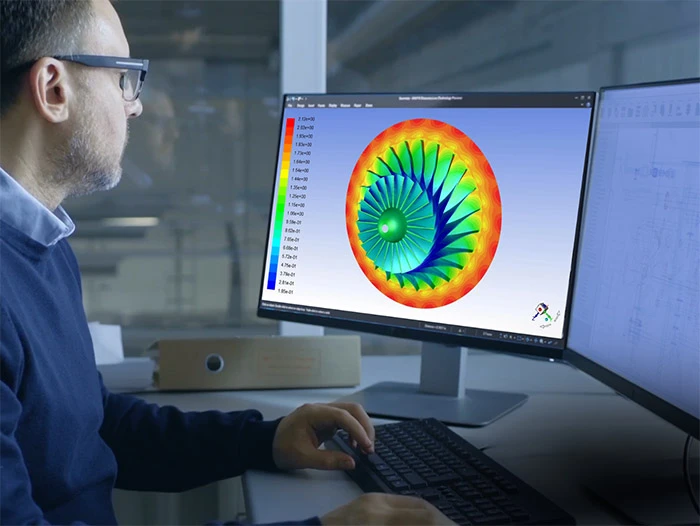
FEM Workflow: The process involves pre-processing (model creation), solving equations using FEM algorithms (solver), and post-processing (analysis and interpretation of results).
Elements of FEM
Discretization: Dividing the system into smaller elements (triangular, quadrilateral, tetrahedral, or hexahedral) to simplify complex geometry and behaviors.
Nodes and Elements: Nodes represent points where physical quantities (such as displacement, temperature) are determined, while elements connect nodes and define their relationships.
Shape Functions: Mathematical functions defined within elements to interpolate or approximate behavior, facilitating the formulation of element equations.
Assembly and Solution: Assembling element equations to form a global system, applying boundary conditions, and solving the resulting system of equations using numerical techniques.
Applications of FEM
Structural Mechanics: Analyzing stresses, strains, and deformations in structures subjected to loads, aiding in designing and optimizing components or entire structures.
Heat Transfer Analysis: Predicting temperature distributions and heat flow in systems to optimize thermal performance or design cooling systems.
Fluid Dynamics: Modeling fluid flow, pressure distribution, and turbulence in pipes, channels, or aerodynamic components to optimize designs for efficiency.
Electromagnetics: Analyzing electromagnetic fields, currents, and forces in electrical components or devices to optimize their performance.
FEM in Engineering Industries
Aerospace and Automotive: FEM is extensively used in designing aircraft components, automotive structures, and engine components to ensure structural integrity and performance.
Civil Engineering and Infrastructure: Analysis of bridges, dams, buildings, and other infrastructure to ensure stability, durability, and safety.
Manufacturing and Material Science: Optimizing manufacturing processes, material behavior, and product design to improve efficiency and durability.
Biomedical Engineering: Modeling biological structures, implants, and medical devices to analyze their mechanical behavior and interactions with the human body.
Advantages and Limitations of FEM
Advantages:
Versatility: Applicable to various fields and problems in engineering and sciences.
Accuracy: Provides accurate predictions and insights into complex systems.
Efficiency: Enables optimization and analysis without costly physical prototypes.
Flexibility: Capable of simulating complex behaviors and conditions.
Limitations:
Computational Demands: Complex models may require significant computational resources and time.
Mesh Generation: Creation of accurate and suitable meshes can be challenging for complex geometries.
Assumptions and Validation: Requires validation against experimental data to ensure accuracy and reliability.
Recent Developments and Future Trends
High-Performance Computing: Utilizing advancements in computing power for faster and more detailed simulations of complex systems.
Multiphysics Simulation: Integrating multiple physical phenomena (e.g., fluid-structure interaction, thermal-electrical coupling) into unified simulations.
Artificial Intelligence and Machine Learning: Using AI/ML techniques to optimize FEM models, automate mesh generation, and enhance accuracy.
Cloud-Based Simulations: Adoption of cloud computing for scalable and accessible simulations across distributed teams.
Conclusion:
Finite Element Method (FEM) has revolutionized engineering and scientific analysis by providing a versatile and powerful tool for modeling complex systems and predicting their behavior. Despite challenges related to computational demands and model validation, FEM continues to evolve, embracing advancements in computing, AI, and multiphysics simulations. As technology progresses, FEM will continue to be instrumental in engineering, offering insights, optimizing designs, and driving innovation across various industries, ensuring safer, more efficient, and cost-effective solutions for complex real-world problems.






Sign in to leave a comment.