
The fintech industry continues to reshape how consumers and businesses handle payments, lending, investing, insurance, and digital banking. As customer expectations evolve and regulations become stricter, businesses investing in fintech app development need to stay ahead of emerging technologies and market trends.
Whether you're planning a digital wallet, payment gateway, BNPL platform, or investment application, understanding the latest trends can help you build a competitive product.
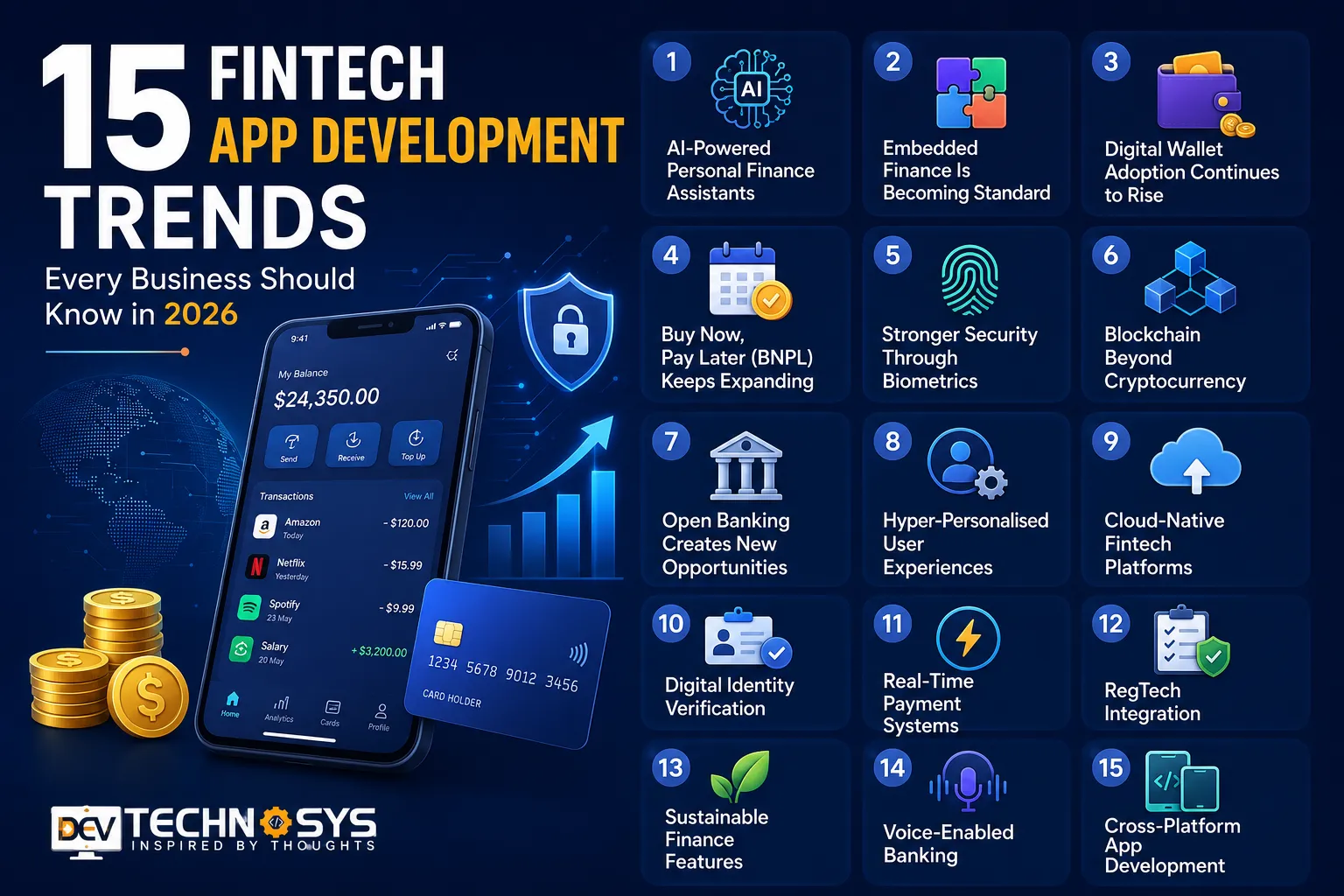
Here are 15 fintech app development trends that are defining the future of financial technology in 2026.
1. AI-Powered Personal Finance Assistants
Artificial intelligence is making financial management more personalised. Modern fintech apps analyse spending habits, predict expenses, and recommend budgeting strategies.
Benefits
- Automated budgeting
- Smart saving recommendations
- Expense categorisation
- Financial forecasting
2. Embedded Finance Is Becoming Standard
Businesses outside traditional banking now integrate payment, lending, insurance, and financial services directly into their platforms.
Examples include:
- E-commerce financing
- Ride-sharing wallets
- Marketplace payment systems
- Insurance integration
3. Digital Wallet Adoption Continues to Rise
Consumers increasingly prefer cashless transactions through digital wallets.
Popular wallet features include:
- QR payments
- Contactless transactions
- Bill payments
- Loyalty rewards
- Peer-to-peer transfers
4. Buy Now, Pay Later (BNPL) Keeps Expanding
BNPL solutions remain popular across retail, travel, healthcare, and education.
Modern BNPL apps often include:
- Instant credit approval
- Flexible repayment schedules
- Fraud detection
- Credit scoring
5. Stronger Security Through Biometrics
Passwords alone are no longer enough.
Many fintech applications now use:
- Face recognition
- Fingerprint authentication
- Behavioural biometrics
- Voice authentication
These measures improve both security and user convenience.
6. Blockchain Beyond Cryptocurrency
Blockchain technology is increasingly used for:
- Cross-border payments
- Digital identity
- Smart contracts
- Fraud prevention
- Transaction transparency
Businesses are exploring blockchain even without offering cryptocurrency services.
7. Open Banking Creates New Opportunities
Open banking APIs allow secure data sharing between financial institutions and third-party applications.
Benefits include:
- Better customer experiences
- Faster payments
- Personalised financial products
- Improved account aggregation
8. Hyper-Personalised User Experiences
Modern fintech apps customise dashboards, financial insights, offers, and recommendations based on user behaviour.
Personalisation increases:
- User engagement
- Customer retention
- Cross-selling opportunities
9. Cloud-Native Fintech Platforms
Cloud infrastructure enables fintech companies to scale rapidly while maintaining high availability.
Advantages include:
- Lower infrastructure costs
- Faster deployment
- Automatic scaling
- Better disaster recovery
10. Digital Identity Verification
Know Your Customer (KYC) processes have become faster through AI-powered verification.
Modern verification includes:
- OCR document scanning
- Selfie verification
- Liveness detection
- Automated compliance checks
11. Real-Time Payment Systems
Consumers expect payments to be processed instantly.
Real-time payment features include:
- Immediate transfers
- Instant merchant settlements
- 24/7 availability
- Reduced transaction delays
12. RegTech Integration
Financial regulations continue to evolve globally.
Regulatory Technology (RegTech) helps businesses:
- Monitor compliance
- Detect suspicious activities
- Generate audit reports
- Reduce compliance costs
13. Sustainable Finance Features
Many fintech applications now help users make environmentally conscious financial decisions.
Examples include:
- Carbon footprint tracking
- ESG investment options
- Green banking features
14. Voice-Enabled Banking
Voice assistants are beginning to support banking tasks such as:
- Balance enquiries
- Transaction history
- Bill reminders
- Payment confirmations
This improves accessibility and convenience.
15. Cross-Platform App Development
Businesses increasingly choose frameworks like Flutter and React Native to launch apps on both Android and iOS more efficiently.
Benefits include:
- Faster development
- Reduced costs
- Easier maintenance
- Consistent user experience
Final Thoughts
The fintech industry is evolving rapidly, driven by artificial intelligence, embedded finance, stronger security, cloud technologies, and changing customer expectations. Businesses investing in fintech app development should focus on delivering secure, scalable, and user-centric solutions that can adapt to future innovations.
By understanding these trends, organisations can make informed technology decisions, improve customer experiences, and remain competitive in an increasingly digital financial landscape.




























Sign in to leave a comment.