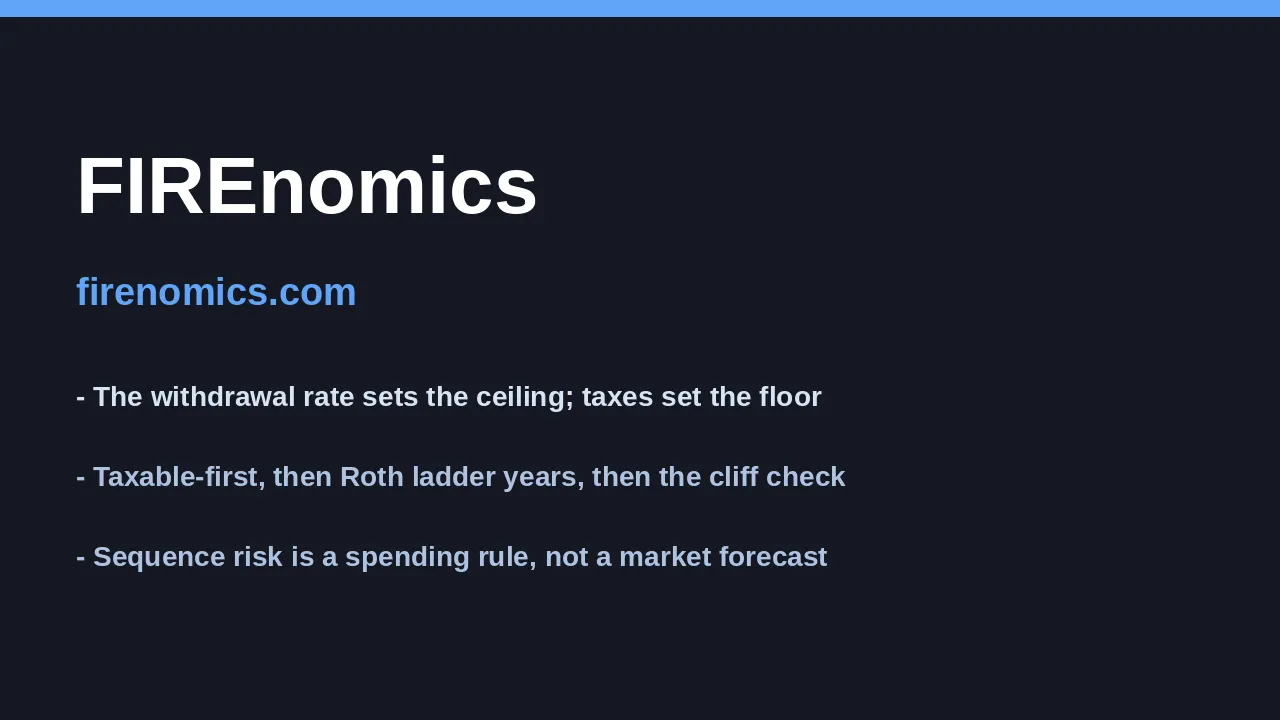

Most retirement planning treats the 4% rule as the finish line: hit the number, withdraw at the rate, done. The rate answers only how much the portfolio can spare each year. It says nothing about which account that money should come from, and for a 40 to 60 year early-retirement horizon the ordering question is worth more than a full percentage point of the rate itself.
The mechanics are simple and unforgiving. Spend taxable first and tax-deferred balances keep compounding sheltered. Sell appreciated taxable shares and the gain is taxed at capital gains rates; pull the same dollars from a traditional IRA and every dollar is ordinary income. A few thousand dollars of extra realized income can move a household across a bracket line or a surtax threshold in a single January.
The low-income years between an early quit date and age 70.5 are an asset, not a gap. With little W-2 income, Roth conversions land in the lowest brackets on the schedule, and the same low modified adjusted gross income is what keeps ACA premium subsidies intact. Retirees who ignore the cliff math have priced their health coverage off one overfunded IRA withdrawal.
Sequence of returns risk folds into the same ordering decision. The standard defense is a cash and taxable buffer covering early-retirement years so a downturn never forces a sale at the bottom. That buffer is not just a safety net; it is the tax-ordering fuel that lets tax-deferred accounts sit untouched while conversion years do their work.
The full sequence, with the account-ordering rules and the annual runbook laid out step by step, is in The FIRE Withdrawal Strategy Tax Playbook on FIREnomics. It walks the same retiree through two different years so the order of operations can be seen in actual dollar terms.
A withdrawal rate is a ceiling. The order accounts get drained is the floor underneath it, and the floor is where most avoidable dollars leak.
























Sign in to leave a comment.