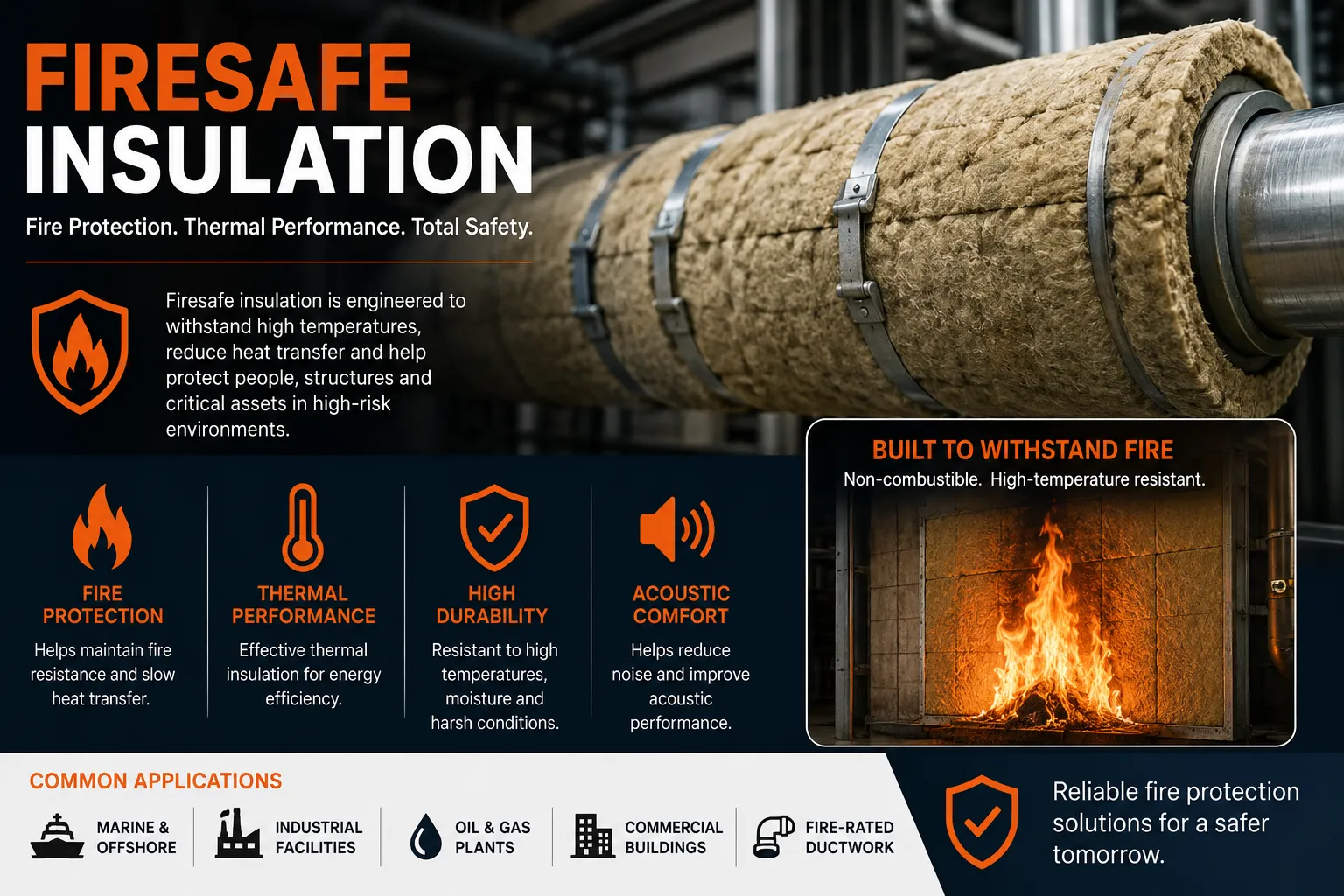

Fire safety is an important consideration in buildings, industrial facilities, marine vessels and offshore installations. In environments where high temperatures and fire exposure can create serious risks, the right insulation system can help protect structures, equipment and people. Firesafe insulation is designed to provide thermal and fire protection in applications where resistance to high temperatures is essential.
Unlike conventional thermal insulation, fire-safe insulation is selected not only for temperature control but also for its ability to contribute to fire-rated construction and protect surrounding materials during fire exposure. Mineral and stone wool products, for example, are widely used in fire protection because they can withstand very high temperatures without melting.
What Is Firesafe Insulation?
Firesafe insulation refers to insulation materials and systems designed to provide protection against high temperatures and fire. Depending on the product and application, these systems may be used in walls, decks, bulkheads, ducts, pipes, equipment and other structures requiring fire resistance.
Fire-safe insulation should always be selected as part of a tested or approved system where a specific fire rating is required. The performance of an insulation material depends on its composition, thickness, installation method and the complete construction in which it is used.
Why Is Firesafe Insulation Important?
Fire can spread quickly through buildings and industrial environments if materials and service penetrations are not adequately protected. Properly designed fire-safe insulation can help slow heat transfer and maintain the required performance of a protected construction.
Key benefits can include:
- Improved fire protection
- High-temperature resistance
- Reduced heat transfer
- Protection of surrounding structures
- Support for fire-rated construction
- Improved thermal performance
- Enhanced safety in critical environments
In marine and offshore applications, stone wool insulation is used in approved fire-rated bulkhead and deck constructions because of its high-temperature performance.
Common Applications of Firesafe Insulation
Marine and Offshore
Ships and offshore platforms require insulation systems that can withstand demanding conditions while supporting fire safety. Firesafe insulation can be used in fire-rated decks, bulkheads and other marine constructions.
Some high-density stone wool fireboards are specifically designed for A-class marine and offshore constructions.
Industrial Facilities
Industrial plants often contain high-temperature equipment, pipelines and process systems. Fire-safe insulation can help protect nearby structures and equipment from excessive heat.
Oil & Gas Facilities
Oil and gas environments have significant fire and heat risks due to the presence of hydrocarbons and high-temperature processes. Appropriate fire protection and insulation systems can contribute to safer infrastructure and improved asset protection.
Fire-Rated Ductwork
Fire-resistant duct systems require insulation or construction capable of maintaining required integrity and insulation performance during fire exposure.
Firesafe Insulation vs Standard Insulation
Standard insulation is often installed primarily for thermal efficiency, temperature control or condensation prevention. Firesafe insulation, however, has an additional role in fire protection.
The key difference is the required performance under fire conditions. A fire-rated insulation system must be evaluated according to the relevant testing requirements and the specific construction in which it is installed.
This is particularly important when insulation forms part of a fire-rated wall, floor, duct, deck or bulkhead.
Key Factors When Choosing Firesafe Insulation
Selecting the right insulation requires consideration of the actual application. Important factors include:
- Required fire rating
- Operating temperature
- Insulation thickness
- Material type
- Location of installation
- Moisture exposure
- Mechanical conditions
- Acoustic requirements
- Marine or offshore requirements
- Applicable standards and certifications
- Installation method
The insulation should be selected according to the complete system requirements rather than simply choosing a material based on its name or thermal performance.
High-Temperature Performance
One of the major advantages of suitable fire-safe insulation is its ability to withstand high temperatures. For example, ROCKWOOL Technical Insulation states that its stone wool fibres can withstand temperatures above 1,000°C without melting, although the binder behaves differently at temperatures above approximately 250°C.
This type of performance can make mineral-based insulation suitable for demanding fire protection applications when correctly specified and installed.
Supporting Long-Term Fire Safety
Fire protection is not only about selecting the right insulation material. Installation quality, system design, supporting structures and compatible firestop components all influence the final performance.
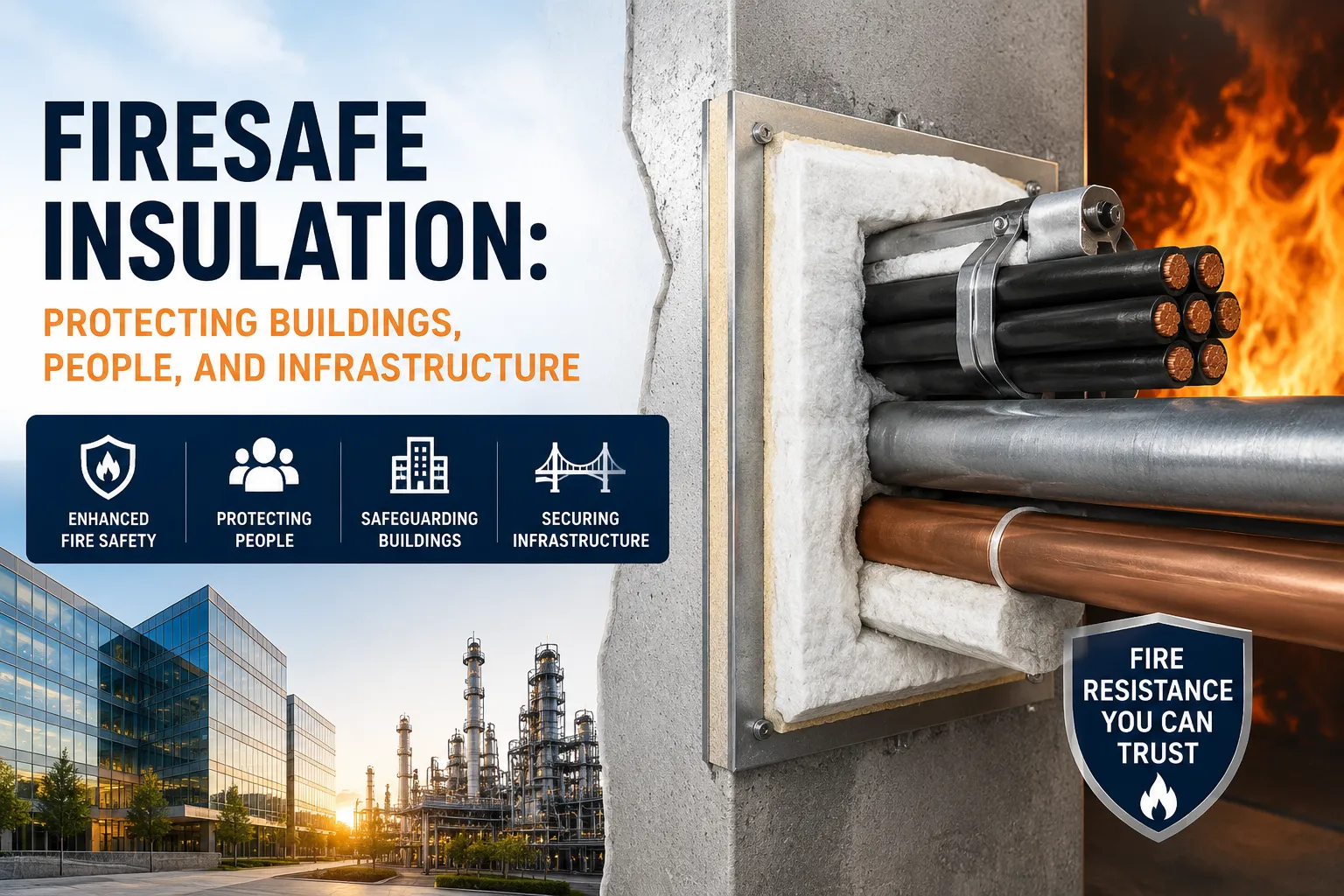
For pipe and cable penetrations, insulation may also need to work together with tested fire sealing systems. Certain firestop systems have specific requirements regarding the type, thickness and configuration of pipe insulation used with them.
Conclusion
Firesafe insulation plays an important role in protecting structures and equipment from high temperatures and fire exposure. From marine and offshore installations to industrial, oil and gas and building applications, the right insulation system can support fire safety while also providing thermal protection.
For safety-critical projects, insulation should be selected based on the required fire rating, operating conditions, installation environment and applicable standards. Using a properly tested and correctly installed system can help improve fire protection, asset reliability and long-term safety.



















Sign in to leave a comment.