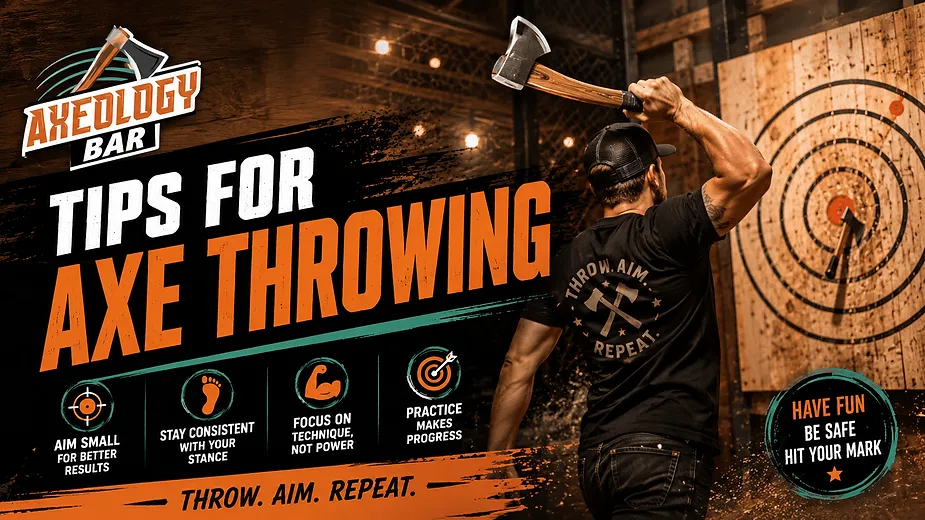

Axe throwing is more than just a trendy activity—it's a fun and rewarding experience that combines focus, coordination, and friendly competition. Whether you're visiting an axe throwing venue with friends, celebrating a special occasion, or trying something completely new, understanding the basics can make your first session much more enjoyable.
Many beginners worry about whether they'll be able to stick the axe or hit the target. The good news is that axe throwing is easier to learn than most people think. With a few simple techniques and the right mindset, you'll quickly gain confidence and improve your accuracy.
Here are eight expert axe throwing tips that can help you get the most out of your experience.
1. Start With the Right Mindset
One of the biggest mistakes first-time throwers make is expecting perfection immediately.
Axe throwing is a skill that develops through repetition and small adjustments. Instead of focusing solely on hitting bullseyes, focus on learning the proper technique and enjoying the experience.
The more relaxed you are, the better your throws will become.
2. Keep Your Throw Simple
When beginners watch experienced throwers, they often try to copy advanced techniques too soon.
The best approach is to keep your motion simple and controlled.
A successful throw typically includes:
- A balanced stance
- A comfortable grip
- A smooth overhead motion
- A natural release
Complicated movements often lead to inconsistent results.
3. Let the Axe Do the Work
A common misconception is that you need to throw the axe with a lot of force.
In reality, the design of the axe allows it to rotate naturally toward the target.
Instead of throwing harder:
- Focus on smooth movement.
- Maintain control throughout the throw.
- Release at the same point every time.
Consistency will always outperform raw power.
4. Pay Attention to Your Foot Placement
Your feet create the foundation for every throw.
A stable position helps keep your body aligned with the target and improves overall accuracy.
For best results:
- Keep your feet shoulder-width apart.
- Stay balanced throughout the motion.
- Avoid unnecessary movement before releasing the axe.
Small adjustments to your stance can often lead to major improvements.
5. Watch the Axe Rotation
The way the axe rotates can tell you a lot about your technique.
If the blade isn't sticking properly, observe how it contacts the target.
Common signs include:
Too Much Rotation
The axe rotates past the ideal angle before reaching the target.
Not Enough Rotation
The blade doesn't complete its rotation and strikes flat.
Consistent Rotation
The blade lands cleanly and sticks securely.
Learning to recognize these patterns helps you make quick adjustments.
6. Build Confidence Through Repetition
Confidence plays a bigger role in axe throwing than many people realize.
Each successful throw reinforces proper technique and helps eliminate hesitation.
Rather than changing your approach after every miss, commit to a consistent throwing style and trust the process.
Over time, your body develops muscle memory that improves both accuracy and reliability.
7. Learn From Every Throw
Every throw provides valuable feedback.
Ask yourself:
- Did the axe rotate correctly?
- Was my stance balanced?
- Did I release too early or too late?
- Did I stay focused on the target?
Treating each throw as a learning opportunity can accelerate your progress and help you identify patterns more quickly.
8. Have Fun and Enjoy the Experience
While improving your score is rewarding, axe throwing is ultimately about having fun.
Many people discover that the most memorable part of axe throwing isn't hitting the bullseye—it's spending time with friends, celebrating achievements, and enjoying the excitement of learning something new.
The more you enjoy the experience, the more naturally your skills will develop.
Why Axe Throwing Is Perfect for Groups
Axe throwing has become a popular choice for:
- Birthday parties
- Team-building events
- Bachelor and bachelorette parties
- Family gatherings
- Date nights
- Corporate outings
The activity encourages friendly competition while creating a unique and memorable experience for participants of all skill levels.
Benefits of Axe Throwing
Beyond entertainment, axe throwing offers several personal benefits.
Improves Focus
Throwers must concentrate on a specific target, helping sharpen mental focus.
Reduces Stress
The combination of physical movement and concentration can be a great way to unwind.
Builds Coordination
Axe throwing develops timing, balance, and hand-eye coordination.
Creates Lasting Memories
The excitement of sticking an axe for the first time is something many participants never forget.
Frequently Asked Questions
Is axe throwing safe for beginners?
Yes. When proper safety guidelines are followed and participants receive instruction from trained staff, axe throwing is a safe and enjoyable activity.
How long does it take to learn axe throwing?
Most beginners can successfully stick an axe within their first session.
What should I wear for axe throwing?
Closed-toe shoes and comfortable clothing that allows free movement are typically recommended.
Do I need previous experience?
No experience is necessary. Most venues provide instruction and coaching before participants begin throwing.
What's the secret to hitting more bullseyes?
Consistency. Developing a repeatable stance, grip, and release is the most effective way to improve accuracy.
Final Thoughts
Axe throwing is one of the most exciting activities for beginners because progress happens quickly. By focusing on proper technique, staying patient, and learning from each throw, you'll build confidence and improve your results faster than you might expect.
Whether you're aiming for your first successful stick or your first bullseye, remember that every experienced thrower started exactly where you are today. Practice consistently, trust the fundamentals, and most importantly—enjoy every throw.


























Sign in to leave a comment.