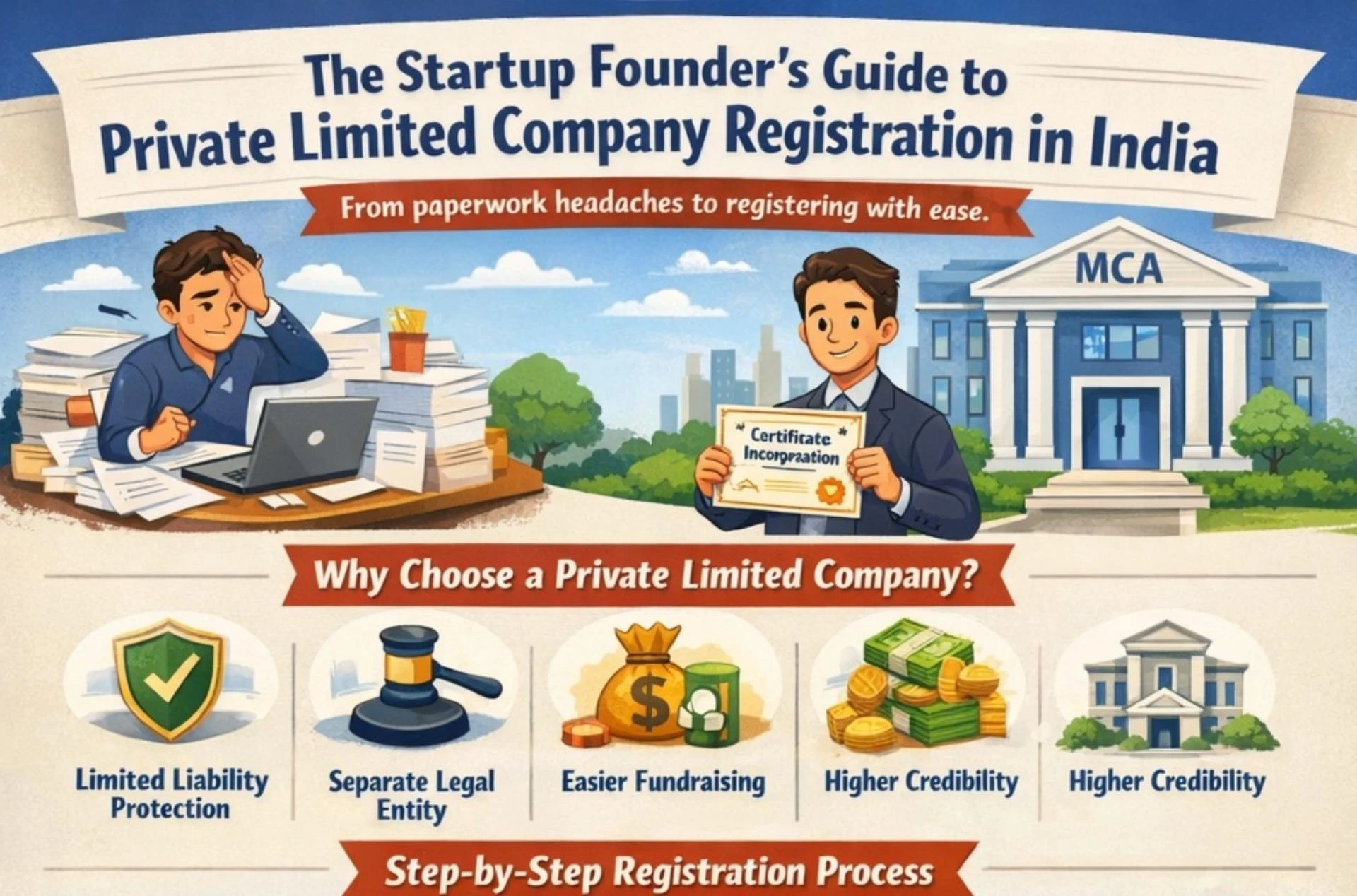

Starting a business feels exciting, until paperwork enters the room. For first-time founders, business incorporation often sounds complex, expensive, and time-consuming. The good news? With the right guidance and a clear startup registration process, registering a private limited company in India is now faster and more transparent than ever.
If you’re exploring Company Registration in Laxmi Nagar and GST Registration Services in Shahdara, reliable professionals and verified Google My Business listings can help you begin with confidence and clarity.
This guide breaks everything down, step by step, using real laws, official sources, and practical logic. No fluff. No myths. Just what actually works.
What Is a Private Limited Company?
A private limited company is one of the most trusted business structures in India. It operates under the Companies Act, 2013, regulated by the Ministry of Corporate Affairs (MCA).
This structure suits startups because it offers:
- Limited liability protection
- Separate legal identity
- Better funding opportunities
- Higher credibility with banks and investors
In simple terms, your business becomes its own legal person. If the company takes a hit, your personal assets stay safe. That’s a big win for first-time founders.
Also Read: 12A Registration vs. Other NGO Tax Registrations: What You Should Know
Why First-Time Founders Prefer Private Limited Company Registration
Let’s talk logic, not hype.
1. Limited Liability Means Peace of Mind
Your personal finances remain separate from business risks. That protection matters when things don’t go as planned—and sometimes they won’t.
2. Easier Fundraising
Angel investors, venture capital firms, and even banks prefer private limited companies. Equity shares make investment straightforward and legally clean.
3. Professional Image
Clients trust registered companies more than informal setups. A “Pvt. Ltd.” tag adds instant credibility.
According to MCA data and industry reports, most funded Indian startups begin as private limited companies. That trend exists for good reasons.
Documents Required for Business Incorporation
Before you register a company online, gather the following documents. No surprises here—these come straight from MCA guidelines.
For Directors and Shareholders:
- PAN Card
- Aadhaar Card
- Passport (for foreign nationals)
- Address proof (bank statement or utility bill)
For the Registered Office:
- Rent agreement or ownership proof
- Latest utility bill
- No Objection Certificate (NOC) from the owner
Accuracy matters. Even a small mismatch can delay approval.
Step-by-Step Startup Registration Process
This is where things get real—and practical.
Step 1: Obtain DSC (Digital Signature Certificate)
Directors must sign documents digitally. Certifying authorities approved by MCA issue DSCs.
Step 2: Apply for DIN
A Director Identification Number (DIN) is mandatory. You can apply for it through the SPICe+ form on the MCA portal.
Step 3: Name Approval
Choose a unique name that follows MCA naming rules. Avoid restricted or trademarked words. Logic helps here—simple names clear faster.
Step 4: File SPICe+ Form
This single form covers:
- Company incorporation
- DIN allotment
- PAN and TAN issuance
Yes, the government finally simplified something.
Step 5: Certificate of Incorporation
Once approved, MCA issues the Certificate of Incorporation. Your company officially exists from this date.
Also Read: Latest Updates in GST Registration Online: What Businesses Must Know in 2026
Register a Company Online: What Makes the Process Easier Now?
Earlier, founders needed weeks and multiple visits. Today, digital systems have improved transparency.
Key government platforms include:
- MCA Portal – for incorporation and compliance
- Income Tax Department – PAN and TAN
- GST Portal – indirect tax registration
Professional company formation services ensure filings meet legal standards. If you’re considering GST Registration Services in Shahdara, CA in Shahdara, verified local experts like AABK & Associates listed on Google My Business can offer face-to-face clarity when needed.
GST Registration: When and Why It Matters
GST registration becomes mandatory if:
- Annual turnover exceeds the threshold set by the GST Council
- You sell goods or services interstate
- You operate an e-commerce business
The GST framework runs under the Central Board of Indirect Taxes and Customs (CBIC). Registering on time avoids penalties and builds trust with clients.
Startups that plan ahead save money and headaches later. Logic beats last-minute panic—every time.
Common Mistakes First-Time Founders Should Avoid
Let’s add a bit of honest humour here.
Choosing a “Cool” Name Without Checking Availability
Your dream name may already belong to someone else. MCA won’t be impressed.
Ignoring Compliance
Annual filings matter. Skipping them leads to penalties and director disqualification.
DIY Without Knowledge
Online forms look easy—until they aren’t. Errors slow things down.
This is why many founders rely on company formation services for accuracy and peace of mind.
How Professional Support Improves Trust and Speed
Google values Experience, Expertise, Authority, and Trust (E-E-A-T). So do regulators.
Working with professionals ensures:
- Accurate documentation
- Compliance with Companies Act, 2013
- Proper tax and GST structuring
If you search for Company Registration in Laxmi Nagar and CA in Shahdara, you’ll find verified service providers with clear office locations listed on Google My Business. That transparency builds both user and search engine trust.
Trusted Sources That Govern Company Registration in India
All information in this guide aligns with official authorities, including:
- Ministry of Corporate Affairs (MCA), Government of India
- Companies Act, 2013
- Income Tax Department of India
- GST Council and CBIC
These institutions publish public guidelines and updates. Always rely on them—not random blogs or unverified claims.
Final Thoughts: Start Smart, Not Scared
Every successful company once started with a single form and a nervous founder. Feeling unsure is normal. Ignoring the process isn’t.
With the right understanding of private limited company registration, a clear startup registration process, and reliable support, business incorporation becomes manageable—and even empowering.
Keep things legal. Keep them logical. And yes, keep a sense of humour. You’re building something real now.



























Sign in to leave a comment.