

Flooding is one of the most common and costly natural disasters in New Jersey. Whether caused by heavy rainfall, coastal storms, hurricanes, or overflowing rivers, floodwater can leave behind serious damage to homes and businesses. The first few hours and days after a flood are critical. Taking the right steps can reduce property damage, protect your health, and speed up the recovery process.
If you are wondering what to do after a flood, the answer is simple: ensure safety first, document all damage, contact your insurance provider, remove standing water, begin drying the property, and seek professional flood damage restoration services when necessary. Acting quickly can prevent mold growth, structural issues, and costly repairs.
This guide explains the essential flood recovery steps every New Jersey resident should follow after a storm.
Why Flood Recovery Must Start Immediately
Floodwater can cause extensive damage in a very short time. According to the Federal Emergency Management Agency (FEMA), just one inch of water inside a home can cause thousands of dollars in property damage.
The longer water remains inside a building, the greater the risk of:
- Structural weakening
- Mold growth
- Electrical hazards
- Damaged flooring and drywall
- Contaminated indoor air quality
- Permanent damage to furniture and belongings
Professional flood damage restoration experts often emphasize the importance of beginning mitigation within the first 24 to 48 hours to minimize long-term problems.
Step 1: Make Sure Your Home Is Safe to Enter
Before entering a flooded property, ensure local authorities have declared the area safe.
Floodwater can create hidden dangers, including:
- Electrical shock hazards
- Gas leaks
- Unstable structures
- Contaminated water exposure
If you suspect structural damage, avoid entering the property until it has been inspected by qualified professionals.
Wear protective equipment such as waterproof boots, gloves, and masks when entering flood-affected areas.
Watch for Signs of Structural Damage
Inspect your property carefully for:
- Cracked foundations
- Sagging ceilings
- Warped walls
- Damaged support beams
- Loose flooring
If you notice significant structural issues, contact a professional contractor before beginning cleanup.
Step 2: Document All Flood Damage
One of the most important steps after flooding is documenting everything before cleanup begins.
Take clear photographs and videos of:
- Standing water
- Damaged walls
- Flooring damage
- Furniture and appliances
- Personal belongings
- Exterior damage
Keep a detailed inventory of damaged items and save receipts for emergency expenses.
This documentation can help support your flood insurance claim and improve the chances of receiving proper compensation.
Create a Damage Inventory
Include details such as:
- Item description
- Approximate purchase date
- Estimated value
- Extent of damage
Organized records make the claims process much smoother.
Step 3: Contact Your Insurance Company
Notify your insurance provider as soon as possible after the flood.
Many homeowners are surprised to learn that standard homeowner's insurance policies often do not cover flood damage. Coverage may require a separate flood insurance policy through the National Flood Insurance Program (NFIP) or a private insurer.
When speaking with your insurance company:
- Report the damage immediately
- Submit photos and videos
- Request claim instructions
- Ask about temporary repairs
- Keep records of all communications
The faster you begin the claims process, the sooner restoration work can move forward.
Step 4: Remove Standing Water Quickly
Water extraction is one of the most important parts of flood recovery.
Standing water can continue damaging building materials and create ideal conditions for mold growth.
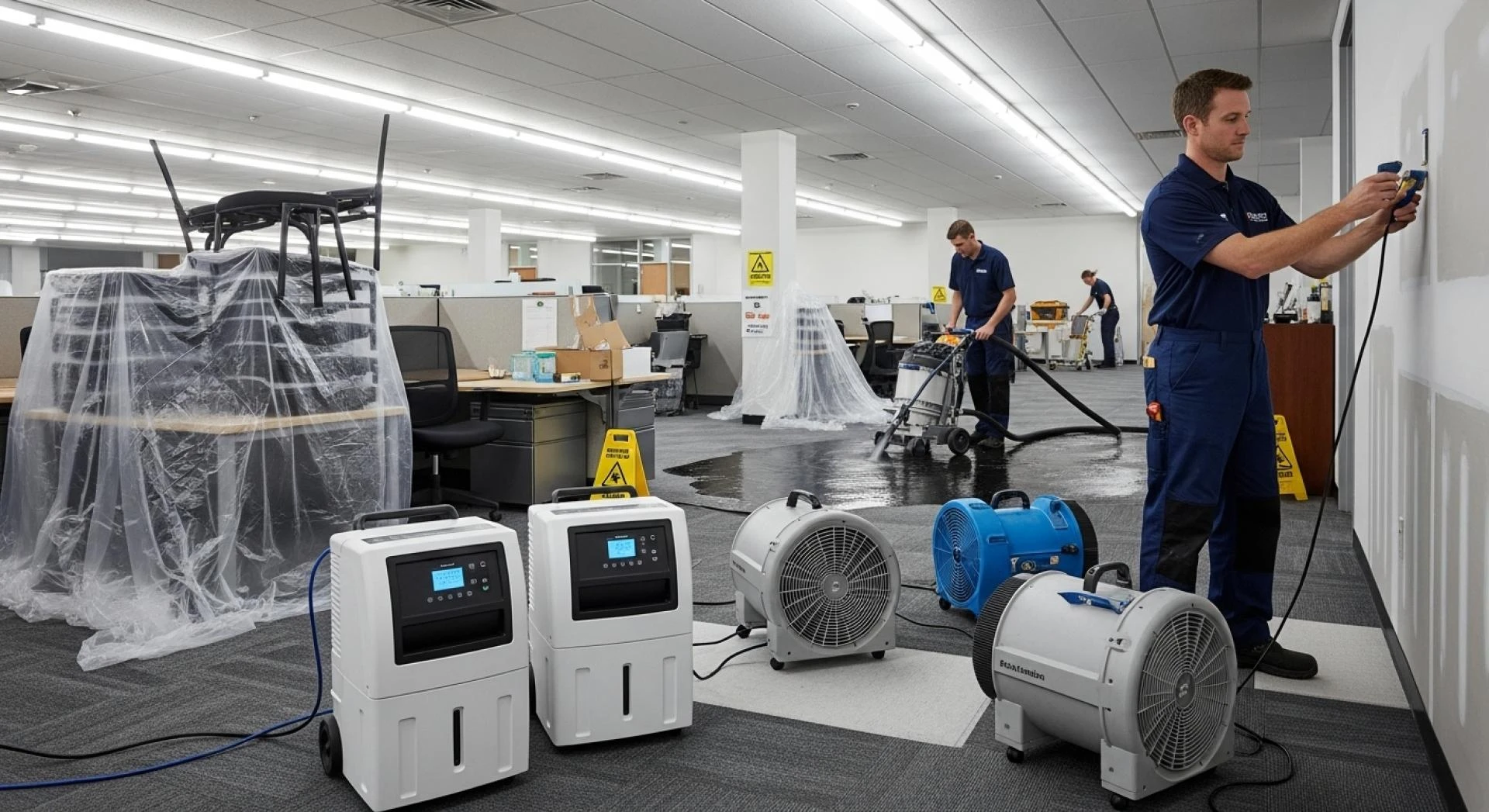
Professional water removal equipment often includes:
- Commercial-grade pumps
- Wet vacuums
- High-capacity extractors
- Industrial drying systems
Even small amounts of remaining moisture can cause hidden damage behind walls and under flooring.
Why DIY Water Removal Is Often Not Enough
Many homeowners attempt cleanup using household fans and basic wet vacuums. While helpful for minor water issues, severe flooding usually requires professional equipment to remove water completely.
Moisture can become trapped inside:
- Insulation
- Drywall
- Subfloors
- Crawl spaces
- Wall cavities
Professional moisture detection tools help identify hidden water that may otherwise go unnoticed.
Step 5: Begin Drying and Dehumidification
After water removal, the drying process must begin immediately.
Industry standards established by the Institute of Inspection, Cleaning and Restoration Certification (IICRC) emphasize thorough drying to prevent secondary damage.
Professional drying typically involves:
- Air movers
- Industrial dehumidifiers
- Moisture monitoring equipment
- Humidity control systems
Drying may take several days depending on the extent of flooding.
Signs That Moisture Is Still Present
Watch for:
- Musty odors
- Damp surfaces
- Peeling paint
- Warped flooring
- Condensation on windows
These signs often indicate hidden moisture that requires further attention.
Step 6: Prevent Mold Growth Before It Starts
Mold can begin developing within 24 to 48 hours after water exposure.
New Jersey's humid climate can make mold prevention especially important after flooding.
Common areas where mold develops include:
- Drywall
- Carpets
- Insulation
- Basements
- Attics
- HVAC systems
Health Risks Associated With Mold
Exposure to mold may cause:
- Allergic reactions
- Respiratory irritation
- Asthma flare-ups
- Eye irritation
- Skin irritation
Young children, older adults, and individuals with weakened immune systems may be particularly vulnerable.
Proper drying, sanitation, and mold remediation help reduce these risks.
Step 7: Clean and Sanitize Affected Areas
Floodwater often contains harmful contaminants, especially when sewage backups or stormwater are involved.
Water damage professionals classify floodwater into different contamination levels based on industry standards.
Flood-affected surfaces should be thoroughly cleaned and disinfected.
Areas requiring sanitation often include:
- Floors
- Walls
- Countertops
- Furniture
- Personal belongings
Items that cannot be adequately cleaned may need to be discarded to protect health and safety.
Pay Special Attention to Sewage Contamination
If sewage is involved, professional cleanup is strongly recommended.
Sewage-contaminated water may contain:
- Bacteria
- Viruses
- Parasites
- Toxic substances
Specialized protective equipment and cleaning procedures are necessary in these situations.
Step 8: Inspect Electrical and HVAC Systems
Floodwater can damage electrical systems and heating or cooling equipment.
Never restore power yourself unless a qualified electrician has inspected the property.
Flood exposure can affect:
- Electrical panels
- Wiring
- Outlets
- Furnaces
- Air conditioners
- Water heaters
Damaged systems may create fire hazards or operational failures if not properly inspected.
Replace Contaminated Air Filters
Flooding can introduce dirt, mold spores, and contaminants into HVAC systems.
Replacing filters and cleaning ductwork can help improve indoor air quality during recovery.
Step 9: Evaluate Structural Repairs
Once the property is dry and clean, assess the extent of permanent damage.
Common repairs after flooding may include:
- Drywall replacement
- Flooring replacement
- Insulation replacement
- Foundation repairs
- Roof repairs
- Painting and finishing work
A professional assessment helps identify hidden issues that could become expensive problems later.
Don't Ignore Minor Damage
Small cracks, warped materials, or moisture stains may seem insignificant initially but can worsen over time.
Early repairs are often less costly than waiting until damage becomes severe.
Understanding Flood Risks in New Jersey
New Jersey regularly experiences flooding due to:
- Coastal storms
- Hurricanes
- Nor'easters
- Heavy rainfall
- River flooding
- Urban drainage issues
Many areas throughout the state face recurring flood concerns, especially during severe weather seasons.
Climate experts continue to report increasing rainfall intensity across the Northeast, making flood preparedness and recovery planning more important than ever.
Homeowners who understand local flood risks can take preventive measures to better protect their properties.
How Professional Flood Damage Restoration Helps Speed Recovery
Flood recovery is often more complicated than simply removing visible water.
Professional flood damage restoration services provide:
- Emergency response
- Water extraction
- Moisture detection
- Structural drying
- Mold prevention
- Sanitization
- Damage assessment
- Restoration planning
Experienced restoration teams follow industry best practices to restore properties safely and efficiently.
Professional intervention can also help reduce long-term repair costs by addressing hidden damage early.
Restore Your Home Faster With NSH Home Services
Recovering after a flood can feel overwhelming, but taking the right steps quickly can make a significant difference. From water extraction and structural drying to mold prevention and repairs, professional assistance helps protect your home and your family's health.
If you need reliable Flood Damage Restoration in New Jersey, NSH Home Services provides comprehensive restoration solutions designed to help homeowners recover after storms and flooding events. Their experienced team responds quickly, assesses damage thoroughly, and works to restore properties safely while helping reduce the risk of future issues.
Acting early can shorten recovery time, support insurance claims, and help return your home to normal as efficiently as possible.




























Sign in to leave a comment.