
Introduction
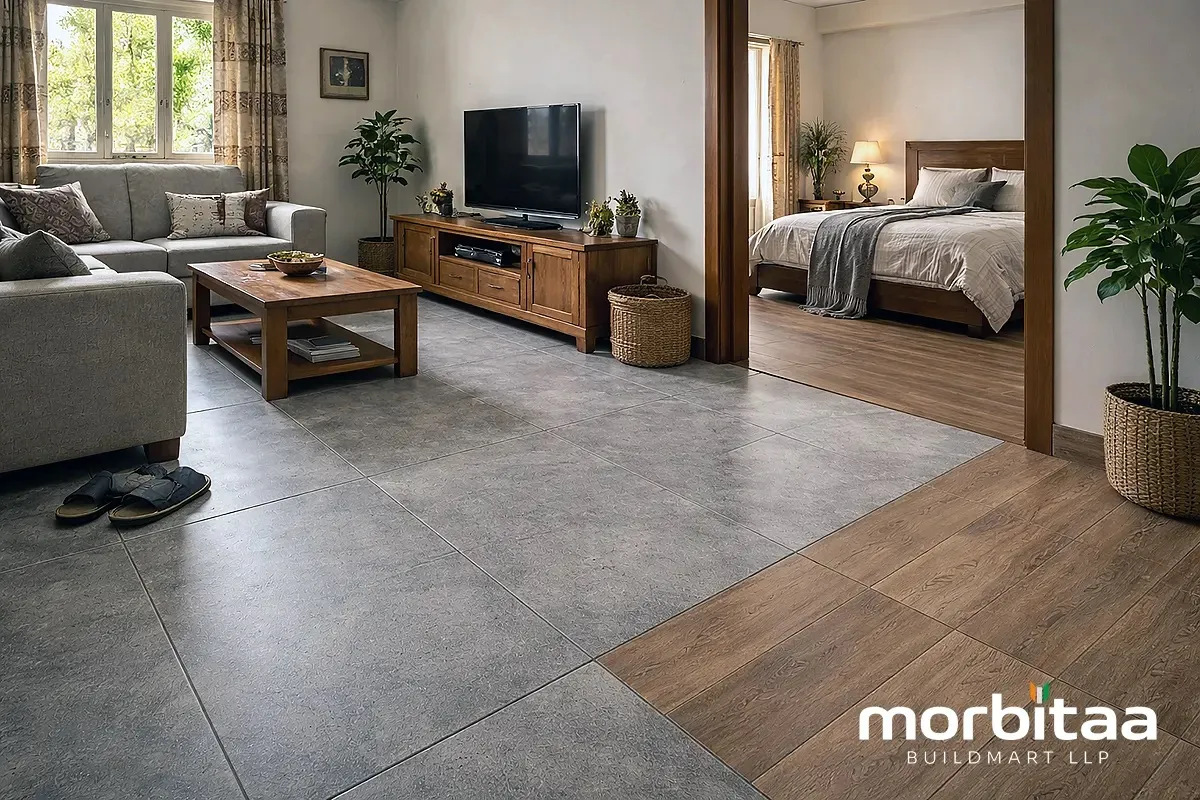
Choosing floor tiles is not only about colour or design. The right tile should suit the room, daily foot traffic, cleaning routine and local conditions. A tile that looks attractive in a showroom may not always be practical for everyday use.
For Indian homes, vitrified, porcelain and ceramic tiles are common choices. Buyers should also consider tile size, surface finish, grip, installation quality and replacement needs before placing an order.
Morbi, Gujarat is a major tile manufacturing hub, so buyers can find many options across sizes, finishes and quality levels. However, comparing the right specifications is more important than simply choosing the lowest rate.
Choose the Tile Material According to Usage
Ceramic tiles can work well in areas with lighter use. They are often considered for bedrooms and other spaces where heavy foot traffic is not a major concern.
Vitrified tiles are a popular choice for living rooms, bedrooms, kitchens and passages. Their dense body makes them suitable for regular household use and easy to maintain.
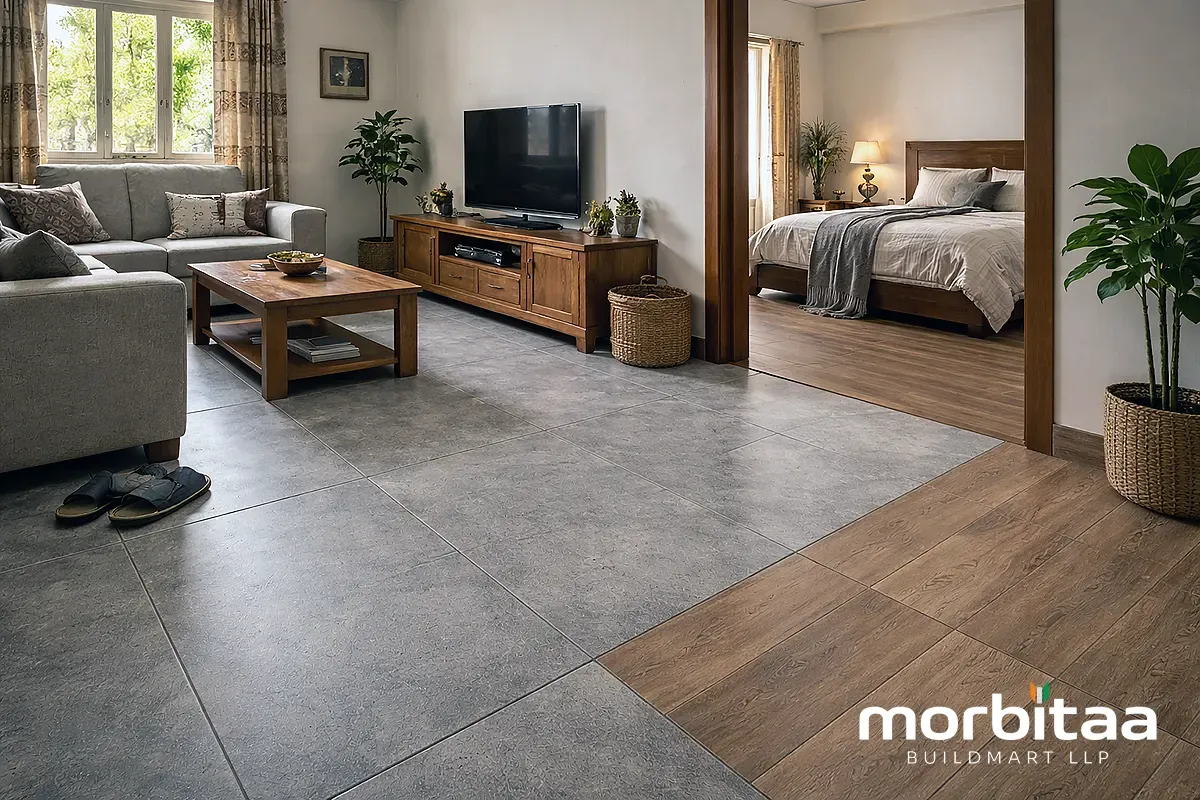
Porcelain tiles are another option for buyers who want a dense and low-absorption surface. They can be useful in areas that experience higher use or moisture, depending on the product and installation requirements.
The material should always be matched with the intended application instead of choosing only on appearance.
How Tile Size Changes the Look of a Room
Tile size has a strong effect on the final appearance. Smaller formats create more grout lines, while larger tiles can give a cleaner and more open appearance.
For many standard residential rooms, 600×600 mm tiles are practical because they are relatively easy to handle and widely available. Larger formats such as 600×1200 mm can create a modern look with fewer joints, but they need good floor preparation and proper installation.
For bathrooms and smaller wet areas, smaller tiles may make slope and drainage planning easier. The room dimensions should therefore be considered before selecting a format.
Matte, Satin or Glossy: Which Finish Works Better?
Finish affects both appearance and daily maintenance.
Matte tiles are generally practical for busy residential areas because they do not highlight every small mark or footprint. They can be a good choice for living rooms, bedrooms and kitchens.
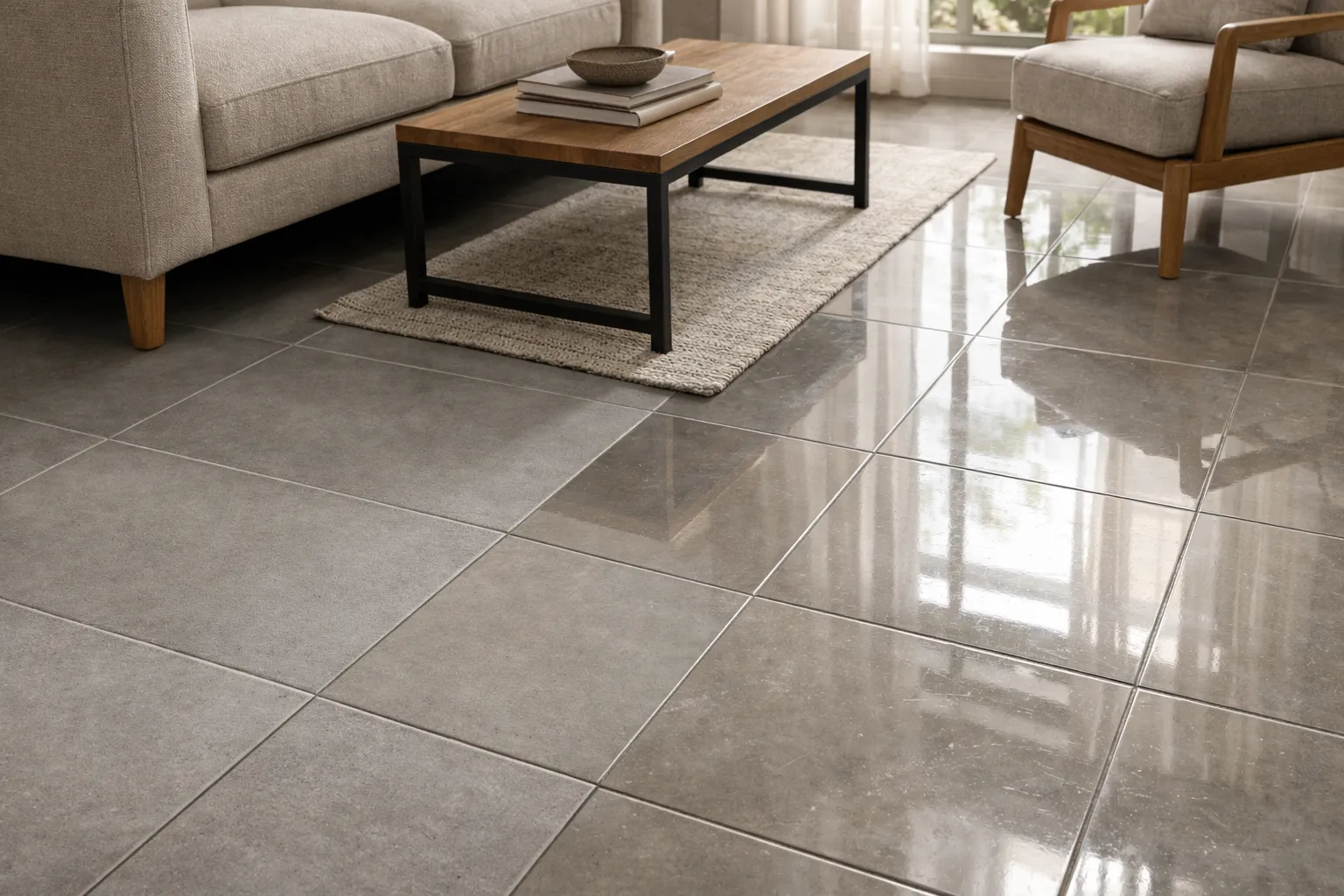
Satin finishes provide some surface reflection without the stronger shine of polished tiles. They can suit buyers who want a balance between appearance and everyday practicality.
Glossy tiles create a bright and reflective surface. However, they can show dust, marks and scratches more easily. They also require extra care where water may collect.
For wet areas, always check the product's actual slip-performance information rather than assuming that a particular finish is automatically safe.
What Should Buyers Check Before Ordering?
Before purchasing floor tiles, check the following points:
- Confirm the exact tile size and box coverage.
- Ask about the material and intended application.
- Check the finish under normal lighting if possible.
- Verify the batch, shade and calibre before installation.
- Calculate the required quantity and keep some extra tiles for future repairs.
- Confirm packing and transport arrangements for bulk orders.
- Make sure the floor is properly level before installation.
- Use a suitable installation system and follow the tile manufacturer's recommendations.
For buyers sourcing from Morbi, the final landed cost should include the tile rate, GST, packing, transport and any other applicable charges. Comparing only the ex-godown rate can give an incomplete picture of the actual purchase cost.
Avoid Common Installation Problems
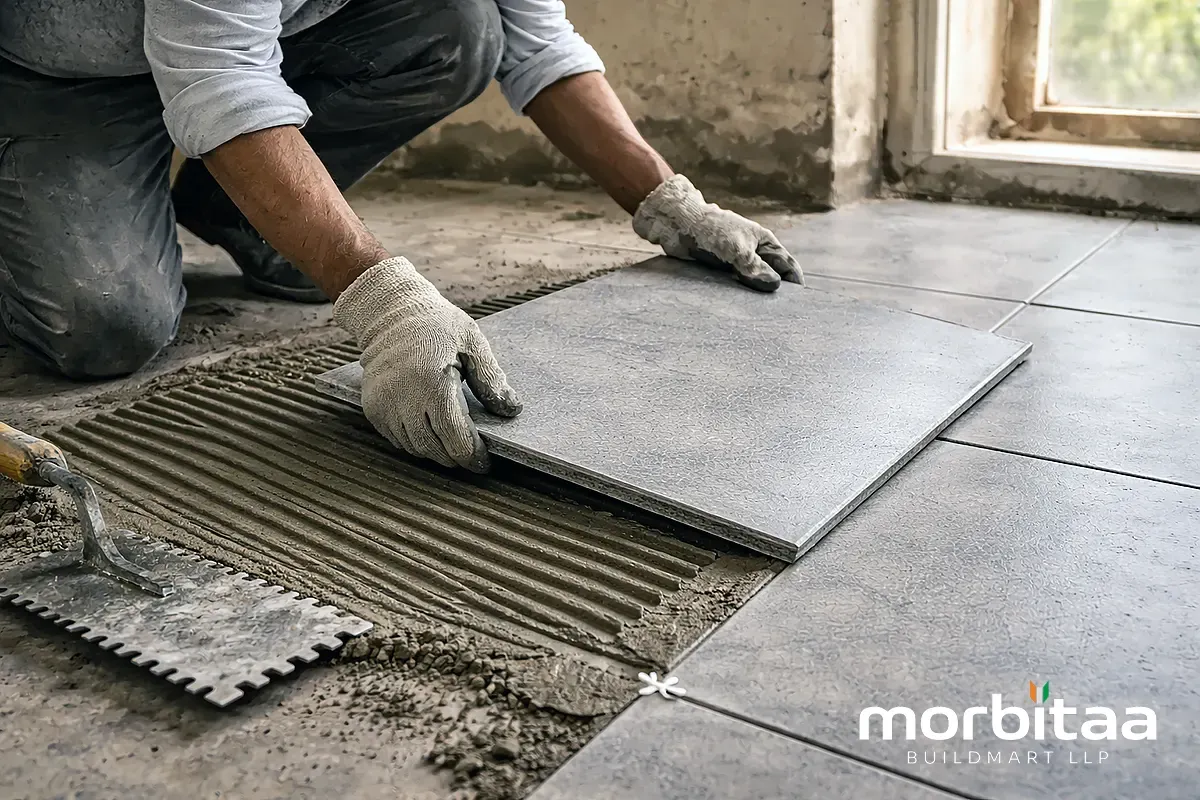
Many flooring problems are linked to installation rather than the tile itself. Uneven floors, poor adhesive coverage and rushed fitting can lead to hollow sounds, uneven joints or broken tiles.
The installer should plan the layout before fixing the tiles. This helps reduce awkward cuts and keeps the overall floor appearance balanced.
Buyers looking for more information can refer to this floor tiles buying guide for Indian homes to compare common tile choices, sizes and applications.
Conclusion
The best floor tile is the one that matches the room and its daily use. Material, size, finish and installation quality all matter.
For homes in India, a practical selection process can prevent many common flooring problems. Whether buying locally or sourcing from Morbi, compare the complete specification and landed cost before making the final decision.
Hashtags:
#FloorTiles #VitrifiedTiles #PorcelainTiles #MorbiTiles #FlooringIdeas #TileBuyingGuide #IndianHomes
























Sign in to leave a comment.