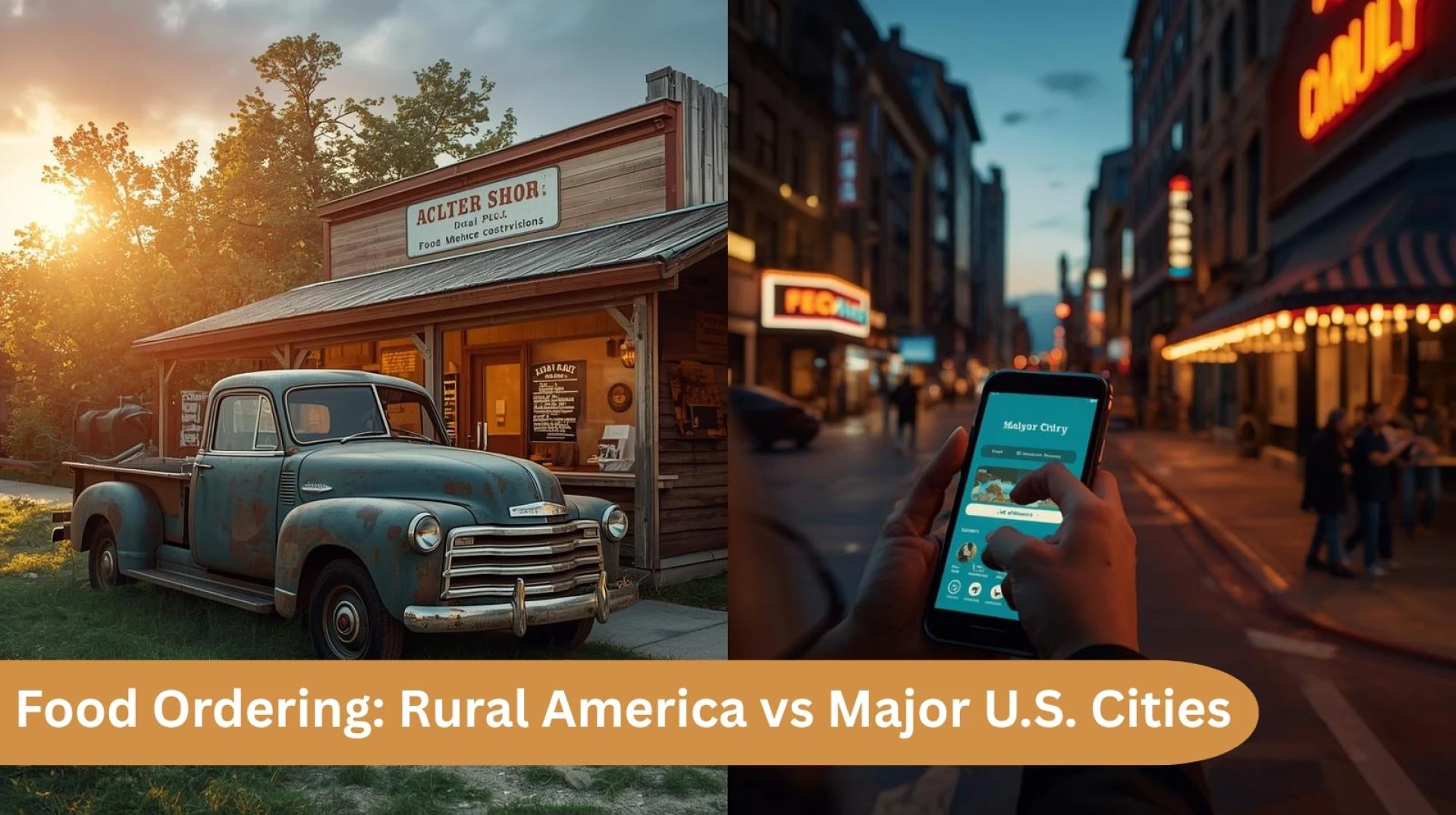

Food delivery has become second nature in big cities. A few taps, and dinner shows up in 30 minutes. But that experience isn’t the same everywhere.
Across rural America, food ordering looks very different. Some towns have no delivery apps. Others rely on local call-ins or pickup-only systems. Meanwhile, urban areas have multiple platforms, fast options, and endless cuisine choices. The contrast isn’t just about convenience. It’s about access, infrastructure, and how technology is reshaping food habits across the U.S.
This article breaks down how food ordering compares in rural towns versus major U.S. cities. From availability and speed to user behavior and cost, we’ll explore what sets these markets apart and what businesses need to know to serve both.
Understanding the Food Ordering Landscape in the U.S.
Food ordering in the U.S. has evolved from dialing local pizzerias to using mobile apps that serve millions. But that evolution hasn’t been evenly distributed. To understand the rural vs. urban gap, it’s important to zoom out and see the broader landscape.
The Rise of Online Food Ordering and Delivery
Online food ordering now accounts for a massive share of restaurant sales. Platforms like DoorDash, Uber Eats, and Grubhub dominate urban markets, offering everything from fast food to high-end meals. According to Statista, the U.S. online food delivery market crossed $28 billion in revenue in 2023, with continued growth expected through 2026.
In major cities, consumers expect speed and variety. Delivery times average 30–45 minutes, and users can scroll through hundreds of local restaurants. Loyalty programs, real-time order tracking, and cashless payments are now the norm.
But that’s the urban reality.
What “Rural” vs. “Urban” Really Means
The U.S. Census defines “rural” as areas with fewer than 2,500 residents. These communities are often spread out, with limited infrastructure and fewer businesses per capita. In contrast, urban zones include dense metros like New York, Chicago, and Los Angeles, places where demand and delivery density make fast service possible.
Why does this matter for food ordering?
Because delivery networks work best when demand is high and stops are close together. That’s hard to achieve in low-density rural areas.
Digital Access and Delivery Coverage
Broadband access plays a big role too. While 85% of urban households have reliable high-speed internet, rural broadband penetration still lags behind at around 65%, according to FCC data. This digital divide affects not just entertainment, but access to delivery apps and online payment options.
Delivery coverage follows suit. Most third-party apps prioritize urban zones where orders are frequent and travel time is low. Many small towns still aren’t even on the map for major platforms. In some rural counties, only 1 in 5 restaurants offers any form of online ordering.
Key Differences in Food Ordering: Rural America vs Major U.S. Cities
Rural diners and city dwellers don’t just live in different places they experience food ordering in completely different ways. From availability to speed, here’s how the gap plays out.
Access to Delivery Services
Urban areas are blanketed with delivery platforms. Whether it’s DoorDash, Uber Eats, or local services, restaurants in big cities can easily plug into a tech-driven ecosystem. In fact, over 90% of restaurants in major metros offer online ordering through at least one third-party app.
In rural America, that access is often missing. Many small towns lack driver networks, platform support, or even broadband strong enough to run mobile apps reliably. According to CoBank, only 37% of rural restaurants participate in any online food ordering service.
Speed and Delivery Times
City orders are fast. Drivers can complete multiple deliveries per hour due to short distances and high demand. Time guarantees and real-time tracking are expected features.
Rural deliveries face long travel times, sparse stops, and fewer couriers. Some deliveries can take 60–90 minutes, if they’re available at all. Many rural customers still rely on phone calls and curbside pickup.
Platform Reach and Support
In cities, restaurants can run parallel systems own website ordering, third-party apps, and POS integrations. These setups offer marketing tools, CRM features, and data analytics.
Rural restaurants often lack this digital infrastructure. Many depend on word of mouth, social media pages, or basic phone orders. Building or maintaining a custom ordering system may be too costly, given the limited order volume.
Consumer Behavior and Ordering Frequency
Urban customers are frequent app users. On average, a city resident places 2–3 food orders per week, especially in areas with young, working professionals.
In rural areas, ordering is more occasional. Many residents prefer cooking at home or dining in, due to fewer available options or higher delivery costs. In some regions, weekly online food orders are less than 0.5 per household.
Price Sensitivity and Delivery Costs
Cities benefit from scale. Delivery fees are often lower or waived through loyalty programs, and minimum order amounts are easily met.
Rural consumers face higher per-order costs. Longer distances, smaller order volumes, and fewer alternatives mean fees can exceed $10–$15 per order, making frequent use unsustainable.
Variety of Cuisine and Vendors
Urban ordering means choice Thai, Ethiopian, Korean BBQ, vegan tacos, often all within 10 blocks. Restaurant density feeds discovery and experimentation.
Rural communities may only have a few local options. Chains and diners dominate. The variety of cuisine is narrower, and fewer places offer digital ordering.
Social and Public Health Impacts
Food ordering isn’t just about convenience. It directly affects health, nutrition, and quality of life. The rural and urban divide becomes even clearer when viewed through this lens.
Food Access and Food Insecurity
In major U.S. cities, online food ordering increases access. Residents can order meals, groceries, and fresh produce without leaving home. This matters for seniors, people with disabilities, and time-constrained workers. When delivery is widely available, access improves.
Rural America faces a tougher reality. Many rural counties are classified as food deserts, with limited grocery stores and fewer fresh food options. When online food ordering is unavailable or unreliable, residents have fewer ways to bridge that gap. USDA data shows that food insecurity rates in rural areas are consistently higher than in urban regions, especially in low-income counties.
Nutrition Quality and Meal Choices
Urban consumers benefit from choice. Alongside fast food, they can order healthy meals, plant-based options, and specialty diets. Many platforms now highlight calorie counts and nutrition labels, helping users make informed decisions.
Rural ordering options are often limited to diners, pizza, or fast food. When delivery exists, healthier options may not. This lack of variety can influence long-term eating habits and increase diet-related health risks.
Impact on Vulnerable Populations
For people without reliable transportation, online food ordering can be a lifeline. In cities, delivery fills that role effectively. In rural areas, the absence of delivery options forces dependence on neighbors, community programs, or long travel times.
Public health studies have linked limited food access to higher rates of chronic illness. The gap in food ordering availability quietly reinforces these challenges.
Community and Mental Well-Being
Food access also affects social well-being. Urban residents use food ordering for family meals, social gatherings, and work-life balance. The ease reduces stress and saves time.
In rural communities, fewer options can increase isolation. During emergencies or extreme weather, limited food ordering access becomes a serious concern rather than an inconvenience.
Innovations & Solutions Bridging the Gap
While the rural-urban divide in food ordering is real, it isn’t fixed. New ideas, technologies, and partnerships are beginning to close the gap. Here's how change is taking shape.
Delivery Platforms Expanding Into Rural Markets
Major platforms are starting to test rural-friendly models. DoorDash, for instance, has launched “Drive” programs in smaller towns that let local restaurants access logistics support without being fully dependent on app visibility. Uber Eats has experimented with batch deliveries in low-density areas, grouping multiple orders into a single driver route.
These changes help make rural operations more efficient, even when demand is lower.
Local Innovations and Community Delivery Models
In some towns, community-led delivery models are stepping in where big tech isn’t present. For example, services like Market Wagon offer local food and farm products with scheduled weekly drop-offs. Others, like chamber-of-commerce–backed delivery collectives, pool small restaurant resources to hire shared drivers.
These models aren’t just about food, they’re about building resilience in underserved markets.
Smarter Logistics and AI Route Optimization
Tech isn’t just for cities. Some startups now use AI-driven logistics to map better rural delivery routes, reducing fuel costs and idle time. Smart dispatching, hybrid drop zones, and real-time route adjustments are helping couriers reach more remote addresses.
Even drone delivery pilots are gaining traction in rural counties, especially for groceries and medicines. Zipline and Wing have already completed thousands of rural drops in areas where traditional delivery isn’t viable.
Government and Infrastructure Support
The FCC’s broadband expansion programs are critical. As high-speed internet reaches more rural homes, the digital foundation for food ordering improves. Some states also offer funding for local businesses to digitize operations including setting up online ordering tools or digital menus.
Restaurant Tech Becoming More Accessible
Platforms like Foodiv and ChowNow now offer low-cost, plug-and-play ordering systems for independent restaurants. With fast onboarding and minimal fees, these tools let rural businesses accept digital orders without relying on third-party marketplaces.
Conclusion
Food ordering in the U.S. tells two different stories. In major cities, it’s fast, digital, and filled with options. In rural America, it’s often limited, slower, and shaped by geography and infrastructure gaps. These differences affect not just convenience but also health, access, and opportunity.
But the gap is starting to close. With smarter technology, local innovation, and better connectivity, rural communities are beginning to see new ways to access food and support their local restaurants. And for businesses and platforms looking to grow, understanding these contrasts isn’t optional, it’s essential.
Bridging rural and urban food ordering isn’t just about apps and delivery. It’s about inclusion, access, and building systems that work for everyone, everywhere.

Sign in to leave a comment.