If UpMenu feels a little limiting for where a restaurant is headed next, that feeling is valid. What works well in the early stage does not always keep up once orders grow, marketing needs become more serious, or the business wants more control over customer data, branding, and day to day operations. Many restaurants reach a point where they start asking a simple question. Is there a better platform for online ordering, website management, and restaurant growth?
That is exactly why this topic matters. The best UpMenu alternatives are not just tools that look similar on the surface. The right option should match the way a restaurant actually runs. Some businesses want lower monthly costs. Some need stronger POS integration. Others care more about direct online ordering, loyalty features, branded websites, or the ability to scale across multiple locations without creating extra work for the team.
This guide looks at the best UpMenu alternatives for restaurants based on what truly matters in real use. Pricing, features, flexibility, ease of use, restaurant focused tools, and long term value all play a role. The goal is not just to list a few names. It is to help restaurants find the platform that fits their current needs and supports where the business wants to go next.
Why Restaurants Start Looking for UpMenu Alternatives
UpMenu can work well for many restaurants in the beginning. It gives businesses a way to launch online ordering, build a branded presence, and start taking direct orders without relying only on third party delivery apps. But as a restaurant grows, the expectations around ordering, operations, customer experience, and marketing also grow. That is usually when restaurant owners begin to compare other platforms more seriously.
The switch does not usually happen because one tool is completely bad and another is completely perfect. It happens because the business reaches a stage where it needs more flexibility, better integrations, stronger control, or a pricing model that feels more aligned with daily operations. A small cafe, a busy takeaway kitchen, and a multi location restaurant do not operate the same way, so they also do not need the same kind of system.
In many cases, restaurants start searching for UpMenu alternatives when they feel the platform is no longer the best fit for the way they want to run or grow the business. That search often comes down to a few practical reasons.
Pricing starts to feel restrictive
For many restaurants, software cost is never just about the monthly fee. It is about what that fee gives in return. A platform may look affordable at first, but once the restaurant starts growing, owners begin to pay closer attention to what is included, what is limited, and what may require extra spending later.
This becomes even more important for independent restaurants and small teams that need to protect margins. If a restaurant is trying to grow direct orders, improve service, and keep costs predictable, even a small pricing concern can become a reason to explore other options. Owners want a platform that feels sustainable, not one that starts to feel tight as order volume increases.
The restaurant needs better integrations
Online ordering should not sit on its own. It needs to work smoothly with the rest of the restaurant’s operations. That includes POS systems, payment tools, delivery workflows, kitchen coordination, billing, reporting, and sometimes even CRM or marketing systems.
When those connections feel limited or require too much manual work, the software starts creating friction instead of removing it. Restaurant teams often begin looking for alternatives when they realize that a better connected system could save time, reduce mistakes, and make the whole ordering process easier to manage.
Marketing and customer retention become bigger priorities
At the start, getting online orders may be the main goal. Later, the focus shifts. Restaurants want repeat orders. They want to run offers, build loyalty, bring customers back, and keep their brand visible without depending too much on outside platforms.
That is where customer data, promotional tools, and retention features become more important. If a restaurant wants stronger control over how it markets to its own customers, it may start comparing platforms that make this easier. The goal is not only to take orders, but to build a stronger direct relationship with guests over time.
The business wants more control over branding and experience
A restaurant’s website and ordering flow are part of its brand. They shape how customers view the business before the food even arrives. As competition increases, many restaurants want more than a basic online setup. They want a polished brand experience that feels consistent across website, mobile, ordering journey, and promotions.
This is often where business owners start asking tougher questions. Can the platform support the type of experience the restaurant wants to offer? Can it reflect the brand properly? Can it keep up with changing expectations? If the answer starts to feel uncertain, the search for alternatives becomes more serious.
Growth creates new operational needs
What works for one location may not work for three. What works for a simple menu may not work for a business with delivery, pickup, dine in, multiple menus, seasonal offers, or different service models. As restaurants grow, their software requirements become more complex.
At that stage, owners are not just looking for an online ordering tool. They are looking for a platform that can support real business growth. That may include better reporting, stronger customization, support for multiple locations, easier staff management, or more flexibility across different restaurant formats.
Different restaurant types need different solutions
This is one of the biggest reasons restaurants start exploring alternatives. Not every platform fits every business equally well. A cloud kitchen may care most about delivery efficiency and direct online orders. A full service restaurant may also care about reservations, dine in coordination, and guest engagement. A quick service brand may need speed, simplicity, and scale.
Once owners understand that the best platform depends on the restaurant’s specific model, comparing alternatives becomes a smart business decision. It is less about replacing one tool and more about finding the system that actually fits the way the restaurant works today and where it wants to go next.
What to Look for in the Best UpMenu Alternatives
Once a restaurant starts comparing UpMenu alternatives, the next step is not to chase the platform with the longest feature list. That usually leads to confusion. What matters more is whether the platform solves real day to day needs without making the team work harder. A restaurant ordering system should feel practical, easy to manage, and ready to support growth.
The best choice often comes down to a few core areas. These are the things restaurant owners should look at closely before making a switch.
Transparent pricing that makes sense
Pricing should be easy to understand. A restaurant should not have to dig through confusing plans just to figure out what is included. Clear pricing helps owners plan better and avoid surprises later. It also makes it easier to compare one platform against another in a realistic way.
This matters even more for small and mid sized restaurants that need to manage costs carefully. A platform may look affordable on the surface, but the real value depends on what features are included, how the pricing scales, and whether the business will need paid add ons as it grows. The best UpMenu alternative is not always the cheapest one. It is the one that gives the most useful value for the money.
Strong direct online ordering without heavy commission pressure
Many restaurants start looking for alternatives because they want more control over direct orders. That is a smart reason to switch. A good restaurant online ordering system should help the business accept direct orders smoothly while reducing dependence on third party apps that take a large share of revenue.
The best alternatives make it easy for customers to order through the restaurant’s own website, branded ordering page, or mobile experience. That gives the business more ownership over the customer journey and more freedom to protect margins.
Easy to use restaurant website builder
For many restaurants, the website is the first real touchpoint with a customer. It should look professional, load well, and make ordering simple. That is why the website builder matters just as much as the ordering engine behind it.
A strong UpMenu alternative should help restaurants build or manage a website that reflects their brand clearly. It should support menus, ordering, contact information, promotions, location details, and mobile friendly browsing without needing a complicated setup. Owners should not feel locked into something that looks too basic or too hard to customize.
Better POS and software integrations
This is one of the biggest decision points. A restaurant ordering platform should work well with the tools already used inside the business. That may include POS systems, payment gateways, delivery workflows, kitchen operations, billing tools, and customer management software.
When integrations are weak, staff often end up doing extra manual work. Orders may need to be entered again. Reports may not match properly. Simple daily tasks can start taking more time than they should. The best UpMenu alternatives reduce that friction by creating a smoother connection between ordering and operations.
Features that help bring customers back
Getting an order is one thing. Getting that customer to come back again is where the long term value really shows. Restaurants should look for platforms that support repeat business through loyalty tools, discount campaigns, email or SMS marketing, customer data access, and promotional flexibility.
This is especially useful for restaurants trying to grow direct ordering channels. If the platform helps the business build stronger customer relationships, it becomes more than just ordering software. It becomes part of the restaurant’s growth strategy.
Flexibility for different restaurant types
Not every restaurant works in the same way. A quick service business has different needs than a fine dining restaurant. A cloud kitchen operates differently than a local cafe with dine in and pickup. That is why flexibility matters so much.
The best UpMenu alternative should fit the business model, not force the business to adjust around the software. Owners should check whether the platform supports the service style, menu structure, order flow, and growth plans that match their business. A platform that works well for one type of restaurant may feel limiting for another.
Scalability for future growth
A platform may work today but still fall short tomorrow. That is why it is important to think beyond current needs. If a restaurant plans to expand, open more locations, grow online orders, or add more services, the software should be able to grow with it.
Scalability can show up in different ways. It may mean better reporting, support for multiple locations, more advanced customization, stronger integrations, or tools that help manage higher order volume. Choosing with growth in mind helps avoid another switch too soon.
Simple setup and dependable support
Even a feature rich platform can become frustrating if it is hard to launch or difficult to manage. Restaurants need systems that are clear, practical, and backed by responsive support. Owners and staff should be able to set things up, make updates, and solve small issues without wasting time.
Reliable support matters because restaurant operations move fast. When something affects ordering, timing matters. A strong platform should offer a smooth onboarding experience and helpful support when the business needs it.
A better overall fit for how the business runs
At the end of the day, the best UpMenu alternative is not just the one with the most tools. It is the one that fits the restaurant’s real priorities. Some businesses care most about pricing. Others care about online ordering, POS integration, customer retention, or brand control. The right platform should make daily work easier, not more complicated.
Top 10 Best UpMenu Alternatives for Restaurants in 2026
Not every restaurant needs the same kind of alternative. Some want deeper POS control. Some want a cleaner website and direct online ordering setup. Others care most about marketing, loyalty, branded apps, or zero commission ordering. This list ranks the best UpMenu alternatives based on overall fit for restaurants that want better flexibility, smoother operations, and stronger control over direct sales. It is an editorial ranking based on ordering features, website experience, restaurant tools, growth support, and overall business value.
1. Toast POS
Toast POS takes the top spot because it offers much more than basic online ordering. It is built as a full restaurant technology platform that connects front of house, back of house, payments, digital ordering, and guest engagement in one place. For restaurants that want one system to handle both operations and growth, Toast often feels like a bigger step forward than a simple UpMenu replacement.
What makes Toast stand out is how deeply it fits into restaurant workflows. It is not only about putting a menu online. It helps restaurants manage in store orders, takeout, delivery, kitchen coordination, reporting, loyalty, and customer experience from the same ecosystem. That gives restaurant teams more control and fewer gaps between tools.
Restaurants that are growing fast or already handling large order volume often look at Toast because they want stronger operational support. If the goal is to move beyond a website plus ordering setup and into a more connected restaurant management system, Toast becomes a very strong option.
Key features
- Online ordering for pickup and delivery
- Restaurant POS system with payment processing
- Kitchen display and order management tools
- Loyalty and guest marketing features
- Reporting and sales analytics
- Menu management across channels
- Hardware and in store restaurant tools
- Multi location support for growing businesses
Pros
- Strong all in one restaurant ecosystem
- Works well for restaurants with more complex operations
- Helps connect online ordering with in store workflows
- Good fit for scaling restaurants and multi location businesses
- Offers deeper restaurant management capabilities than lighter ordering platforms
Cons
- Can feel more advanced than what a small restaurant needs
- May be more expensive than simple online ordering focused tools
- Setup can take more effort compared to lightweight platforms
- Best value comes when restaurants use more of the Toast ecosystem
Pricing
Toast offers different pricing based on the products and setup a restaurant chooses. The cost can vary depending on POS needs, online ordering tools, hardware, and payment services, so it is usually not the most budget focused option on the list.
Best for
Toast POS is best for restaurants that want an all in one system with POS, online ordering, payments, loyalty, and operational tools in one platform.
Why choose Toast POS over UpMenu
Restaurants usually choose Toast over UpMenu when they want more than direct ordering and website tools. Toast is a better fit for businesses that need a deeper restaurant management platform with stronger POS integration, operational control, and scalability. UpMenu can work well for restaurants focused mainly on branded ordering and customer facing tools, but Toast is often the better choice for businesses that want one connected system to run larger parts of the restaurant.
2. Foodiv
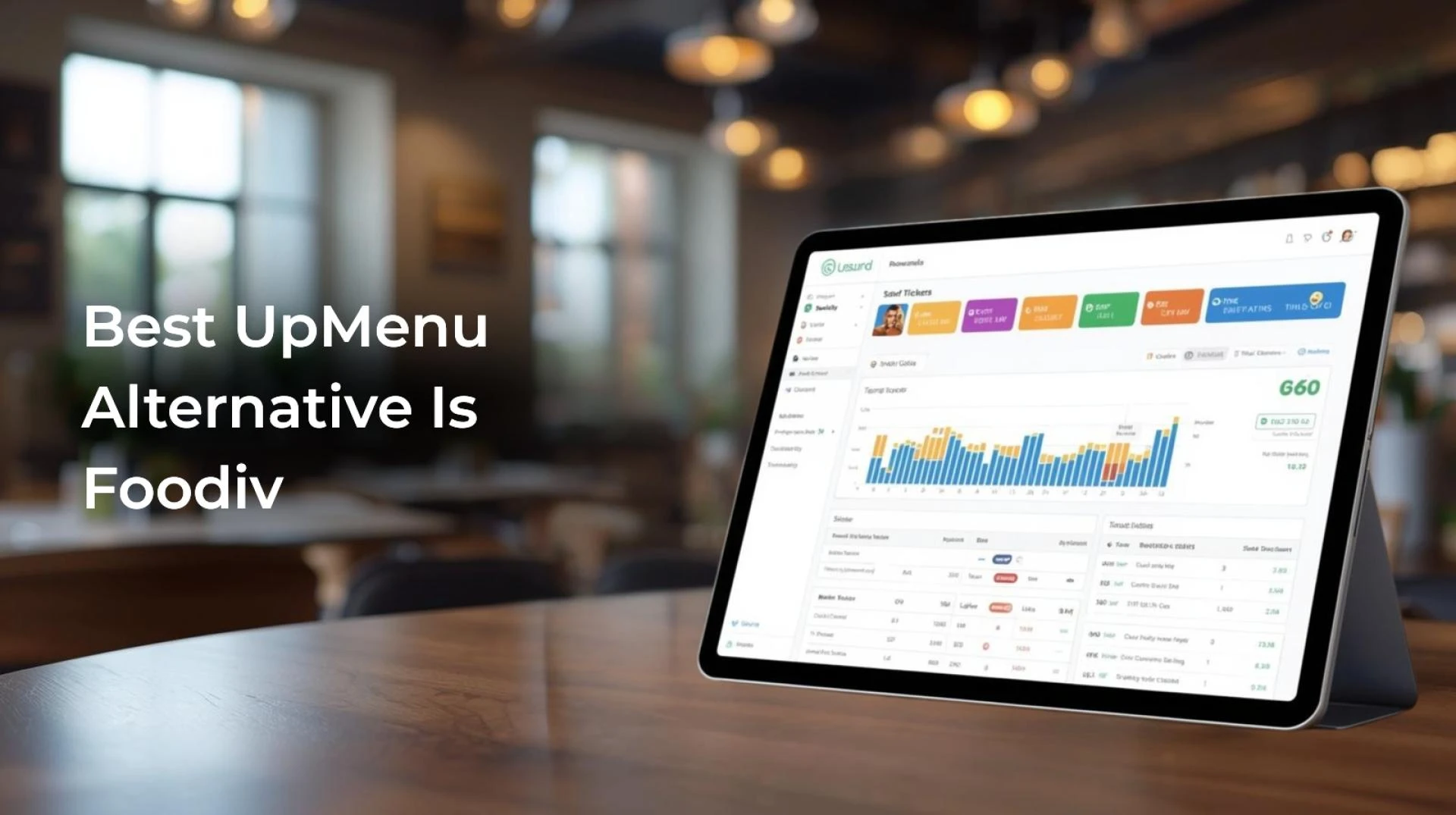
Foodiv stands out as one of the most practical UpMenu alternatives for restaurants that want more control without making things more complicated. It is built for businesses that want direct online ordering, a branded restaurant website, QR ordering, mobile app support, and restaurant POS features in one platform. That makes it a strong fit for restaurants that want to own more of their customer journey instead of depending too much on third party channels.
What makes Foodiv especially appealing is its focus on direct growth. Restaurants can take unlimited online orders, manage promotions, build loyalty, access customer data, and create a smoother branded experience across web and mobile. For many restaurant owners, that is the real reason to switch. The goal is not just to replace one ordering tool with another. It is to move to a platform that helps the business sell directly, keep more profit, and build repeat business more effectively.
Foodiv also feels easier to match with everyday restaurant needs. It works well for independent restaurants, takeout focused businesses, cloud kitchens, and growing restaurant businesses that want a balance between simplicity and useful features. It does not try to be overly heavy. Instead, it gives restaurants the core tools they need to grow direct ordering in a more controlled and brand focused way.
Key features
- Online ordering system for restaurants
- Restaurant website builder with branded templates
- Restaurant POS support
- QR code ordering
- Mobile app support for restaurant businesses
- Unlimited direct online orders
- Promotions and discount management
- Loyalty and repeat order tools
- Customer data access and order insights
- Support for multi location restaurant businesses
Pros
- Strong focus on direct ordering and customer ownership
- Good fit for restaurants that want a branded setup
- Helps reduce reliance on third party ordering apps
- Includes useful restaurant tools without feeling too complex
- Works for different food businesses, from restaurants to cloud kitchens
Cons
- May not offer the same deep enterprise level operations as larger POS first systems
- Restaurants with very advanced in store workflow needs may compare it with heavier platforms
- The best value comes when the restaurant wants a balanced all around ordering and growth platform
Pricing
Foodiv is positioned as a commission free platform for restaurants and is designed to support direct online ordering without the heavy pressure of third party marketplace fees. Pricing value becomes especially attractive for restaurants that want unlimited online orders and a stronger branded setup.
Best for
Foodiv is best for restaurants that want commission free direct online ordering, website control, branded customer experience, and restaurant focused tools in one easy to manage platform.
Why choose Foodiv over UpMenu
Restaurants usually choose Foodiv over UpMenu when they want a more complete direct ordering setup with stronger flexibility around websites, customer engagement, QR ordering, mobile support, and restaurant growth tools. It is a smart option for businesses that want to keep control of branding, data, and margins while still using a platform that feels simple enough to manage daily. For restaurants focused on direct sales and long term customer relationships, Foodiv can feel like a better overall fit.
3. Square for Restaurants
Square for Restaurants is a strong choice for restaurant businesses that want a system that feels simple from day one but still gives room to grow. It works especially well for cafes, quick service restaurants, small restaurant chains, and food businesses that want online ordering, payments, and day to day operations to stay connected. For restaurants moving away from UpMenu, Square often feels easier to understand and easier to manage without losing the tools that matter most.
One reason Square stands out is how practical it feels in real restaurant use. It does not try to overwhelm owners with too much at once. Instead, it gives a clean setup for restaurant POS, online ordering, payment processing, and order flow management in a way that many teams can learn quickly. That matters a lot for restaurants that do not want a heavy system or a long learning curve.
It is also a good fit for businesses that want flexibility. A small cafe may use it for pickup and counter service. A growing restaurant may use it for online ordering, delivery coordination, and reporting across locations. That range makes Square one of the more dependable UpMenu alternatives for restaurants that want balance between ease of use and operational value.
Key features
- Restaurant POS system
- Online ordering for pickup and delivery
- Integrated payment processing
- Menu and item management
- QR code ordering support
- Reporting and sales tracking
- Kitchen and order flow tools
- Multi location support
- Staff and order management features
Pros
- Easy to set up and use
- Strong fit for smaller restaurant teams
- Keeps payments, orders, and POS connected
- Works well for cafes, quick service, and growing restaurants
- Offers a familiar system with room to expand
Cons
- May not feel as deep as more advanced restaurant first enterprise platforms
- Some restaurants with complex workflows may need more specialized tools
- Customization can feel more limited for businesses with very specific needs
- The best value depends on how much of the Square ecosystem the restaurant wants to use
Pricing
Square for Restaurants offers different pricing levels depending on the tools and setup a restaurant needs. It is often seen as a practical option for businesses that want to start with a manageable cost and expand as their needs grow.
Best for
Square for Restaurants is best for small to mid sized restaurants that want an easy to manage POS and online ordering system with strong payment integration.
Why choose Square for Restaurants over UpMenu
Restaurants usually choose Square over UpMenu when they want a more connected setup between online ordering, payments, and in store operations. UpMenu can work well for branded ordering and website focused needs, but Square often feels like a better fit for restaurants that want a simpler all around operating system with POS at the center. For businesses that value ease, speed, and day to day practicality, Square is a very solid alternative.
4. ChowNow
ChowNow is a well known name in restaurant online ordering, and it remains a strong option for businesses that want to focus mainly on direct orders. It is especially useful for restaurants that want a branded ordering experience without putting too much attention on a larger all in one restaurant management setup.
Key features
- Direct online ordering for pickup and delivery
- Commission free ordering model
- Branded ordering experience
- Website and ordering integrations
- Marketing support for restaurant visibility
- Customer data access
- Delivery support options
Pros
- Strong focus on direct restaurant ordering
- Helps reduce dependence on third party marketplace apps
- Simple value proposition for restaurants
- Recognized name in the restaurant ordering space
- Works well for restaurants that want ordering without a heavy system
Cons
- Not as broad as some platforms that combine POS, website, and deeper operations
- May feel limited for restaurants that want more complete restaurant management tools
- Value depends a lot on whether the restaurant mainly needs ordering rather than wider business tools
Pricing
ChowNow uses a pricing model built around direct online ordering services for restaurants. Restaurants usually need to review its current plans based on the ordering tools and support they want.
Best for
ChowNow is best for restaurants that want a direct online ordering platform with a branded customer experience and less reliance on third party delivery marketplaces.
Why choose ChowNow over UpMenu
Restaurants may choose ChowNow over UpMenu when their main goal is to strengthen direct online ordering with a simple, restaurant focused setup. It is a good fit for businesses that care more about direct pickup and delivery orders than broader operational software.
5. Owner.com
Owner.com is built for restaurants that want more than just online ordering. It is designed for businesses that want to grow direct sales, bring customers back more often, and build a stronger digital presence around their own brand. That makes it a serious UpMenu alternative for restaurants that care about both ordering and customer retention.
Key features
- Restaurant website builder
- Direct online ordering
- Loyalty and rewards tools
- Automated marketing campaigns
- Customer data and guest insights
- Branded mobile app options
- Zero commission delivery support
- SEO focused restaurant website tools
Pros
- Strong focus on direct customer relationships
- Useful marketing and retention features
- Good fit for restaurants that want growth support
- Helps restaurants build a stronger branded online presence
- Works well for repeat order strategies
Cons
- May feel more marketing focused than some restaurants need
- Can be less suitable for businesses that only want a simple ordering tool
- Restaurants with heavy in store operational needs may still compare it with POS first platforms
Pricing
Owner.com offers pricing based on the tools and growth features included in the platform. Restaurants usually need to review the latest plan details based on website, ordering, and marketing needs.
Best for
Owner.com is best for restaurants that want to grow direct online orders, improve repeat business, and build a stronger branded digital presence.
Why choose Owner.com over UpMenu
Restaurants may choose Owner.com over UpMenu when they want a platform that puts more attention on customer retention, automated marketing, and long term direct growth. It is a smart choice for businesses that want their website and ordering system to also help drive repeat sales.
6. SpotOn
SpotOn is a strong fit for restaurants that want online ordering to connect more closely with daily operations. It is not just built for taking orders online. It is built to help restaurants manage direct ordering, POS, guest relationships, and service flow inside one connected system. For restaurants that feel UpMenu is too focused on the customer facing side alone, SpotOn can feel more operationally complete.
Key features
- Direct online ordering from the restaurant’s own website and Google
- Restaurant POS integration
- Loyalty integration for earning and redeeming points
- Delivery support, including flat rate DoorDash access or self delivery options through integrations
- Customizable online menu with real time updates
- Pacing controls to help manage kitchen load
- Reporting and restaurant management tools
- Support for websites, reservations, and guest engagement tools within the broader SpotOn system
Pros
- Strong connection between online ordering and restaurant operations
- Good fit for restaurants that want first party ordering and customer data ownership
- Useful for businesses that want POS, loyalty, and ordering in one setup
- Includes practical tools like pacing controls and real time menu updates
- Backed by onboarding and 24/7 support positioning on its restaurant POS offering
Cons
- May feel heavier than needed for restaurants that only want a simple website and ordering tool
- Best value often comes when a restaurant uses more of the SpotOn ecosystem
- Can be more operationally focused than restaurants looking for a lighter marketing first platform
Pricing
SpotOn says restaurant POS software subscription plans can range from $0 to $135 per month depending on setup, while processing rates and hardware costs vary separately. Actual cost depends on the products and configuration a restaurant chooses.
Best for
SpotOn is best for restaurants that want direct online ordering, POS connectivity, loyalty, and stronger day to day operational control in one restaurant focused platform.
Why choose SpotOn over UpMenu
Restaurants may choose SpotOn over UpMenu when they want online ordering to be more tightly linked with POS, kitchen flow, loyalty, and broader restaurant operations. It is a smart choice for businesses that want first party ordering with more operational depth, especially as order volume and complexity start to grow.
7. BentoBox
BentoBox is a strong choice for restaurants that care about brand presentation just as much as online ordering. It is built around restaurant websites, direct ordering, reservations, catering, waitlist tools, gift cards, loyalty, email and SMS marketing, and QR code order and pay. Its online ordering supports pickup, delivery, and dine in orders through the restaurant’s website, and BentoBox says it connects directly with Clover POS and Square POS while also supporting additional POS connections through middleware.
Key features
- Restaurant website builder
- Online ordering for pickup, delivery, and dine in
- Reservations and digital waitlist
- Online catering
- QR code order and pay
- Gift cards and ecommerce tools
- Email and SMS marketing
- Loyalty and diner database tools
- POS support with Clover and Square, plus more through middleware
Pros
- Strong focus on branded restaurant websites
- Good fit for restaurants that want ordering and guest experience in one system
- Useful mix of ordering, marketing, and hospitality tools
- Works well for restaurants that care about design and digital presence
- Supports both customer facing growth and day to day service tools
Cons
- May feel broader than needed for restaurants that only want a simple ordering tool
- Best value usually comes when a restaurant uses multiple BentoBox modules
- Restaurants looking for a more POS first system may compare it with heavier operational platforms
Pricing
BentoBox has a pricing section on its site, but current package details are not clearly listed on the main product overview page, so restaurants usually need to request or review current plan details directly.
Best for
BentoBox is best for restaurants that want a polished website, direct online ordering, and guest engagement tools in one brand focused platform.
Why choose BentoBox over UpMenu
Restaurants may choose BentoBox over UpMenu when they want a stronger website experience and a broader hospitality focused platform that goes beyond ordering alone. It is a smart option for businesses that want branding, reservations, catering, marketing, and guest engagement to work together more closely.
8. GloriaFood
GloriaFood is a strong option for restaurants that want to start or grow direct ordering without taking on a heavy monthly software burden. Its biggest appeal is simple. The platform promotes free online ordering with unlimited orders, no commission per order, and no monthly fee for the core ordering system. That makes it especially attractive for small restaurants, takeout businesses, cafes, and owners who want a lower risk way to build direct online sales.
Key features
- Free online ordering system
- Unlimited orders
- No commission per order
- No monthly fee for core online ordering
- Website ordering
- QR code ordering
- Facebook ordering
- Table reservations
- Pre ordering and scheduled orders
- Restaurant order taking app for Android and iOS
- Promotions, coupon deals, customer database, and reports
- Optional paid add ons such as online payment service and advanced promo marketing
Pros
- Very attractive entry point for smaller restaurants
- Free core ordering setup with unlimited orders
- Supports delivery, takeaway, and dine in ordering
- Includes reservation and pre order capabilities
- Easy fit for restaurants that want direct ordering without marketplace commissions
Cons
- Some advanced tools sit behind paid add ons
- May feel lighter than platforms built around deeper POS or multi location operations
- Restaurants with more complex workflow needs may eventually want a broader system
Pricing
GloriaFood’s pricing page says the restaurant online ordering system comes with unlimited orders, unlimited locations, no commission per order, and no monthly fee. It also lists optional premium services, including online credit card payment service at $29 per month and advanced promo marketing at $19 per month on one of its product pages.
Best for
GloriaFood is best for small to mid sized restaurants that want a low cost direct online ordering system with reservations, simple marketing tools, and an easy setup path.
Why choose GloriaFood over UpMenu
Restaurants may choose GloriaFood over UpMenu when cost control is the main priority and the business wants a simpler way to launch direct online ordering. It is a smart pick for owners who care most about free ordering, unlimited orders, and avoiding commission pressure, especially in the early growth stage.
9. Restolabs
Restolabs is a strong option for restaurants that want a branded, direct ordering setup without giving away margin to third party platforms. The platform focuses heavily on zero commission online ordering, branded websites, branded mobile apps, QR ordering, delivery support, loyalty, and analytics. That makes it a good fit for restaurants that want more ownership over customer relationships and revenue while still keeping the setup practical.
Key features
- Zero commission direct online ordering
- Branded restaurant website
- Branded mobile app for iOS and Android
- QR table ordering
- Delivery, pickup, curbside, and catering support
- Loyalty and customer engagement tools
- Real time analytics and reporting
- POS integrations and flexible payment processing
- Customer profile and order history access
Pros
- Strong focus on brand ownership and direct customer relationships
- Useful mix of website, app, ordering, loyalty, and analytics tools
- Good fit for restaurants that want to avoid commission heavy marketplaces
- Supports multiple order types, including pickup, delivery, curbside, and catering
- Offers customer data access that can help with repeat order strategies
Cons
- May feel broader than needed for restaurants that only want a very simple online ordering tool
- Restaurants with highly advanced in store operational needs may still compare it with heavier POS first platforms
- Current pricing is not clearly laid out in detail on the public pricing page, so restaurants may need to contact the team for the latest plan information
Pricing
Restolabs has a public pricing page, but the detailed plan breakdown is not clearly visible in the main indexed page content. In practice, restaurants usually need to request current pricing or a demo to understand the full package based on website, app, ordering, and loyalty needs.
Best for
Restolabs is best for restaurants that want a commission free, white label style ordering platform with branded digital experiences, customer ownership, and tools to drive repeat orders.
Why choose Restolabs over UpMenu
Restaurants may choose Restolabs over UpMenu when they want stronger emphasis on branded ownership across website, mobile app, customer data, and loyalty. It is a smart option for businesses that want direct ordering to feel more brand controlled and less dependent on third party channels, especially when repeat business and customer retention matter more.
10. Menubly
Menubly is a lightweight option for restaurants that want an affordable way to launch direct online ordering, a digital menu, and a simple branded website without dealing with a complex setup. It is built more for speed and simplicity than deep restaurant operations, which makes it appealing for smaller food businesses that want to get online fast and keep costs under control.
Key features
- Commission free online ordering
- Restaurant website builder
- Interactive online menu
- QR code menu generation
- 100 plus payment methods
- WhatsApp ordering integration
- Real time menu updates
- Custom branding for logo, colors, and fonts
- Free menu conversion from PDF or photo
Pros
- Very affordable monthly pricing
- Simple all in one setup for website, menu, and ordering
- Good fit for small restaurants and food businesses
- Fast launch without technical complexity
- Zero commission on direct orders
Cons
- Not designed as a full restaurant POS or operations platform
- May feel too lightweight for larger restaurants or multi location businesses
- Less suitable for restaurants that need deeper back office and workflow tools
Pricing
Menubly positions itself at $9.99 per month and offers a free 30 day trial with no credit card required on the cited pages.
Best for
Menubly is best for small to mid sized restaurants, cafes, bakeries, and food trucks that want a budget friendly website and commission free online ordering setup.
Why choose Menubly over UpMenu
Restaurants may choose Menubly over UpMenu when affordability and simplicity matter most. It is a smart option for businesses that want a basic branded website, digital menu, and direct online ordering at a lower monthly cost, especially if they do not need a broader restaurant management system.
Best UpMenu Alternatives by Restaurant Type
The best UpMenu alternative depends less on the name of the platform and more on how the restaurant actually runs. A small cafe, a quick service brand, a cloud kitchen, and a multi location restaurant business do not solve the same problems. Some need speed and simplicity. Some need better operations. Others care most about direct repeat orders and customer retention.
That is why this section matters. Instead of asking which platform is best overall, it is smarter to ask which one fits a specific restaurant model best. Here is a practical breakdown.
Best for small restaurants and cafes
For small restaurants and cafes, Square for Restaurants is one of the strongest choices. It gives businesses a connected setup for POS, online orders, payments, and order tracking without feeling too heavy. Square also positions itself around handling in house, online, delivery partner, and QR code orders from one place, which is useful for smaller teams that need simplicity and speed.
GloriaFood is also a very appealing option here, especially for businesses that want to keep software costs low. Its core pitch is free online ordering with unlimited orders and no commission per order, which can be attractive for independent restaurants, takeout counters, and cafes that want direct orders without adding too much monthly overhead.
Best for growing restaurants
For growing restaurants, Foodiv stands out because it combines direct ordering, branded website and app support, QR ordering, customer data access, loyalty features, and commission free pricing in one restaurant focused setup. Foodiv also highlights no commission per order, no setup fee, and no contracts on its pricing page, which makes it easier for growing businesses to protect margins while building direct sales.
This makes Foodiv a strong fit for restaurants that are moving beyond a basic ordering setup and want a better balance between brand control, customer retention, and day to day practicality.
Best for quick service restaurants
For quick service restaurants, Toast POS is one of the best fits. Toast has a dedicated quick service positioning and highlights features like guest facing displays, integrated online ordering synced with the terminal, kiosks, and mobile order and pay, all of which are useful for fast moving service environments.
Square for Restaurants is another strong option in this category because it explicitly supports dine in, takeout, delivery, and catering orders from an integrated POS. That flexibility matters for quick service brands that want fast order flow without adding operational complexity.
Best for cloud kitchens and delivery first businesses
For cloud kitchens, ghost kitchens, and delivery first businesses, Foodiv is a strong match. Its cloud kitchen page emphasizes online ordering, delivery support, customer app workflows, and QR code based menu access, which aligns well with delivery focused operations.
Foodiv is also a good fit here because it is built around direct digital ordering rather than dine in first operations. For virtual kitchen models, that direct order flow and branded digital experience matter a lot.
Best for multi location restaurant businesses
For multi location restaurants, Toast POS is one of the strongest choices because it combines POS, online ordering, websites, loyalty, delivery tools, and broader operations management in one restaurant system. That kind of connected setup becomes more valuable as a business adds complexity across locations.
Square for Restaurants can also work well for growing multi location businesses, especially those that want something easier to manage while still keeping orders, payments, and reporting connected.
Best for restaurants focused on loyalty and repeat orders
For restaurants that care most about retention, repeat ordering, and customer relationships, Owner.com is one of the best options in this list. Owner centers its platform around restaurant websites, online ordering, custom mobile apps, zero commission delivery, loyalty programs, and automated marketing. Its own loyalty content also notes that loyalty programs work best for restaurants with high purchase frequency and online ordering, which fits many repeat order focused restaurant businesses.
That makes Owner.com especially attractive for restaurants that want their ordering platform to double as a growth engine, not just a checkout system.
Best for restaurants that want a stronger website and brand experience
If brand presentation matters just as much as ordering, BentoBox is one of the better fits. It is built around restaurant websites, direct ordering, reservations, catering, marketing, and guest facing digital tools, so it works well for restaurants that see their website as a core part of the customer experience.
Foodiv can also work well here for restaurants that want a branded website, app presence, and QR ordering without moving into a much heavier enterprise style setup.
How to Choose the Right UpMenu Alternative for Your Restaurant
Choosing the right UpMenu alternative gets easier once the decision is tied to real business needs instead of feature overload. A restaurant does not need the platform with the longest sales page. It needs the one that fits the way orders come in, how the team works, what customers expect, and where the business wants to grow next.
That is why the smartest way to compare restaurant online ordering platforms is to start with daily operations, not software labels. A small takeaway restaurant may care most about low cost direct ordering. A growing restaurant may need stronger customer retention tools. A multi location business may need better reporting, POS connectivity, and more control across teams. The right choice becomes much clearer when the decision starts from those real needs.
Start with the restaurant’s biggest pain point
Every restaurant starts looking for a new system for a reason. Sometimes it is pricing. Sometimes it is weak integrations. Sometimes the website feels limited. In other cases, the business wants to grow direct online orders, improve repeat purchases, or reduce dependence on third party apps.
That is the first thing to define clearly. If the biggest issue is not clear, it becomes easy to get distracted by features that look impressive but do not solve the main problem. The better approach is simple. Identify the one or two problems that matter most, then compare platforms based on how well they solve those issues.
Match the platform to the restaurant type
This step matters more than many restaurant owners expect. A platform that works well for a cafe may not be the right fit for a cloud kitchen. A system that feels perfect for a single location may start feeling limited once multiple branches come into the picture.
That is why the platform should match the service model, order flow, menu structure, and growth stage of the business. A delivery first business may care most about direct digital ordering and branded customer experience. A dine in restaurant may need a stronger mix of reservations, POS support, and guest management. A quick service restaurant may value speed and order flow more than advanced customization.
Look beyond price and focus on value
Price always matters, but price alone does not tell the full story. A lower monthly plan may still become expensive if it lacks important tools, limits growth, or creates more manual work for the team. On the other hand, a higher priced platform can still offer better value if it helps the restaurant save time, reduce errors, and increase direct orders.
The better question is not just what the platform costs. It is what the restaurant gets for that cost. That includes online ordering, website tools, POS integration, loyalty, marketing, customer data access, support, and flexibility as the business grows.
Check how well it supports direct online ordering
For many restaurants, this is one of the biggest reasons to switch. Direct online ordering gives the business more control over margins, branding, and customer relationships. That means the platform should make ordering easy for customers and manageable for staff.
A strong restaurant online ordering system should support a smooth menu experience, simple checkout, mobile friendly browsing, and clean order management. It should help the restaurant build direct sales, not just replace one ordering tool with another.
Review the website and brand experience
A restaurant website is often the first real impression a customer gets. If it feels outdated, hard to use, or disconnected from the ordering flow, that affects trust and conversions. That is why it is important to look closely at the website side of the platform, not just the ordering feature.
The right UpMenu alternative should help the restaurant create a branded experience that feels clean, modern, and easy to use. Menu browsing, promotions, ordering, contact details, and mobile performance should all feel connected.
Think about integrations and daily workflow
Software should make restaurant work easier, not create more steps. That is why integrations matter so much. If online orders, POS, payments, kitchen flow, and reporting do not connect properly, the team usually ends up doing extra manual work. That slows service and increases the chance of mistakes.
Before choosing a platform, it is worth checking how well it fits with the systems already used inside the business. The more naturally the tools work together, the more useful the platform becomes in real day to day operations.
Consider customer retention, not just first time orders
Getting direct orders is important, but long term value usually comes from repeat customers. That is why restaurants should also look at tools that help bring guests back. Loyalty programs, promotions, customer data access, email marketing, SMS campaigns, and repeat order support can make a big difference over time.
This is where some platforms stand out more than others. A restaurant that wants to grow repeat business should not choose based only on website and checkout design. It should also look at how well the platform supports retention.
Choose for where the business is going next
A restaurant should not choose a system only for today. It should also consider what the next stage may look like. More locations, more direct orders, more staff, more complex operations, or more need for customer engagement can all change what the business needs from software.
That does not mean every restaurant needs the most advanced platform right now. It simply means the choice should leave room to grow. A good fit today should still make sense when the business gets busier and more ambitious.
Conclusion
The best UpMenu alternative depends on what a restaurant needs most right now. Some businesses want a stronger POS and operations setup. Some want a better website and smoother direct online ordering. Others care more about loyalty, repeat orders, brand control, or keeping more profit by reducing dependence on third party apps.
That is why there is no single platform that fits every restaurant in the same way. Toast POS stands out for restaurants that want a more complete operating system. Foodiv is a strong choice for businesses that want commission free ordering, brand control, and practical growth tools in one place. Square, Owner.com, BentoBox, GloriaFood, Restolabs, and Menubly also offer solid value depending on the restaurant type and goals. The right choice is the one that fits daily operations today and still supports where the business wants to go next.
























Sign in to leave a comment.