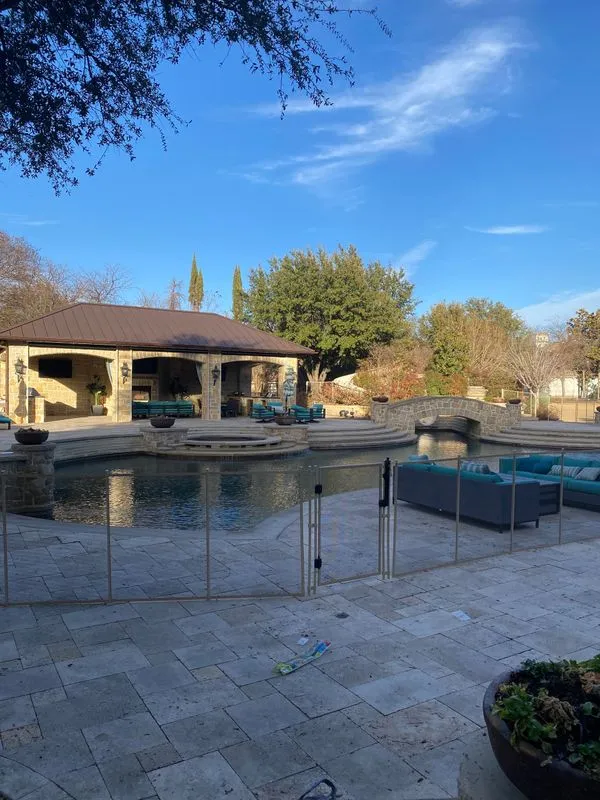

Drive through any established Fort Worth neighborhood and you'll see plenty of pools that have been sitting there for decades. The fence around them, though? Often not quite up to what current code requires. That's not really a knock on the homeowners. Fence codes have changed since a lot of these pools went in, and nobody sends out a memo when that happens. Here's what a compliant barrier actually looks like today, and why retrofitting an old fence is a different job entirely from installing a brand-new one.
Retrofitting Is More Common Here Than New Installs
A big share of Fort Worth's pools sit in neighborhoods built long before the current barrier standard existed. So the fence question around here usually isn't about a brand-new install at all. It's about bringing an old yard up to code, whether that gets triggered by a home sale, an insurance renewal, or a homeowner who just finally decided it's time.
Retrofits move slower than new builds, and there's a reason for that. There's an existing patio to work around. Landscaping that might need to move. Sometimes a pool deck that was never built with a barrier in mind at all. None of that makes the project impossible, it just means the planning phase takes longer than slapping a fence around an empty lot.
The Core Numbers Every Fort Worth Homeowner Should Know
Fort Worth follows a version of the International Residential Code, same as most Texas cities do. The fence needs to stand at least 48 inches tall, measured from the ground on the outward side, and gaps have to stay under 4 inches, small enough to stop a toddler from squeezing through or using the fence as a makeshift ladder.
Those numbers apply to the whole yard, by the way, not just whatever's visible from the street. A fence can be perfectly compliant along the front and one side and still fail if it comes up short along the back line, which happens more than you'd guess.
Rail spacing counts just as much as height does. Space the rails too far apart and you've basically built a ladder, even if the fence clears 48 inches with room to spare. Vertical picket designs mostly dodge this problem, which is part of why they show up so often around here.
What the Gate Inspection Actually Checks
Gates fail more Fort Worth inspections than anything else, hands down. It has to swing away from the pool and latch shut entirely on its own, no pushing required from anyone. The release sits high enough, and set back far enough, that a small kid genuinely can't reach it, not even on tiptoes.
A gate that passes a one-time test but doesn't reliably close after real, repeated use tends to fail the follow-up. Test it the way it'll actually get used day to day before scheduling the official inspection.
Mature Trees, Uneven Ground, and Older Landscaping
Fort Worth's tree cover is part of what makes its older neighborhoods worth living in, and it's also a common reason a fence retrofit gets flagged. A branch hanging over the fence line, or shrubs planted close enough to climb, can undo an otherwise solid barrier. Sometimes trimming back the landscaping is genuinely the entire fix needed.
Sloped or uneven ground complicates the height check too, since it's measured from the base of the fence. A barrier crossing a slope needs stepped sections or fresh grading to hold that height the whole way across. Skip it, and the retrofit fails its first inspection more often than you'd think.
Getting the Retrofit Approved Without a Long Delay
Send the fence plan in before work starts, not after, since older properties tend to raise more code questions than new builds ever do. An installer who regularly handles pool fence retrofits around Fort Worth can shorten that back-and-forth quite a bit, since they already know which older-neighborhood issues come up again and again.
Keep your records once the project wraps up. A copy of the approved permit and photos of the finished gate hardware come in handy if the home sells later, or if an insurer has questions down the line.
A Fence Built for the Long Haul
Passing inspection is the floor here, not really the goal. Texas Pool Barrier works with Fort Worth homeowners on both new installs and retrofits, using materials built for Texas heat and hardware meant to keep working for years, not just look good on inspection day and then quietly fall apart.
If the pool's been sitting in the backyard for decades and nobody's checked the fence lately, that's worth doing before the next round of pool parties starts up.
Texas Pool Barrier designs and installs code-compliant pool safety fences for homeowners across the Fort Worth area and greater Texas, with real experience bringing older properties up to current barrier standards. Learn more at texaspoolbarrier.com.





























Sign in to leave a comment.