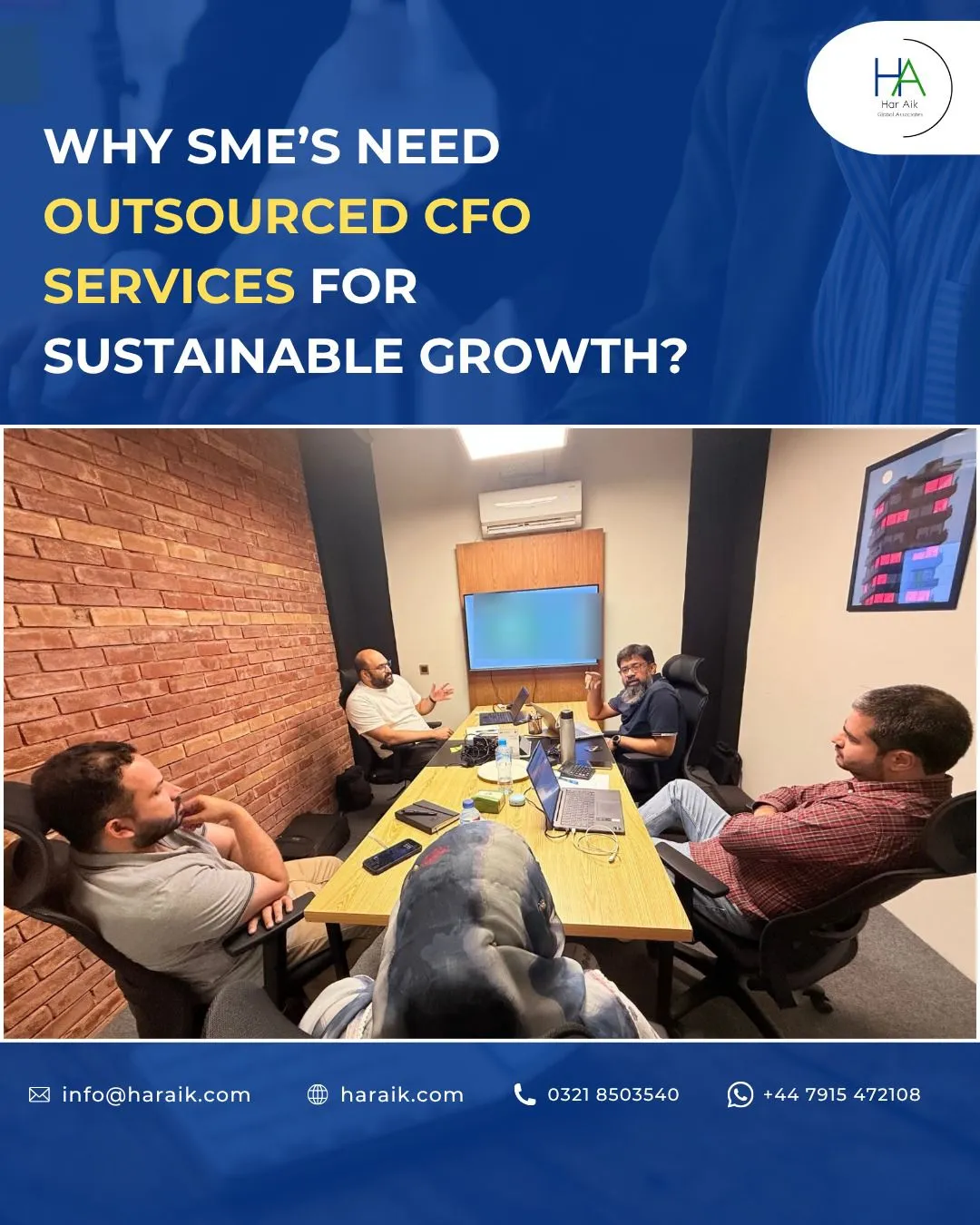

For many years, businesses viewed finance as a back-office function responsible for bookkeeping, compliance, and annual reporting. Today, that perspective has changed dramatically. Modern organizations recognize that financial management is not simply about maintaining records—it is about creating strategic value, improving decision-making, and supporting sustainable growth.
In an increasingly competitive global economy, businesses need accurate financial information, strong governance structures, effective risk management, and expert advisory support. Organizations that successfully integrate these elements gain a significant advantage over competitors and position themselves for long-term success.
This shift has transformed the role of accounting and advisory firms. Businesses now seek trusted partners who can help them navigate complex regulations, strengthen financial performance, and support strategic initiatives. Firms like Har Aik Global Associates are helping organizations move beyond compliance and leverage finance as a driver of business growth.
The Business Environment Has Changed
The modern business landscape is far more complex than it was a decade ago. Organizations face increasing pressure from regulators, investors, customers, and stakeholders who demand greater transparency, accountability, and performance.
Several factors are driving this change:
- Globalization of markets
- Increased regulatory requirements
- Rapid technological advancement
- Growing investor expectations
- Rising cybersecurity risks
- Greater demand for financial transparency
As a result, business leaders require more sophisticated support than traditional accounting services alone can provide.
Success now depends on the ability to combine financial expertise with strategic insight.
Why Financial Information Is a Strategic Asset
Every major business decision relies on financial information.
Whether a company is expanding into new markets, launching products, attracting investors, or acquiring another business, financial data plays a critical role in determining success.
Organizations with strong financial reporting capabilities can:
Make Faster Decisions
Accurate information enables leadership teams to act quickly and confidently.
Improve Resource Allocation
Businesses can identify which activities generate the highest returns and focus investments accordingly.
Strengthen Investor Relationships
Reliable financial reporting builds credibility and trust.
Enhance Business Performance
Management gains visibility into operational strengths and areas requiring improvement.
Financial information is no longer simply a compliance requirement—it is a strategic asset that drives growth and competitiveness.
The Importance of Technical Accounting Expertise
Accounting standards continue to evolve, creating new challenges for organizations operating in local and international markets.
Technical accounting expertise has become increasingly valuable because businesses must address complex issues such as:
- Revenue recognition
- Business combinations
- Financial instruments
- Impairment assessments
- Lease accounting
- Fair value measurements
Professional advisory support helps organizations interpret and apply accounting standards correctly while minimizing compliance risks.
Har Aik provides specialized technical accounting and IFRS support designed to help organizations maintain accurate, compliant, and audit-ready financial reporting. The firm's approach focuses on combining technical precision with practical business understanding.
Building Strong Governance Frameworks
Strong governance is one of the defining characteristics of successful organizations.
Governance provides a structure for accountability, oversight, and strategic decision-making. It ensures that businesses operate ethically, responsibly, and in alignment with stakeholder expectations.
Effective governance frameworks support:
Better Decision-Making
Clear roles and responsibilities improve accountability.
Risk Oversight
Organizations can identify and manage risks more effectively.
Regulatory Compliance
Governance frameworks help businesses meet legal and reporting requirements.
Stakeholder Confidence
Investors and business partners are more likely to trust organizations with transparent governance practices.
Companies that invest in governance often experience stronger long-term performance and greater organizational resilience.
Internal Audit as a Value-Creation Function
Many businesses underestimate the value of internal audit.
While compliance remains an important aspect of internal auditing, its role extends far beyond regulatory requirements.
A well-designed internal audit function helps organizations:
- Evaluate internal controls
- Improve operational efficiency
- Identify process weaknesses
- Enhance governance practices
- Support risk management efforts
Rather than focusing solely on identifying problems, modern internal audit functions contribute to continuous improvement and business optimization.
Organizations that view internal audit as a strategic tool often discover opportunities for cost savings, performance enhancement, and stronger risk management.
Risk Management in an Uncertain World
Every business faces uncertainty. The question is not whether risks exist but how effectively they are managed.
Today's organizations must address a wide range of risks, including:
Financial Risks
Market volatility, liquidity challenges, and investment uncertainties.
Operational Risks
Process failures, supply chain disruptions, and resource constraints.
Regulatory Risks
Changing laws, standards, and compliance obligations.
Technology Risks
Cybersecurity threats and digital vulnerabilities.
Strategic Risks
Competitive pressures and changing market dynamics.
Effective risk management enables organizations to anticipate challenges, protect assets, and make informed decisions with greater confidence.
Businesses that proactively manage risk are often better prepared to navigate uncertainty and capitalize on emerging opportunities.
The Rise of Outsourced Finance Functions
Building a highly experienced in-house finance team can be costly and difficult, particularly for growing organizations.
As a result, many businesses are adopting outsourced finance models that provide access to specialized expertise without significant overhead costs.
Benefits include:
Cost Efficiency
Organizations gain access to senior financial expertise without maintaining large internal teams.
Flexibility
Services can be scaled according to business needs.
Specialized Knowledge
Businesses benefit from professionals experienced in complex accounting, reporting, and compliance matters.
Strategic Support
Outsourced finance professionals often contribute to planning, forecasting, and performance improvement initiatives.
Har Aik offers managed finance services, virtual finance teams, and CFO support solutions that help organizations strengthen financial management while maintaining operational flexibility.
Data and Analytics: The Future of Decision-Making
Modern organizations generate vast amounts of data every day. However, data only becomes valuable when it is transformed into actionable insights.
Business intelligence and analytics allow organizations to:
- Track key performance indicators
- Improve forecasting accuracy
- Identify emerging trends
- Enhance operational efficiency
- Support strategic planning
Data-driven businesses are often more agile, responsive, and competitive than organizations that rely primarily on intuition.
The future belongs to companies that can effectively combine financial expertise with advanced analytics capabilities.
Digital Transformation Is No Longer Optional
Technology has fundamentally changed how businesses operate.
Organizations that embrace digital transformation can improve productivity, reduce costs, and enhance customer experiences.
Digital transformation initiatives often include:
- Process automation
- Cloud-based financial systems
- Digital reporting tools
- Workflow optimization
- Business intelligence platforms
However, successful transformation requires more than technology implementation. It involves aligning people, processes, and systems to support business objectives.
Organizations that approach digital transformation strategically often achieve significant improvements in performance and scalability.
Creating Long-Term Value
The most successful businesses focus on creating long-term value rather than pursuing short-term gains.
Long-term value creation involves:
- Financial discipline
- Strong governance
- Continuous improvement
- Strategic planning
- Innovation
- Talent development
Organizations that balance operational excellence with strategic growth initiatives are better positioned to achieve sustainable success.
Professional advisory firms play an important role in helping businesses establish the structures, systems, and capabilities required for long-term growth.
Conclusion
The role of finance has evolved from a compliance-focused function to a strategic driver of business success. Organizations now require advisors who can provide technical expertise, strategic insight, and practical solutions that address increasingly complex business challenges.
By combining accounting, IFRS advisory, internal audit, governance, risk management, outsourced finance, and digital enablement services, modern advisory firms help organizations achieve clarity, compliance, and confidence. Har Aik Global Associates exemplifies this approach through its multidisciplinary expertise, cross-border capabilities, and commitment to helping businesses strengthen financial performance and make informed decisions.
As the business environment continues to evolve, organizations that invest in strong financial foundations, effective governance, and expert advisory support will be best positioned to transform challenges into opportunities and achieve lasting success.






























Sign in to leave a comment.