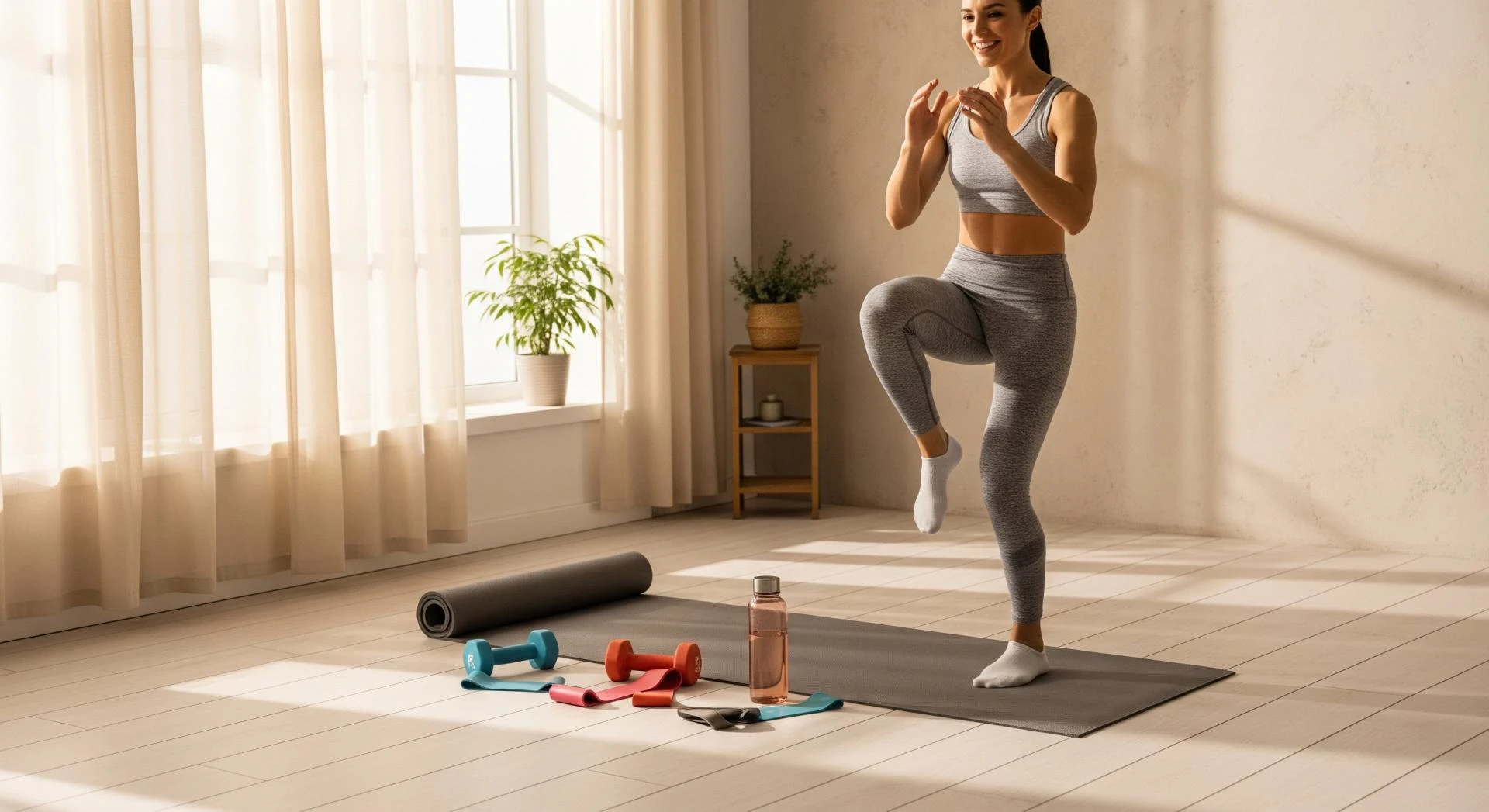

Winter slows down everything: your steps, your mood, and your motivation. Early sunsets, cold mornings, and cozy blankets make outdoor exercise feel almost impossible. This is why indoor workouts are one of the most effective ways to maintain fitness during the colder months.
Whether you’re a beginner or someone restarting your routine, learning how to work out at home in winter gives you flexibility, structure, and consistency, without stepping outside.
What Are Indoor Workouts?
Indoor workouts are exercises performed in any enclosed space; your living room, bedroom, study, or even a balcony.
These include:
• Body-weight strength exercises
• HIIT sessions
• Stretching and mobility work
• Indoor cardio exercises
• No-equipment circuits
• Dance workouts
• Resistance-band movements
Their biggest advantage is that you can start immediately, with zero setup.
Benefits of Indoor Workouts in Winter
Indoor workouts offer multiple advantages, especially during winter:
• No commute
• Zero weather dependency
• More privacy and comfort
• Easier to build a daily habit
• Great for calorie burn and stamina
• Perfect for small spaces
• Safe on extremely cold days
In short, a home workout routine removes the biggest barriers to staying active.
How Cold Weather Impacts Daily Activity Levels

Winter changes your body’s behaviour in subtle but significant ways, most of which make regular movement harder. These seasonal shifts reduce overall activity and increase the need for structured, intentional exercise.
• Lower NEAT (Non-Exercise Activity Thermogenesis)
Cold weather naturally reduces everyday movement. People take fewer steps, run fewer errands, and spend more time sitting indoors.
• Mood and Motivation Dips
Shorter days and limited sunlight lower serotonin levels, which can reduce motivation to exercise or even get up and move.
• Increased Joint Stiffness
Muscles and joints feel tighter in cold temperatures, making warm-ups essential and spontaneous activity less appealing.
• Comfort-Food Cravings
Warm, heavy meals and sweet cravings rise in winter, increasing calorie intake while physical activity drops.
Together, these changes make cold-weather workouts crucial for maintaining metabolism, mobility, and overall energy during the winter months.
Indoor vs Outdoor Exercise — What Works Better in Winter?
Both have benefits, but for most people:
Indoor workouts are the smarter choice in winter because they:
• Eliminate weather excuses
• Allow early-morning or late-night training
• Feel safer and more comfortable
• Help build a consistent routine
• Require minimal space or equipment
You never lose momentum with indoor workouts, making them ideal for a sustainable winter exercise routine.
Warm-Up Routines to Start Your Indoor Sessions
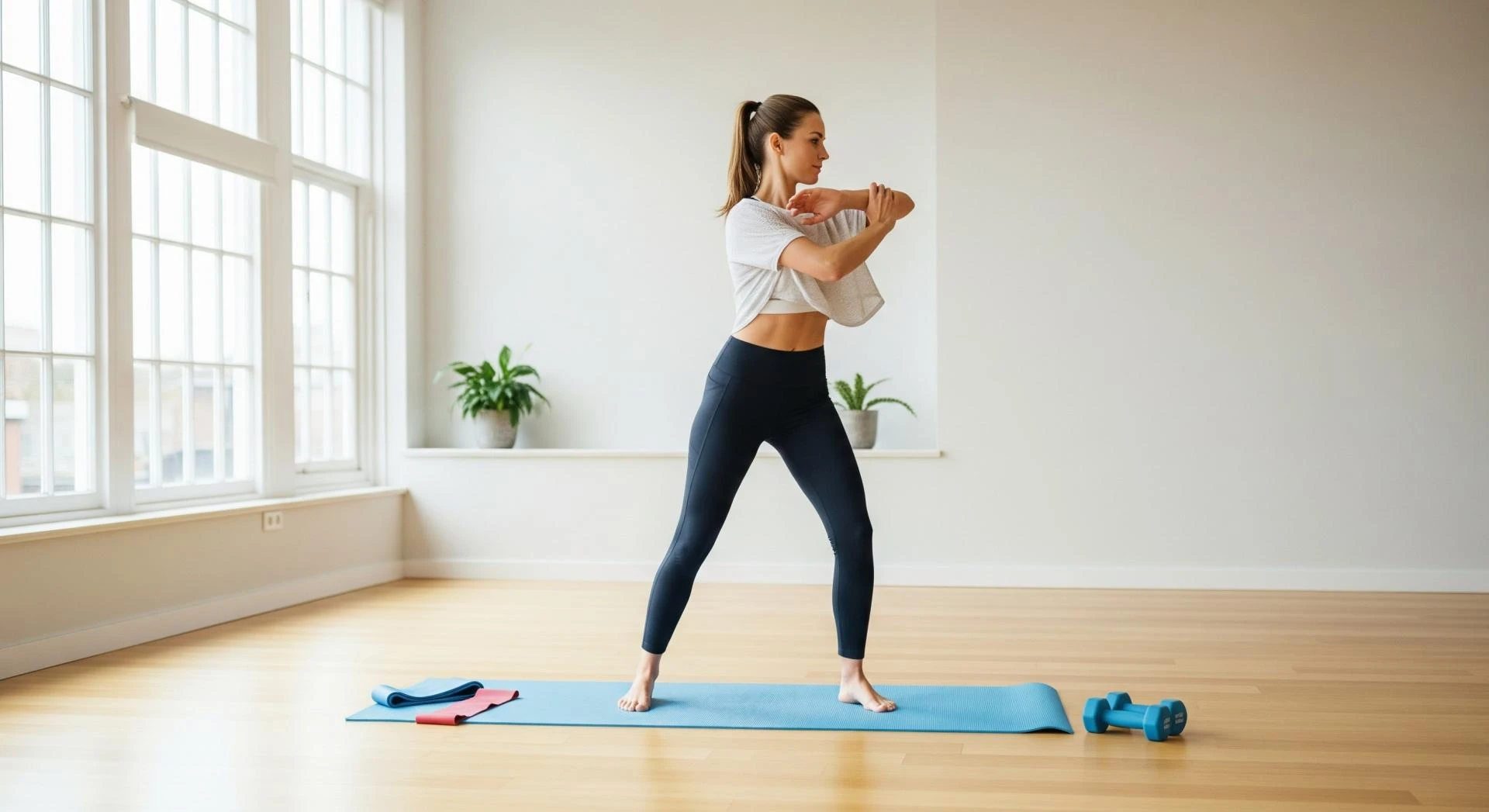
Winter demands longer warm-ups to prepare your muscles and reduce injury risk.
5–7 Minute Winter Warm-Up
• March in place — 60s
• Arm circles — 30s
• Hip openers — 30s
• High knees or low-impact jog — 45s
• Cat-cow stretches — 30s
• Ankle rotations — 20–30s each
This warm-up elevates your core temperature, making your home workout routine smoother and safer.
Safety Tips for Cold-Weather Indoor Workouts
Keep these winter-specific precautions in mind:
• Start slow—cold muscles need time
• Keep a water bottle handy
• Avoid overly cold rooms
• Wear layers you can remove as you warm up
• Ensure the floor is non-slippery
• Ventilate the room if doing HIIT
Small adjustments make indoor workouts more effective and injury-free.
Common Mistakes People Make With Indoor Workouts
Improve your results by avoiding these:
• Skipping warm-ups
• Using only low-intensity movements
• Doing the same routine every day
• Not hydrating
• Training without progression
• Ignoring form due to small spaces
Fixing these mistakes enhances your workout at home in winter tremendously.
Beginner Home Workouts
Perfect for anyone returning to exercise or getting started.
Beginner Home Workout (10–12 Minutes)
• March in place — 60s
• Body weight squats — 12 reps
• Wall push-ups — 10 reps
• Standing knee lifts — 45s
• Glute bridge — 12 reps
• Rest — 30s
• Repeat 2–3 rounds
These beginner home workouts focus on mobility, balance, and endurance.
Intermediate Indoor Cardio Exercises for Better Fat Burn
When you’re ready for more intensity:
Intermediate Cardio Circuit (12–15 Minutes)
• Jumping jacks — 30s
• Reverse lunges — 12 each leg
• Fast punches — 45s
• Mountain climbers — 30s
• Plank — 40s
• Rest — 30s
• Repeat 3 rounds
These indoor cardio exercises build stamina and increase calorie burn.
Advanced Indoor Cardio for High-Intensity Training
For people who enjoy challenging routines:
Advanced HIIT Routine (15 Minutes)
• Burpees — 20s
• Skater jumps — 30s
• High knees — 30s
• Jump squats — 20s
• Push-ups — 30s
• Rest — 20s
• Repeat 4 rounds
A great option for intense cold-weather workouts at home.
No-Equipment Full-Body Cardio Circuits
You don’t need gym gear to get a great workout. These no-equipment workouts activate your full body:
Full-Body No-Equipment Routine
• Squats — 15 reps
• Push-ups — 10–12 reps
• Walkout to plank — 5 reps
• Glute bridge — 20 reps
• Towel hamstring slides — 12 reps
• Fast feet — 30s
• Rest — 45s
• Repeat 3 rounds
Perfect for small homes and apartments.
Small-Space Indoor Fitness Ideas
If you have limited space, try these creative indoor fitness ideas:
• Wall sits — 45–60s
• Step-ups on a sturdy chair or step
• Shadow boxing — 2–3 minutes
• Towel resistance rows
• Standing knee drives — 30–45s
• Corridor or balcony shuttles
• Yoga flows
These movements require minimal space but deliver maximum benefit.
Time-Based Indoor Workout Options
Whether you have 10, 20, or 30 minutes, you can stay active.
If You Have 10 Minutes
• March → squats → knee drives
• Great for energy and mobility
If You Have 20 Minutes
• Full-body circuit with cardio + strength
• Ideal for fat burn
If You Have 30 Minutes
• HIIT + strength + cool-down
• Complete winter exercise routine
How to Stay Motivated for Indoor Workouts
Use habit stacking: Do your workout right after chai, shower, or breakfast.
Create a playlist: Music boosts energy instantly.
Track your streaks: Visual progress increases motivation.
Keep workout clothes accessible: Environment influences behaviour.
Start with 5 minutes: Once you begin, momentum builds naturally.
These micro-strategies help maintain your home workout routine all winter long.
Conclusion
Winter doesn’t have to pause your fitness journey. With effective indoor workouts, structured routines, and zero-equipment options, you can build stamina, burn calories, and stay consistent without stepping outside.
For personalised indoor workout routines, no-equipment plans, and Indian-specific fitness guidance, try the Alpha Coach App. It creates structured winter exercise routines that help you stay active, motivated, and fit; all from home.































Sign in to leave a comment.