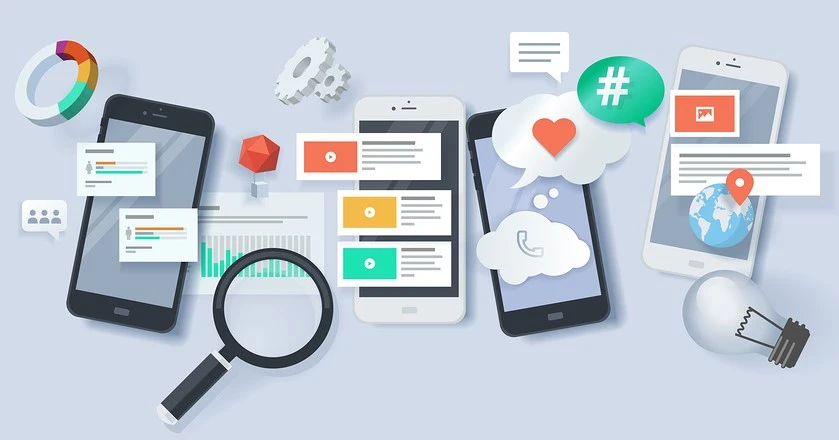

" Mobile is the digital marketing industry's future. In fact, the present is already here. More than 75% of the world's internet traffic now comes from mobile devices, according to Statista. In addition, that number will continue to rise in the years to come.
This indicates that mobile marketing must be a primary focus for businesses wishing to thrive in the digital age. But how can businesses maximize their mobile marketing efforts?
1. Develop mobile-friendly landing pages and websites.
Businesses that want to reach mobile users need landing pages and websites that are mobile-friendly. On a small screen, these pages should be simple to read and navigate, and they should be optimized for speed.
Businesses can create mobile-friendly websites and landing pages in a variety of ways. These are some:
Employing a responsive design, which means that the layout of the website or landing page will automatically adapt to the screen size.Using text that is easy to read on a small screen and is clear and concise.Making use of large images and buttons that are simple to tap or click.Avoid using too much Flash or other animated content because this can make the page load more slowly.2. Make use of mobile-specific ad formats.
To reach mobile users, a variety of mobile-specific ad formats are available. These are some:
Ad banners: The most common kind of mobile ad is one like this. A mobile web page typically displays them at the top or bottom.Interstitial ads: Between two pieces of content, these advertisements fill the entire screen. They might be a good way to get mobile users' attention.Native adverts: The purpose of these ads is to blend in with the content around them. They might be a good way to get in touch with mobile users who don't care about traditional ads.3. Ads for mobile users should be targeted.
To reach mobile users with their advertisements, businesses can utilize a variety of targeting options. These are some:
Targeting based on location: Businesses can now target mobile users in a specific area with their ads thanks to this. Reaching people who live near your business or are likely to be interested in your products or services can be accomplished in this way.Population targeting: Businesses can now target mobile users based on factors like age, gender, or interests in their ads. Your ads might be able to reach a specific group of people this way.Personalization targeting: Businesses can now target their ads to mobile users who have previously expressed an interest in their goods or services thanks to this. Reaching people who are already interested in what you have to offer can be made easier with this method.4. Make use of mobile-specific analytics software.
You can use a variety of mobile-specific analytics tools to monitor how well your mobile marketing campaigns are performing. You can see how many people are seeing your ads, clicking on them, and converting after seeing them with the assistance of these tools.
You can use this information to boost the effectiveness of your mobile marketing campaigns. For instance, if you notice that a particular ad format isn't doing well, you can stop using it and concentrate on other formats that are doing better.
5. Make your mobile marketing messages unique.
Individualized experiences are what mobile users expect. Personalize your mobile marketing messages with data. Push notifications, for instance, can be sent to mobile users based on their location or previous purchases.
Compared to generic messages, personalized messages are more likely to be opened and clicked on. This indicates that you can improve your chances of reaching your intended audience and driving conversions by personalizing your mobile marketing messages.
6. The rise of mobile commerce
Mobile commerce, also known as m-commerce, is the purchase and sale of products and services via mobile devices. It is a trend that is expanding at a rapid rate and is anticipated to continue expanding in the years to come.
The rise of m-commerce can be attributed to a variety of factors. First, more and more people are accessing the internet via mobile devices. In point of fact, according to Statista, mobile devices now account for more than 75% of all internet traffic worldwide. Second, the capabilities and power of mobile devices are increasing. As a result, they can be used to make purchases in a more secure and convenient manner. Thirdly, a variety of mobile payment options make it simple for customers to pay for their purchases using mobile devices.
Websites and mobile apps should be optimized for mobile commerce if businesses want to stay ahead of the curve. As a result, they must be able to securely process payments and be designed to be simple to use on a mobile device.
7. Machine learning (ML) and artificial intelligence (AI)
AI and ML are being used to personalize mobile marketing messages and improve the performance of mobile marketing campaigns. AI can be used to understand user behavior and preferences, and ML can be used to predict which users are most likely to be interested in a particular product or service.
Personalized mobile marketing messages that are more likely to be opened and clicked on can be created using this information. A company might, for instance, send a push notification to a user who has previously expressed an interest in their products or services. A reminder that the user has items in their shopping cart or a special offer might be included in the notification.
Mobile marketing campaigns can also benefit from the use of AI and ML. A company might, for instance, make use of AI to monitor how well various ad formats and target audiences perform. The campaign's efficiency and effectiveness could then be enhanced with the help of this data.
8.The expansion of the app economy
Businesses must ensure that they have a robust mobile app presence because the app economy is exploding. Mobile users can be reached and engaged with in a personalized way through apps.
Businesses should have a mobile app for a number of reasons. First, apps can be used to make user experiences more convenient and engaging. Second, apps can be used to collect data about how users behave, which can be used to make the app better and send users marketing messages that are more relevant to them. Thirdly, apps can be used to increase conversions and sales.
In order for businesses to thrive in the app economy, they must develop high-quality apps that are user-friendly and well-designed. Additionally, they must ensure that their apps are accessible on all of the major app stores.
Conclusion
Mobile has become the cornerstone of digital marketing, with a significant share of global internet traffic originating from mobile devices. To succeed in the digital age, businesses must prioritize mobile-friendly websites, utilize mobile-specific ad formats, target mobile users effectively, leverage mobile analytics tools, personalize marketing messages, embrace mobile commerce, harness the potential of AI and ML, and capitalize on the growing app economy. By embracing the mobile revolution, businesses can connect with their audience in meaningful ways and drive unprecedented growth in the ever-evolving digital landscape.







Sign in to leave a comment.