
For many years, plastic waste has been viewed as one of the biggest environmental challenges facing modern society. With increasing pressure on businesses to reduce their environmental impact, manufacturers are exploring new ways to rethink how plastics are produced, used, and reused.
One of the most significant developments in this area is the growing use of recycled polymers in injection moulding. By transforming discarded plastic materials into valuable manufacturing resources, businesses can reduce waste, support circular economy principles, and create products that meet the demands of a more environmentally conscious market.
The journey from waste plastic to a reliable manufacturing material involves several important stages, from collection and processing to testing and production. Understanding this process highlights how innovation is helping reshape the future of injection moulding.
Collecting And Sorting Plastic Waste
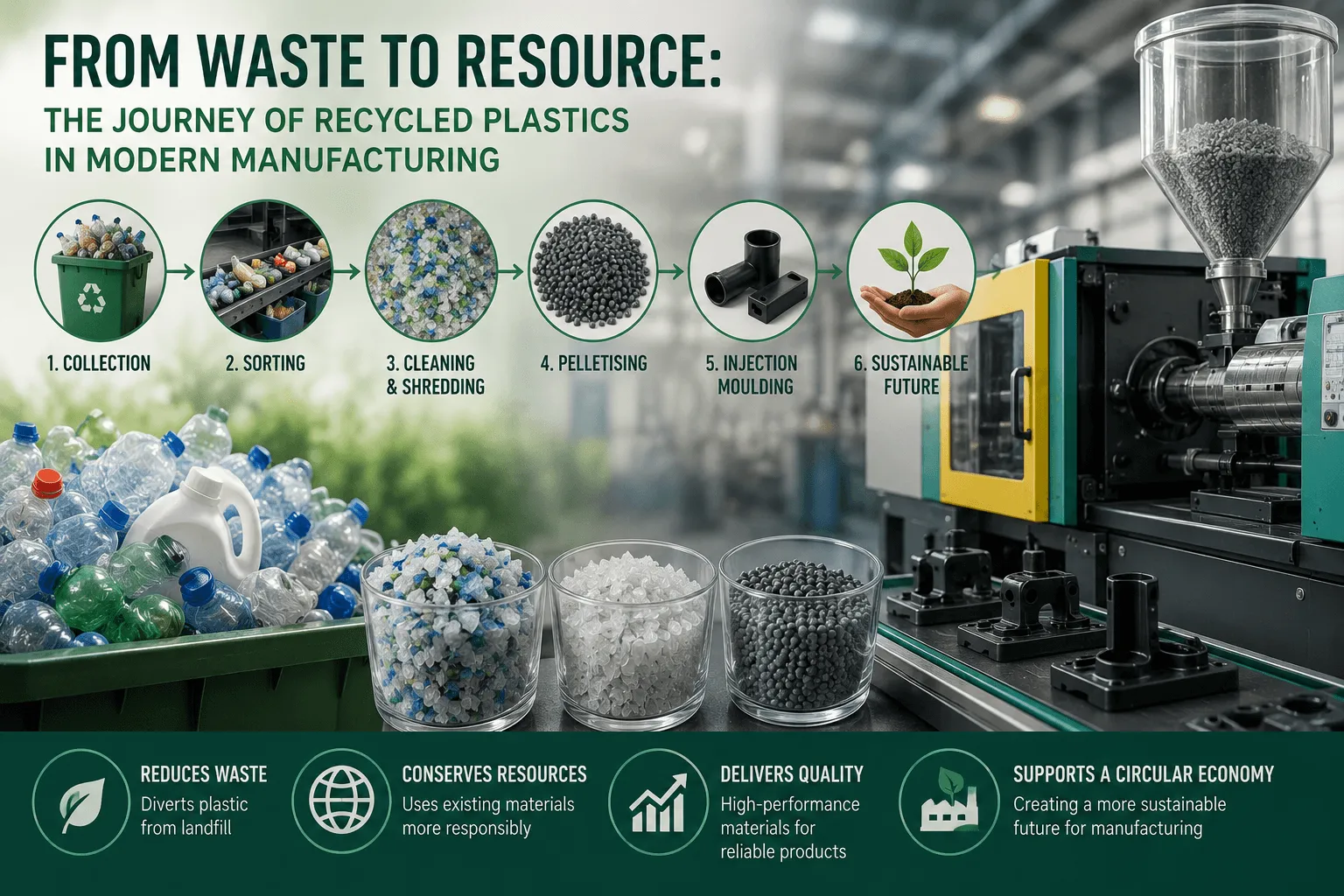
The first stage in creating recycled polymers begins with collecting plastic waste from a variety of sources. This can include post-consumer plastics, such as packaging and household products, as well as post-industrial materials generated during manufacturing processes.
Once collected, plastics must be carefully sorted. Different types of polymers have different chemical structures and properties, meaning they cannot always be processed together. Effective sorting ensures that materials are separated correctly and that the final recycled polymer maintains consistent quality.
Modern sorting technologies, including automated systems and advanced identification methods, are improving the efficiency and accuracy of this stage. Better sorting helps manufacturers produce recycled materials that are more reliable and suitable for demanding applications.
Processing Waste Into Usable Materials
After sorting, plastic waste undergoes a series of processes to transform it into a usable manufacturing material.
The plastics are typically cleaned to remove contaminants such as labels, adhesives, dirt, or other unwanted materials. They are then shredded or ground into smaller pieces known as flakes.
These flakes are processed further through methods such as melting and extrusion, where the material is transformed into recycled polymer pellets. These pellets provide a consistent format that manufacturers can use in injection moulding machines, similar to traditional virgin plastic materials.
This transformation is a crucial step in moving plastic from being considered waste to becoming a valuable resource within the manufacturing supply chain.
Ensuring Quality And Performance
One of the most important considerations when using recycled polymers is maintaining quality. Manufacturers need confidence that recycled materials can deliver the required strength, durability, and consistency for their specific applications.
Advanced testing and quality control processes help ensure recycled polymers meet performance standards. Materials are assessed for characteristics such as strength, flexibility, thermal stability, and processing behaviour.
In some cases, recycled polymers may be blended with virgin materials or enhanced with additives to achieve specific performance requirements. This allows manufacturers to benefit from recycled content while still producing reliable, high-quality components.
As recycling technologies continue to improve, recycled polymers are becoming suitable for an increasingly wide range of injection moulding applications.
The Role Of Recycled Polymers In Injection Moulding
Injection moulding is widely used across industries to manufacture everything from automotive components and electronic housings to consumer products and industrial parts. Traditionally, many of these products have relied heavily on virgin plastics.
The introduction of recycled polymers is changing this approach. Manufacturers can now incorporate recycled materials into production processes while maintaining efficiency and product quality.
For businesses, this creates opportunities to reduce reliance on new plastic resources and support more sustainable production methods. Recycled polymers can also help companies meet environmental targets and respond to growing demand for responsibly manufactured products.
The ability to use recycled materials without compromising performance is a major step forward for the injection moulding industry.
Supporting A Circular Manufacturing Economy
The traditional approach to plastics has often followed a linear model: produce, use, and dispose. A circular economy aims to create a different system where materials remain in use for as long as possible through reuse, recycling, and responsible design.
Recycled polymers are a key part of this transition. By returning plastic materials back into manufacturing cycles, businesses can reduce waste and make better use of existing resources.
For manufacturers, this means considering the entire lifecycle of a product—from the materials selected during design to how components can be reused or recycled at the end of their useful life.
Injection moulding plays an important role in this shift because many moulded products can be designed with recyclability in mind from the beginning.
Overcoming Challenges With Innovation
While recycled polymers offer significant benefits, there are still challenges to overcome. Material availability, contamination risks, colour limitations, and maintaining consistent quality can all present difficulties.
However, ongoing investment in recycling technology and material science is helping address these challenges. Improved sorting systems, advanced recycling techniques, and better polymer formulations are making recycled materials more reliable and accessible.
Manufacturers are also becoming more experienced in designing products that work effectively with recycled content, creating new opportunities for sustainable innovation.
The Future Of Recycled Plastics In Manufacturing
The demand for sustainable manufacturing solutions continues to grow, and recycled polymers are expected to play an increasingly important role in the future of injection moulding.
As technology advances, recycled materials will continue to improve in quality, versatility, and performance. More industries are likely to adopt recycled polymers as part of broader sustainability strategies, helping reduce waste while maintaining the benefits of plastic manufacturing.
The future of plastics does not have to be defined by disposal. Through innovation, collaboration, and responsible manufacturing practices, waste materials can become valuable resources that support a more sustainable industrial future.
Building A More Sustainable Manufacturing Future
The journey of recycled plastics from waste material to injection moulding resource demonstrates how innovation can transform environmental challenges into opportunities.
By improving collection methods, refining recycling processes, and developing advanced material solutions, manufacturers are creating a more responsible approach to plastic production.
Recycled polymers are not simply an alternative material—they represent a shift towards a more circular and sustainable manufacturing model. As businesses continue to prioritise environmental responsibility, these materials will play a vital role in shaping the future of injection moulding and helping create a more sustainable world.


























Sign in to leave a comment.