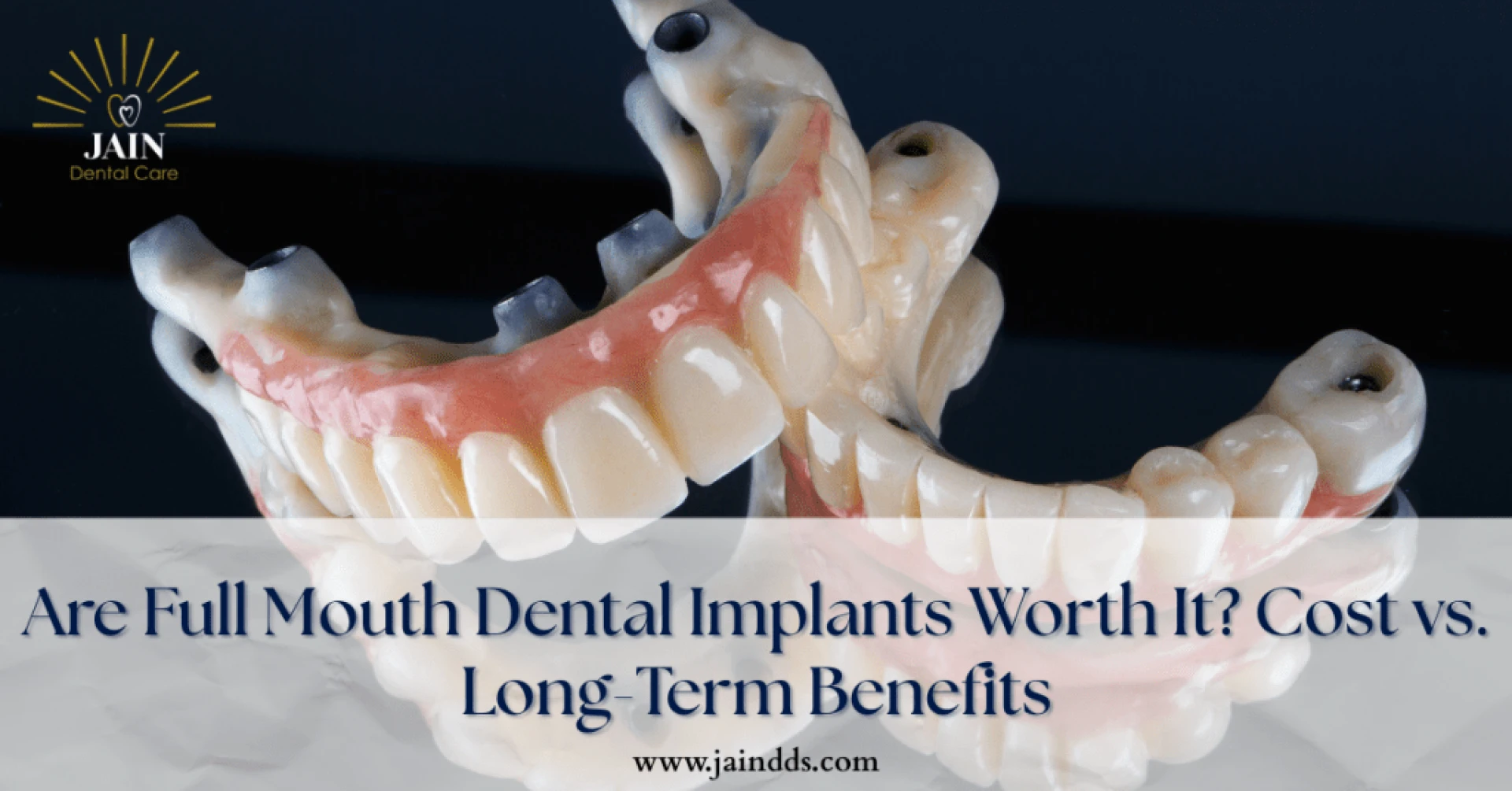

When tooth loss becomes extensive, traditional dentures or bridges may seem like the obvious solution. But for many people, those options come with compromises — discomfort, slipping, difficulty chewing, frequent maintenance. That’s where full-mouth dental implants shine. If you’re weighing the cost of full mouth dental implants against long-term quality of life, this post will help you see why many patients conclude it’s worth it.
What Are Full-Mouth Dental Implants — and Who Needs Them
Full-mouth dental implants replace all missing teeth in one or both jaws using surgically placed implants, abutments, and a secure, fixed prosthesis. This replaces the entire arch of teeth in a stable, permanent way.
Such comprehensive restoration is ideal for people who:
- Have lost many teeth or have failing dentition
- Are tired of dentures that slip, cause sore spots, or need frequent adjustment
- Want a long-term solution that mimics natural teeth in appearance and function
Understanding the Cost: What Drives Implants Cost
The total dental implants price can vary widely, because several factors influence it:
- Number of implants needed per arch: Full-mouth replacement may use fewer or more implants depending on the method chosen (e.g. “all-on-four” vs more implants)
- Material and quality: Implant posts (often titanium or zirconia) and the prosthetic teeth’s material affect durability and price
- Bone condition & preparatory work: Bone grafts or extractions may be required before implantation if bone density is insufficient
- Complexity of the treatment plan and dental expertise: More complex jaw conditions, custom prosthetics, and specialist care add to cost
- Type of final prosthesis: A fully fixed implant-supported bridge costs more than a removable overdenture
Because of these variables, the types of dental implants cost and the final expense for full mouth dental implants cost will vary from one patient to another.
The Procedure: What to Expect
If you choose full-mouth implants, the dental implants procedure typically involves these steps:
- Initial consultation and planning, including imaging to assess bone and oral health.
- Preparatory treatment, if needed — extractions, bone grafting, or sinus lift for proper implant support.
- Surgical placement of implant posts into the jawbone.
- Healing period during which implants integrate with the bone (osseointegration), providing a stable foundation.
- Attachment of abutments and prosthetic teeth, completing the full-arch restoration.
The entire process can take several months, especially if preparatory work is required — but the result is a durable, stable, and natural-feeling full arch of teeth.
Why Many Patients Say Full-Mouth Implants Are Worth the Investment
1. Natural Function & Appearance
Implant-supported prosthetics behave like real teeth. You can chew comfortably, enjoy a variety of foods, and speak without worrying about slipping dentures or clicking noises. The prosthetic teeth are custom-crafted, so the smile looks natural and visually appealing.
2. Long-Term Oral Health & Bone Preservation
When teeth are missing, the jawbone gradually deteriorates — leading to bone loss, facial changes, and compromised oral structure. Implants act as artificial roots, stimulating the bone and preserving bone density. Over time, this helps maintain facial shape and oral health better than removable dentures.
3. Durability & Low Maintenance
With proper oral hygiene and routine dental checkups, implants can last for decades. There’s no need for messy adhesives, frequent relining, or repeated replacements — common with dentures. In the long term, this stability often makes the initial expense more cost-effective.
4. Comfort, Confidence & Lifestyle Improvement
Many patients report dramatic improvements in daily life: eating with ease, smiling confidently, speaking clearly, and feeling comfortable in social situations. The psychological and emotional benefits — improved self-esteem and quality of life — are often under-appreciated but highly significant.
5. Reduced Long-Term Expense Compared to Removable Options
Although dentures and bridges might be cheaper initially, their ongoing maintenance — repairs, replacements, adhesives — adds up over time. When you factor in those recurring costs, full-mouth dental implants often emerge as a smarter long-term financial and functional decision.
Are There Reasons to Think Twice?
Full-mouth implants are a major dental commitment. Some challenges to consider:
- Upfront dental implants price is significantly higher than dentures or bridges
- The procedure may involve additional surgeries (e.g. bone grafts), which extends time and cost
- Healing and integration take time — patience and good follow-up care are essential
- Not everyone may be an ideal candidate; a detailed evaluation is needed to ensure bone quality and overall oral health
Final Verdict: Investing in Long-Term Oral Health
If you value long-term comfort, durability, and natural-feeling teeth — and want more than a temporary fix — full-mouth dental implants are often worth the investment. They offer superior oral function, protect bone, improve appearance, and deliver a quality of life many denture-wearers only dream of after making the switch.
While the initial cost of full mouth dental implants may be steep compared to removable options, the long-term return — in health, comfort, confidence, and convenience — frequently outweighs the expense.
If you’re seriously considering a full-arch restoration, consult with a qualified implant dentist to evaluate your suitability and get a personalized plan.



























Sign in to leave a comment.