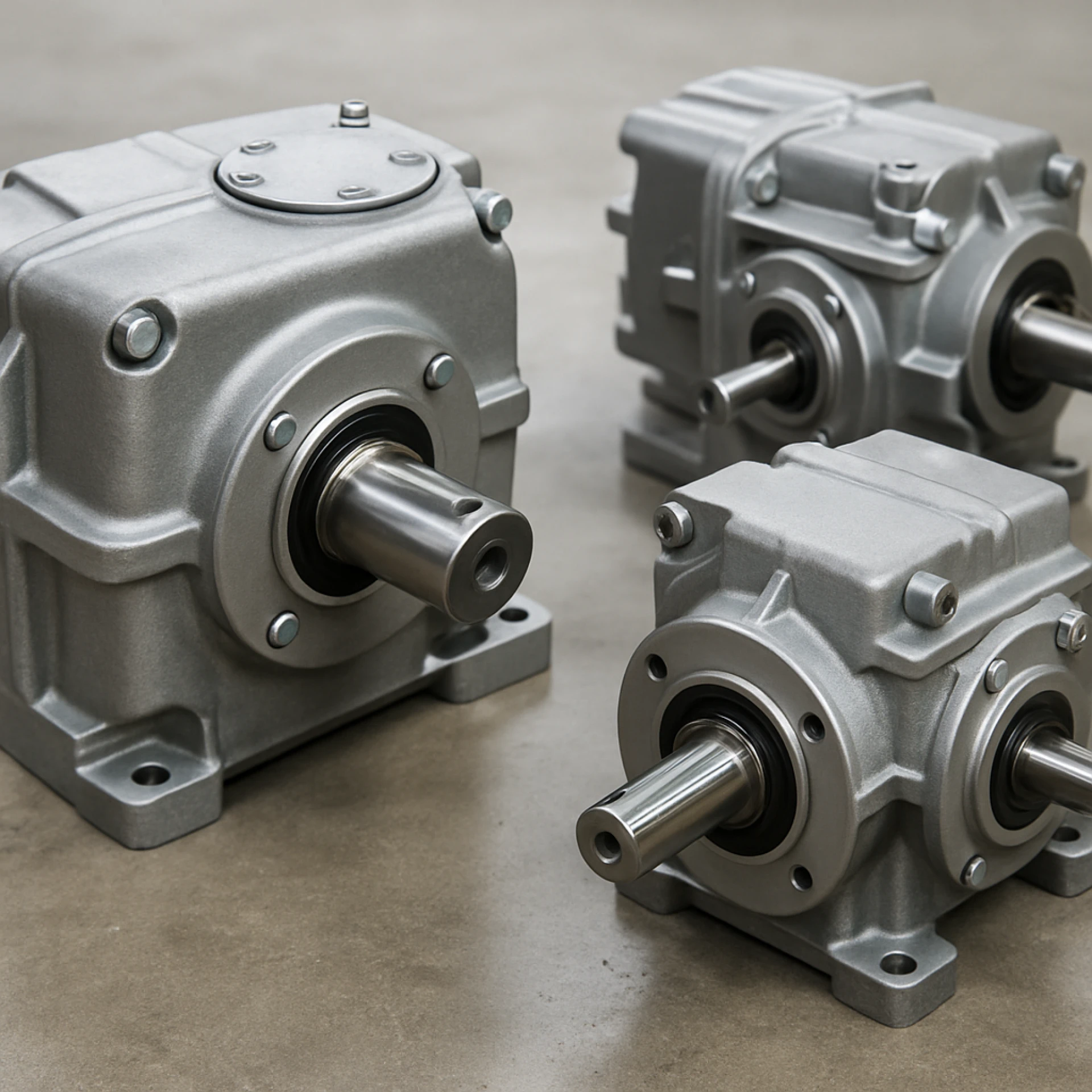

The Changing Demands Facing Spur Gear Manufacturers
Industrial expectations continue to tighten. Equipment now runs at higher speeds, under heavier loads, often within tighter spatial constraints. As a result, Spur Gear Manufacturers face growing pressure to supply gears that deliver greater torque transmission without increasing footprint.
Manufacturing, steel processing, and beverage production lines rely on consistent motion control. When gears fail, production stops. Downtime carries financial consequences, which drives demand for longer service life and predictable performance. Modern engineering teams now prioritise durability at the design stage rather than treating it as a secondary consideration.
Compact drives with higher load capacity have become standard in new installations. Designers expect precision tooth profiles, optimised contact patterns, reduced vibration, with minimal backlash. This shift places increased emphasis on machining accuracy and material selection.
Digital Engineering and Smart Production in Gear Manufacturers
Digital design tools have reshaped how Gear Manufacturers approach development. Advanced CAD platforms allow engineers to simulate tooth geometry under real-world loading conditions before metal is cut. Simulation reduces risk, shortens development cycles, and supports consistent output.
Digital twin technology adds another layer of control. Engineers can mirror a physical gear or gearbox in a virtual environment, track performance data, refine geometry to extend operational life. This data-led approach helps predict wear patterns, identify stress concentrations, and prevent premature failure.
Quality control has also moved beyond traditional inspection. Modern production environments use real-time measurement systems integrated directly into CNC equipment. These systems capture dimensional data during machining, flag deviations instantly, and maintain tighter tolerances across production runs.
Advanced Materials Reshaping Spur Gear Performance
Material science continues to influence gear performance significantly. High-performance alloy steels with improved fatigue strength allow gears to withstand repeated loading cycles without surface degradation. Manufacturers now combine material selection with detailed heat treatment strategies to optimise hardness profiles across the tooth surface.
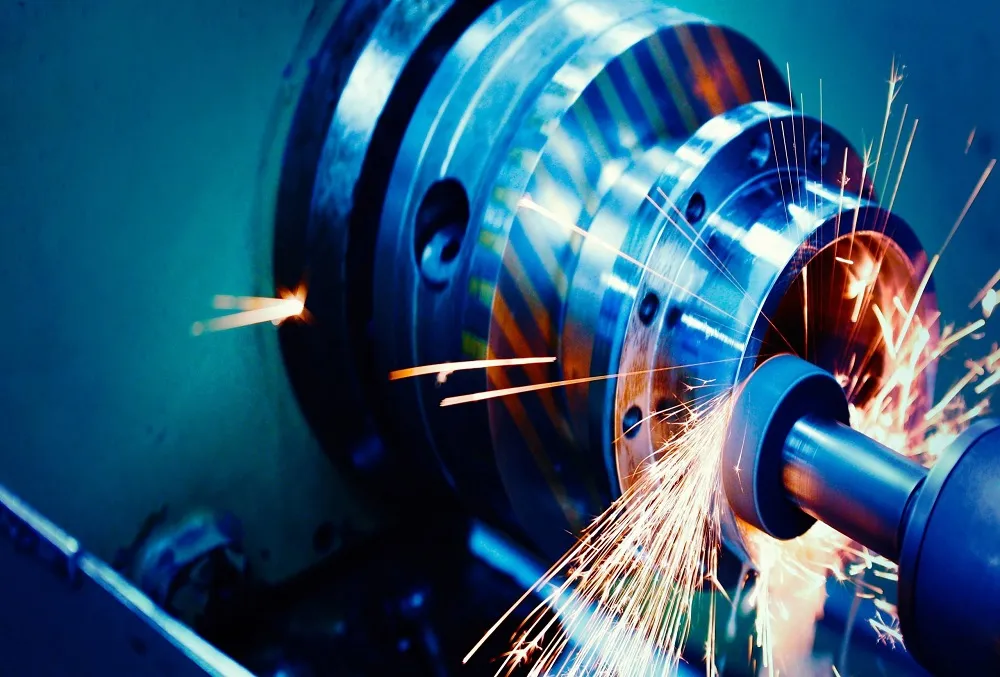
Surface engineering techniques, including advanced case hardening and grinding processes, increase wear resistance while preserving core toughness. These developments allow gears to perform reliably in abrasive or high-temperature environments.
High-torque applications, particularly in heavy industry, demand tooth forms that resist micro-pitting and scuffing. Careful metallurgical control, combined with precise finishing, helps reduce frictional losses, improves efficiency, and extends operational life.
CNC Machining and Automation in Modern Gear Manufacturing
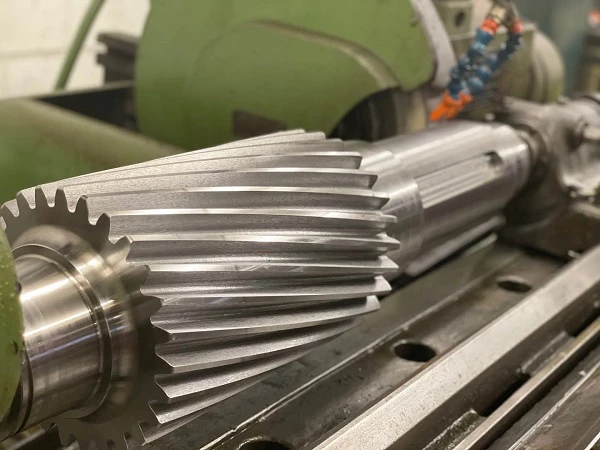
Multi-axis CNC technology continues to refine production accuracy. Five-axis machining centres enable complex geometries to be produced in a single setup, which reduces cumulative error and shortens lead times. Precision tolerances now sit comfortably within microns rather than fractions of millimetres.
Automation supports consistency. Integrated robotics handle loading, unloading, component transfer, which minimises human error while increasing throughput. Lights-out manufacturing has become viable for repeat production runs, particularly for standard gear profiles.
At Highfield Gears, in-house CNC capability allows full control over machining stages, from blank preparation through to final finishing. This integrated model removes reliance on third parties, improves turnaround speed, and maintains accountability throughout the production cycle.
Read Also: How CNC Machining Services Support Complex Part Manufacturing
Sustainability and Energy Efficiency in Gear Production
Energy efficiency now influences procurement decisions across multiple sectors. Efficient spur gears reduce frictional losses within transmissions, which lowers energy consumption across an entire drive system.
Material optimisation reduces waste at the production stage. Modern machining strategies focus on minimising excess stock removal, recycling swarf responsibly, refining cutting paths to improve yield. These incremental improvements contribute to measurable cost savings over time.
Repair and reconditioning services also support sustainability goals. Instead of replacing entire assemblies, engineering teams increasingly refurbish worn gears, restore tooth profiles, and extend service life. This approach lowers material consumption while preserving operational continuity.
The Rise of Integrated Repair and Manufacturing Services
Industries operating legacy equipment often struggle to source original components. Drawings may no longer exist, original suppliers may have ceased trading. In these situations, reverse engineering becomes critical.
Specialist engineering teams assess worn components, measure geometry precisely, recreate accurate technical drawings, manufacture direct replacements. This capability supports gearbox repairs across a range of global brands.
Gear Manufacturers with integrated repair services reduce lead times significantly. By combining inspection, machining, grinding, and heat treatment within a single facility, they streamline communication, accelerate decision-making, and maintain quality control from start to finish.
What the Next Decade Holds for Spur Gear Manufacturers
Customisation continues to rise. Clients now expect gears tailored to specific torque loads, environmental conditions, duty cycles. Standard catalogue components rarely satisfy complex industrial requirements.
Lead times continue to shrink. Procurement teams demand faster response, shorter production cycles, greater flexibility. Manufacturers that invest in automation, digital inspection, and skilled engineering staff position themselves to meet these expectations.
Workforce development remains essential. Skilled machinists, design engineers, metallurgists play a direct role in maintaining precision standards. Companies that prioritise training safeguard quality across future production demands.
The industry will not slow down. Efficiency targets will tighten, machinery will run harder, tolerances will narrow. Spur gear design and manufacturing will continue to evolve through material advancement, digital integration, precision machining. Those who combine technical expertise with modern production capability will remain competitive in demanding industrial markets.
__________________________________________________________________________________
Supply Chain Resilience and Localised Production
Recent years have reshaped procurement strategy across heavy industry. Long overseas lead times, material shortages, shipping delays have encouraged many organisations to reconsider sourcing models. Local production offers tighter oversight, faster communication, greater schedule certainty.
UK-based engineering facilities provide shorter transport routes, simplified logistics, stronger collaboration during development. For sectors where gearbox failure halts entire production lines, proximity carries practical value. Rapid inspection, immediate strip-down, swift component manufacture reduce downtime significantly.
This shift also strengthens quality assurance. When design, machining, grinding, inspection take place under one roof, accountability remains clear. Engineering teams can respond quickly to dimensional queries, modify tooling immediately, implement corrective action without delay.
Precision Standards Continue to Tighten
Tolerance requirements continue to narrow across high-performance applications. Modern drive systems operate at higher rotational speeds, transmit greater torque, demand lower noise levels. Spur gear tooth geometry must reflect these requirements precisely.
Profile modification, lead correction, controlled micro-geometry adjustments all influence load distribution. Engineers now analyse contact patterns in detail to minimise edge loading, reduce vibration, extend service intervals. Small deviations can translate into accelerated wear under heavy duty cycles.
Advanced inspection equipment plays a decisive role. Coordinate measuring machines, gear measurement centres, surface roughness testers provide accurate data that supports continuous improvement. Rather than relying on post-production inspection alone, many facilities integrate measurement into each machining stage.
Collaboration Between Design and Maintenance Teams
Operational teams increasingly involve manufacturers earlier in project lifecycles. Instead of sourcing standard components after failure, maintenance engineers consult during initial equipment upgrades. This collaborative approach improves long-term reliability.
When design engineers understand operating conditions fully, they can specify material grades, heat treatment depths, tooth modifications aligned with real duty cycles. Maintenance feedback helps identify recurring wear patterns, lubrication challenges, alignment issues.
This exchange of knowledge strengthens product performance. It also builds trust between suppliers, plant operators, engineering managers.
Skills, Apprenticeships, and Knowledge Transfer
Technology continues to advance, yet skilled engineers remain essential. CNC machines require experienced programmers, inspection equipment demands trained operators, heat treatment processes rely on metallurgical understanding.
Investment in apprenticeships supports long-term continuity. Experienced machinists pass on practical techniques that software alone cannot replace. Manual skill, combined with digital competence, sustains consistent quality.
Established Gear Manufacturers that balance heritage expertise with modern production methods maintain competitive advantage. Decades of practical experience still matter in high-load industrial applications.
Long-Term Reliability Over Short-Term Cost
Procurement teams often evaluate components on unit price. Industrial operators increasingly consider whole-life costs instead. A spur gear that lasts longer, reduces vibration, improves efficiency contributes measurable savings across years of operation.
Durability, accuracy, and rapid service response carry weight in critical sectors. Manufacturing plants cannot afford extended outages, unexpected breakdowns, or inconsistent component quality.
Since 1927, Highfield Gears has supported industrial clients with repair, reverse engineering, and new manufacture from its Huddersfield headquarters . That continuity reflects sustained investment in engineering capability, skilled personnel, advanced CNC equipment, and a clear focus on quality.
The direction of travel is clear. Spur gear production will continue to refine precision standards, integrate digital systems, and strengthen local manufacturing capability. Organisations that combine technical depth with responsive service will remain trusted partners across heavy industry.


























Sign in to leave a comment.