Concrete surfaces are expected to be strong, level, and visually consistent, whether they are used in residential driveways, commercial floors, or industrial workspaces. In the Australian construction industry, achieving this standard requires more than quality materials alone. The finishing stage plays a significant role in how concrete performs over time. Modern contractors rely on mechanical solutions to meet tight schedules and deliver professional results, especially on larger slabs where hand finishing is no longer practical.
This article explains how petrol-driven concrete finishing equipment supports smooth and durable outcomes, why it suits Australian site conditions, and how it fits into today’s construction workflows.
Why Concrete Finishing Matters
Concrete finishing is not just about appearance. A properly finished surface is denser, more wear-resistant, and less likely to crack or dust over time. In Australia’s varied climate, concrete may be exposed to heat, moisture, and heavy use, all of which place stress on the surface.
Poor finishing can lead to uneven textures, weak top layers, and premature deterioration. This is why many professionals turn to mechanical finishing methods that provide uniform pressure and controlled timing during the critical setting phase.
How Mechanical Finishing Improves Results
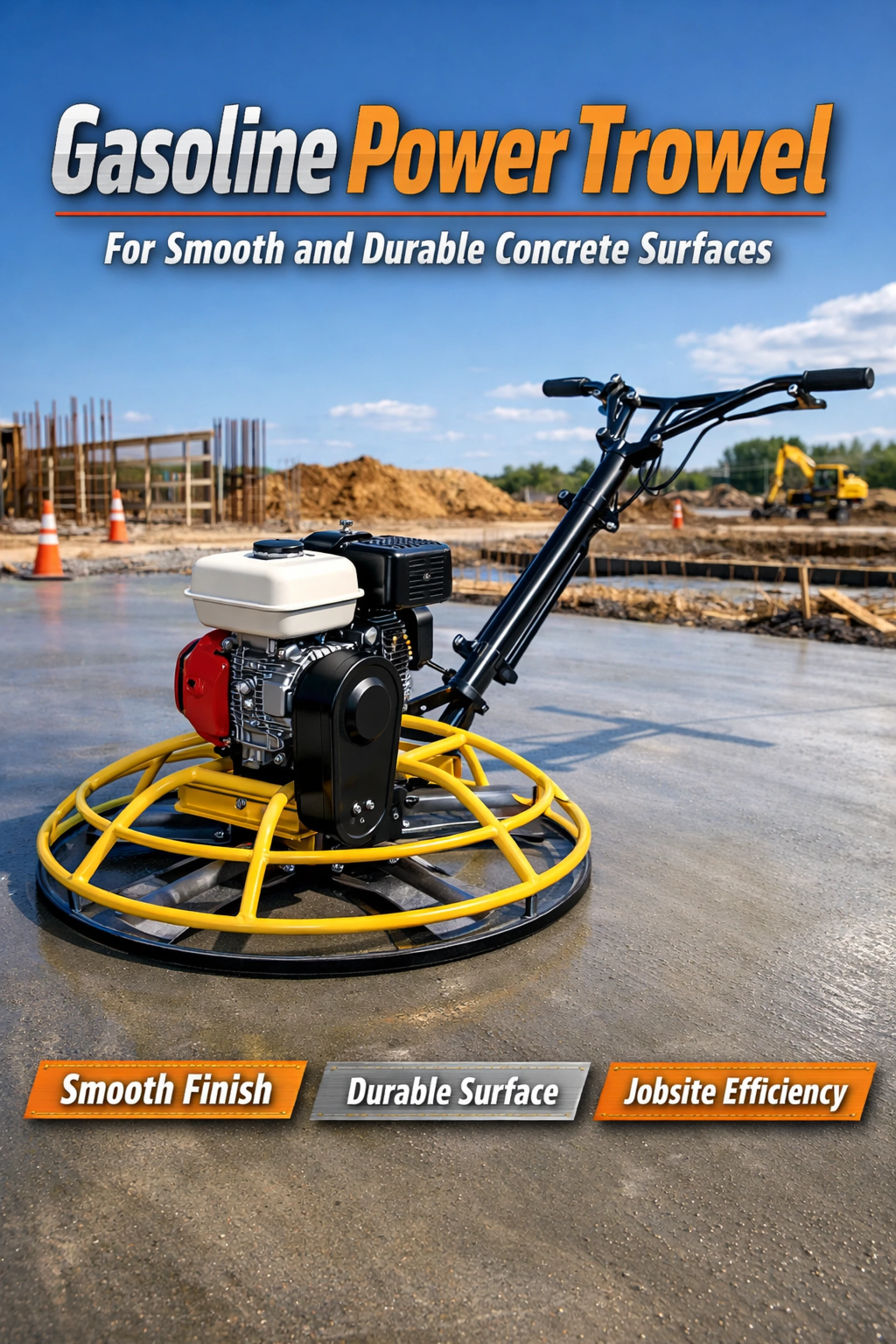
Mechanical troweling allows operators to work the concrete surface evenly as it transitions from wet to firm. A gasoline power trowel uses rotating blades to smooth and compact the top layer, creating a hard-wearing finish that is difficult to achieve by hand on large areas.
Because petrol-powered machines operate independently of electrical supply, they are well suited to outdoor projects and early-stage developments where power access may be limited. This flexibility is particularly valuable on Australian job sites, where work often takes place in open or remote locations.
Productivity Benefits on Australian Job Sites
Construction schedules are becoming increasingly demanding, with multiple trades relying on slabs being completed on time. Mechanical finishing equipment helps reduce delays by efficiently and consistently covering vast areas.
Operators can maintain a steady workflow without fatigue, which improves both speed and finish quality. Over the course of a project, this efficiency reduces Laboure costs and minimizes the risk of surface defects that may require rework.
A gasoline power trowel is especially effective on medium to large slabs, where maintaining consistent pressure and timing is essential for a professional outcome.
Relationship Between Preparation and Finishing
Concrete finishing is only as good as the preparation beneath it. Before any concrete is poured, the base material must be adequately compacted to prevent settlement and cracking. This is where equipment such as a Gasoline plate compactor is commonly used to create a stable foundation.
Once the concrete is placed, finishing equipment takes over to refine the surface. Using a Gasoline plate compactor for preparation and mechanical troweling for finishing ensures that each stage of the process is handled with the appropriate tool, improving long-term durability and structural performance.
Fit Within Modern Equipment Fleets
Today’s contractors often operate with a range of specialized equipment designed to improve efficiency and consistency. Petrol-powered finishing machines integrate well with existing fleets that already include Portable Power Tools, allowing teams to maintain similar servicing routines and operational familiarity.
This compatibility supports smoother workflows on-site and simplifies maintenance planning. Contractors benefit from reduced downtime and improved overall equipment management, particularly when multiple projects are running simultaneously.
Selecting the Right Machine for Your Work
Choosing the right finishing equipment depends on project size, frequency of use, and site conditions. Residential contractors may require compact, easy-to-handle models, while commercial projects often demand higher output and longer run times.
Build quality, operator comfort, and access to spare parts should all be considered. Equipment that is well supported locally in Australia offers better long-term value, especially for businesses that rely on consistent performance.
For contractors already invested in Portable Power Tools, selecting petrol-driven finishing equipment can provide a seamless extension of their existing setup.
Safe Operation and Ongoing Care
As with any mechanical equipment, safe operation is essential. Operators should be trained, wear appropriate protective gear, and follow recommended procedures during use. Regular inspections help identify wear or issues before they lead to downtime or safety risks.
Routine maintenance, including cleaning and scheduled servicing, keeps machines operating at peak performance. This applies not only to finishing equipment but also to preparation tools, such as a Gasoline plate compactor, ensuring the entire concrete process remains efficient from start to finish.
Long-Term Value for Contractors
Consistent concrete finishes contribute directly to a contractor’s reputation. Clients expect smooth, durable surfaces that perform well over time, particularly in commercial and industrial environments. Mechanical finishing supports these expectations by delivering repeatable results across different projects and conditions.
A gasoline-powered trowel helps contractors meet professional standards while improving productivity and reducing physical strain on workers. Its reliability and adaptability make it a valuable asset for businesses focused on quality and long-term growth.
Conclusion
Concrete finishing is a critical step that influences both performance and appearance. In the Australian construction industry, mechanical solutions have become essential for achieving smooth and durable surfaces efficiently. By supporting consistent results, integrating with modern equipment fleets, and performing reliably in diverse site conditions, a Gasoline power trowel remains a practical and effective choice for professional concrete work.



























Sign in to leave a comment.