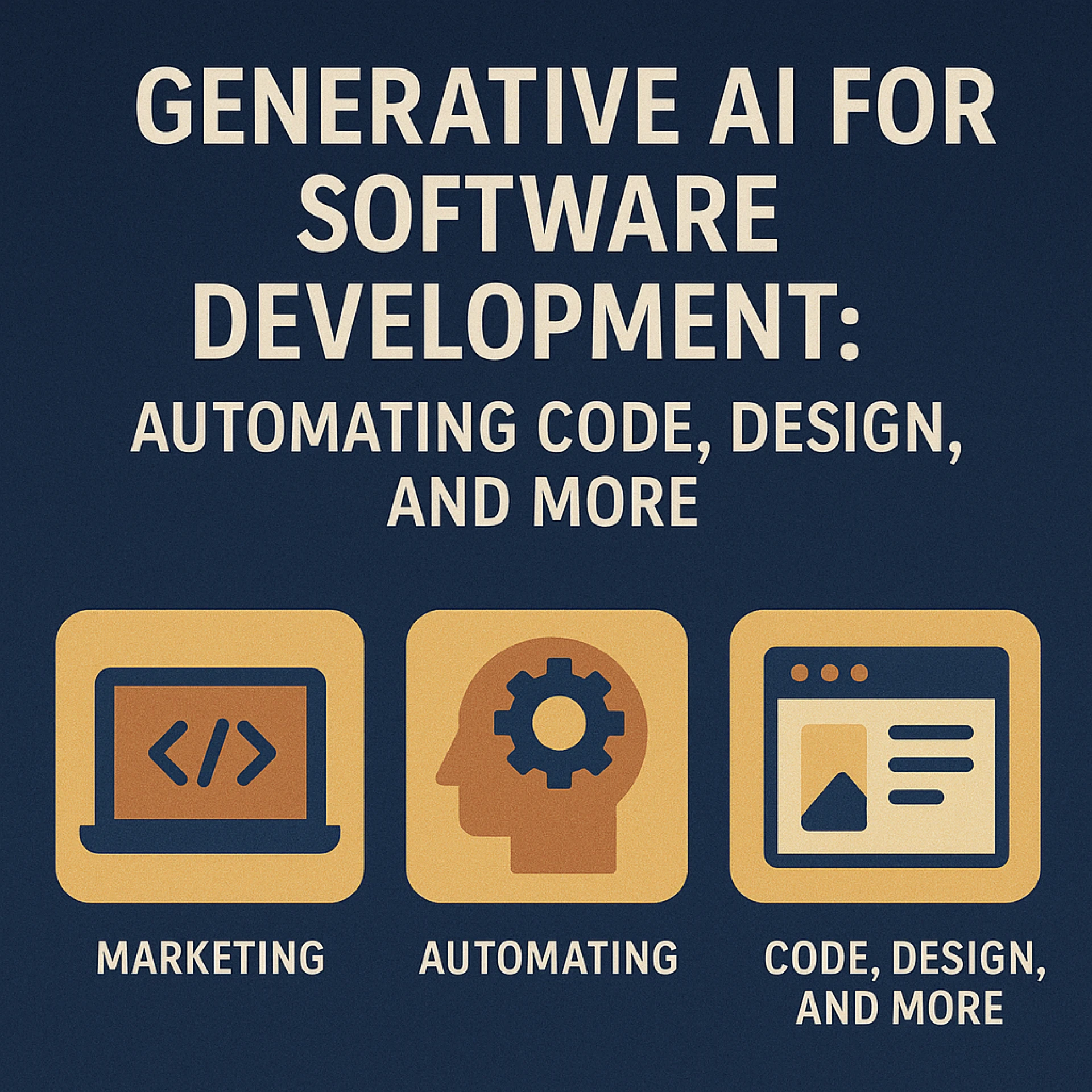
Generative AI is revolutionizing how software is built—enabling faster code generation, automated design processes, and seamless project management. By mimicking human creativity using advanced machine learning algorithms and large language models (LLMs), generative AI is becoming a pivotal tool for modern developers. As organizations seek to improve efficiency, scalability, and innovation, Generative AI Development Companies are increasingly stepping in to offer tailored Generative AI Services.
In this blog, we’ll explore the current landscape, real-world use cases, benefits, challenges, and future trends of generative AI in software development.
What is Generative AI in Software Development?
Generative AI refers to the class of artificial intelligence models that can generate new content—be it text, images, code, or even designs. Unlike traditional AI that follows explicit instructions, generative models learn patterns from vast datasets and produce original output in response to prompts.
In the context of software development, generative AI can:
- Autocomplete or generate code based on intent
- Build user interfaces and design components
- Write documentation and test cases
- Suggest architecture patterns
- Simulate user workflows for QA
Generative AI Development Services are now leveraging these capabilities to automate tasks across the entire Software Development Life Cycle (SDLC).
Market Trends and Adoption Statistics
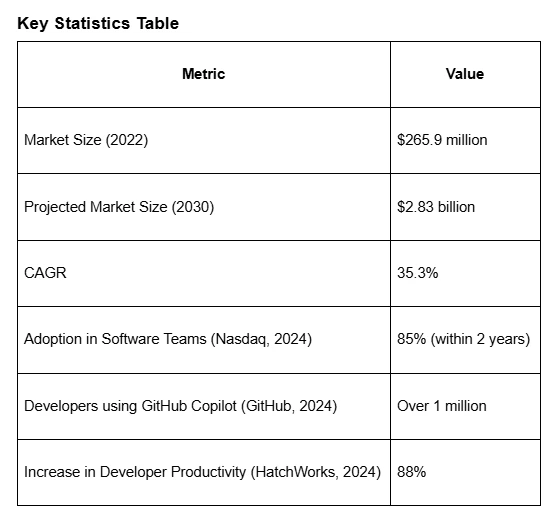
The adoption of generative AI in software development is accelerating at an unprecedented pace. According to Fortune Business Insights, the global generative AI in SDLC market was valued at USD 265.9 million in 2022 and is expected to reach USD 2,833.9 million by 2030, growing at a CAGR of 35.3%.
Major tech giants are already reaping the benefits:
- Microsoft CEO Satya Nadella revealed that over 30% of code at Microsoft is now written by AI.
- Google CEO Sundar Pichai echoed a similar figure, with 30%+ of new code being AI-generated.
- GitHub Copilot users report completing tasks 55% faster on average.
These stats underline how AI is becoming an integral collaborator rather than just a tool.
Automating Code with Generative AI
One of the most transformative applications of generative AI is in code generation and completion. Tools like GitHub Copilot, Replit Ghostwriter, Tabnine, and Amazon CodeWhisperer allow developers to generate boilerplate code, functions, and even entire modules by simply writing a prompt or a comment.
Benefits of AI Code Generation
- Speed: Developers can finish repetitive tasks in seconds.
- Focus: More time is spent solving real problems rather than writing routine code.
- Consistency: Code structure and patterns remain standardized.
- Learning Aid: Junior developers can understand and adopt best practices faster.
GitHub’s research shows that developers using Copilot completed tasks 55% faster, and 88% felt more productive. This makes AI-powered coding tools indispensable for modern development teams.
Accelerating UI/UX Design with AI
Generative AI isn’t limited to backend code—it’s also transforming frontend development and UI/UX design. AI-powered tools like Uizard, Figma AI, and Adobe Firefly can generate design prototypes, layouts, and even branded visuals from simple text inputs.
Fashion retailer Zalando, for instance, uses generative AI to create digital twins of models and apparel for its online store. This innovation reduced design cycles from 6–8 weeks to just 3–4 days, cutting associated costs by up to 90%.
Applications in Design:
- Convert wireframes into HTML/CSS components
- Generate responsive layouts across devices
- Auto-style components to match brand guidelines
- Create animated transitions and micro-interactions
As businesses look to reduce time-to-market, many are partnering with a Generative AI Development Company to embed these tools into their design and prototyping workflows.
Improving Documentation and Testing
Developers often consider writing documentation and test cases as tedious. Generative AI now automates much of this:
- Code Comments: Auto-document functions and APIs.
- README Files: Generate project overviews and setup instructions.
- Unit Tests: Suggest relevant test cases based on code structure.
- Bug Detection: Predict potential errors or performance issues.
Tools like CodiumAI and Testim generate context-aware unit and integration tests. This reduces manual QA time and ensures higher code reliability.
Use Case Spotlight: Devin AI – The Autonomous Software Engineer
A prime example of where we’re headed is Devin AI, released in 2024 by Cognition. Devin can write code, fix bugs, run deployments, and even reason through complex logic like a real engineer. In benchmark testing, Devin outperformed junior developers on GitHub issues and resolved tasks independently without human input.
This kind of innovation signals the future: autonomous agents trained to build entire applications under human supervision.
Business Benefits of Generative AI Development
Partnering with a Generative AI Development Company offers organizations tangible advantages:
Faster Time to Market
- AI-generated code and designs mean faster releases and quicker iteration.
Cost Reduction
- Automating repetitive tasks reduces the need for large teams and lowers project costs.
Increased Developer Satisfaction
- Developers spend less time on grunt work and more on creative problem-solving.
Competitive Edge
- Businesses using AI tools can experiment, adapt, and deploy features faster than competitors.
Customization at Scale
- AI systems can generate personalized features or layouts for different user segments effortlessly.
Challenges and Ethical Concerns
While the benefits are immense, there are important concerns to consider:
- Copyright and Licensing: AI may inadvertently generate code snippets that are under restrictive licenses.
- Security and Quality: Auto-generated code can introduce vulnerabilities if not carefully reviewed.
- Bias and Reliability: AI models may reflect biases present in their training data.
- Dependence: Over-reliance on AI tools can erode human expertise in the long term.
Therefore, it is essential to involve a Generative AI Services provider with strong governance frameworks and ethical AI practices.
The Future of Software Development with Generative AI
We are moving towards a co-pilot paradigm, where humans and AI work side-by-side across the development lifecycle. In the next 3–5 years, we’ll likely see:
- Integrated AI IDEs that understand and suggest changes across entire repositories.
- Autonomous microservices designed and deployed by AI agents.
- Natural language-based programming, where software is written by describing requirements.
- AI-managed CI/CD pipelines optimizing deployment in real-time.
As this landscape evolves, working with an expert Generative AI Development Company ensures you can ride the innovation wave without being overwhelmed by complexity.
Conclusion
Generative AI is not just a trend—it’s the next evolution in software engineering. By automating coding, design, testing, and documentation, generative AI is empowering developers and organizations to innovate faster and more efficiently. While challenges remain, the benefits far outweigh the risks, especially when guided by experienced Generative AI Development Services providers.
Whether you're a startup looking to build a prototype quickly or an enterprise seeking to optimize workflows, now is the time to explore the potential of Generative AI Development. The tools are ready. The talent is emerging. The future is generative.
























Sign in to leave a comment.