
The correct earthing system is crucial for electrical safety and the security of the building in the long run. A complete understanding of the factors like conductivity, corrosion resistance, durability, cost, and overall performance enables owners and engineers to pick the best earthing rod for buildings when comparing GI Earthing Rod vs Copper Bonded Rod.
What Is a GI Earthing Rod?
GI Earthing Rod (Galvanized Iron) consists of steel covered with a layer of zinc, which provides some protection against corrosion. Their low price and easy access are the main reasons for their extensive use.
Key Features of GI Earthing Rods
- Cost-effective grounding option
- Suitable for dry or low-corrosion soil
- Easy to install and maintain
- Provides basic grounding performance
However, GI rods may not offer strong durability in moist, saline, or chemically active soil conditions, leading to faster corrosion.
What Is a Copper Bonded Earthing Rod?
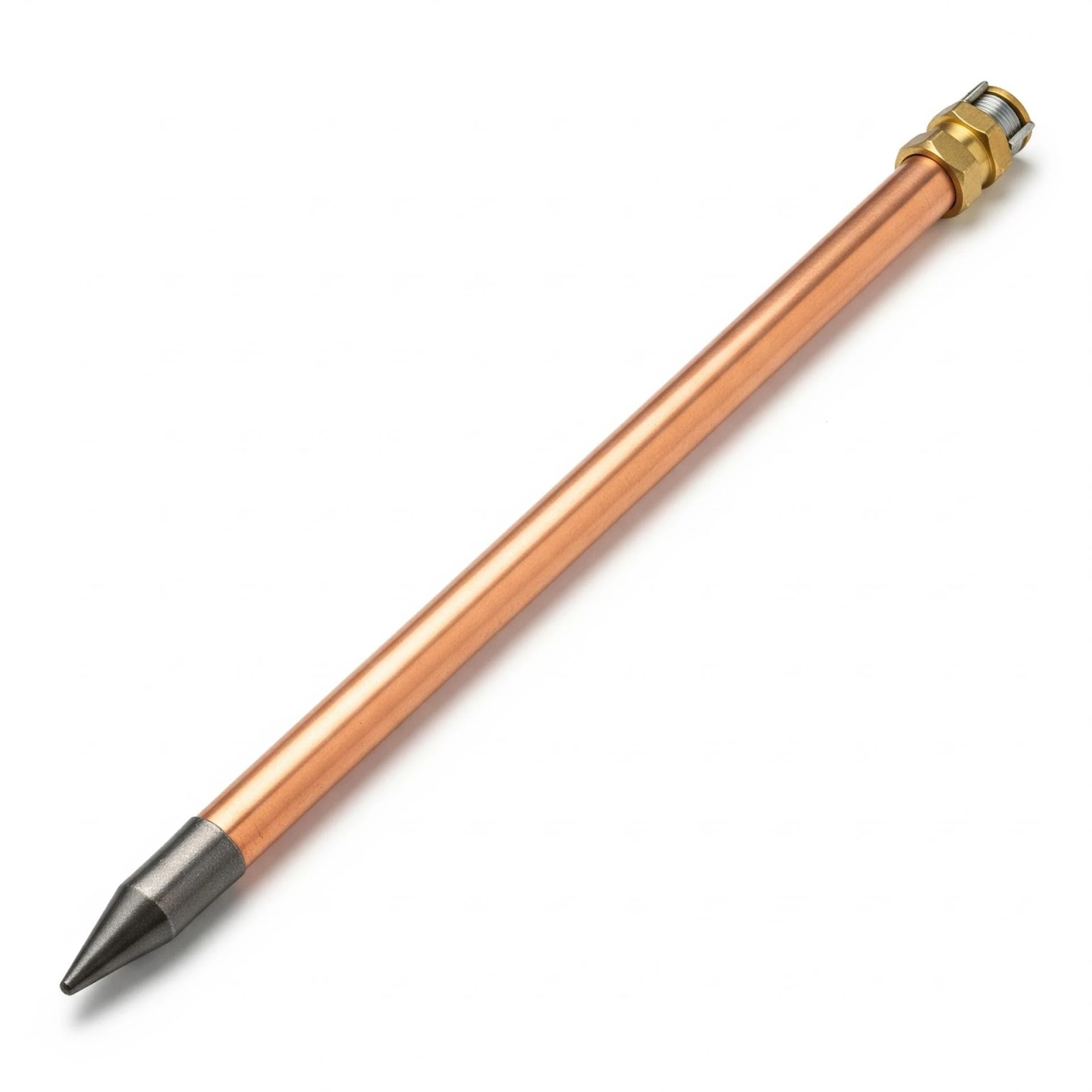
A Copper Bonded Earthing Rod is made up of a steel core with a high strength that is molecularly bonded to the copper. Thus, it enhances the conductivity, the resistance to corrosion, and the performance over a long period.
Key Features of Copper Bonded Rods
- Excellent electrical conductivity
- Strong corrosion resistance
- Long operational lifespan
- Ideal for high soil resistivity areas
- Suitable for residential, commercial, and industrial buildings
Due to these properties, the copper bonded rods are the best among others for electrical grounding solutions for permanent installations.
Copper vs GI Rod for Buildings: Key Differences
1. Conductivity
- Copper bonded rods: High conductivity, faster fault current dissipation
- GI rods: Lower conductivity due to zinc coating
2. Corrosion Resistance
- Copper bonded rods resist corrosion even in aggressive soil
- GI rods corrode faster, especially in moisture or chemical-rich soil
3. Durability
- Copper bonded rods: Lifespan of 20–40 years
- GI rods: Shorter lifespan, frequent replacement in harsh environments
4. Soil Compatibility
- Copper bonded rods perform well in high soil resistivity
- GI rods are suitable for low-corrosion, dry soil conditions
5. Long-Term Safety
Copper bonded rods provide better building earthing safety, ensuring stable and reliable grounding for the long term.
How to Choose the Best Earthing Rod for Buildings
Step 1: Analyze Soil Resistivity for Earthing
Soil resistivity determines how easily the current flows into the ground.
- High resistivity → Choose copper bonded rods
- Low resistivity → GI rods may be acceptable
Step 2: Consider Installation Environment
Factors such as moisture, salinity, and chemical content impact rod performance.
Step 3: Evaluate Long-Term Costs
While GI rods are cheaper initially, copper bonded rods offer better lifetime value due to longer durability.
Step 4: Assess Safety Requirements
The foundation that supports all critical infrastructure buildings (commercial, industrial, IT, hospitals) has to be reliable, for which reason copper bonded rods are the safest option.
Benefits & Risks
Benefits of Copper Bonded Rods
- High conductivity
- Long lifespan
- Excellent corrosion resistance
- Reliable performance for all buildings
- Strong grounding in high-resistivity soil
Benefits of GI Earthing Rods
- Budget-friendly
- Suitable for temporary or low-corrosion environments
- Easy to install
Risks
- GI rods may fail prematurely in harsh soil
- Higher earth resistance may compromise safety
- Mixing GI and copper rods can cause galvanic corrosion
Your Partner in Protection: Pioneer Power International
Between the GI Earthing Rod vs Copper Bonded Rod, the copper bonded rods have clear advantages in terms of conductivity, durability, corrosion resistance and long-term building safety. Meanwhile, GI rods can only be used in low corrosion areas where cost is the main concern.
Pioneer Power International offers high-quality Copper Bonded Earthing Rods engineered for maximum reliability and long service life. With advanced manufacturing standards and a reputation for excellence, Pioneer Power International is always there to provide safe, durable and trusted grounding solutions that can be applied to any type of building.



























Sign in to leave a comment.