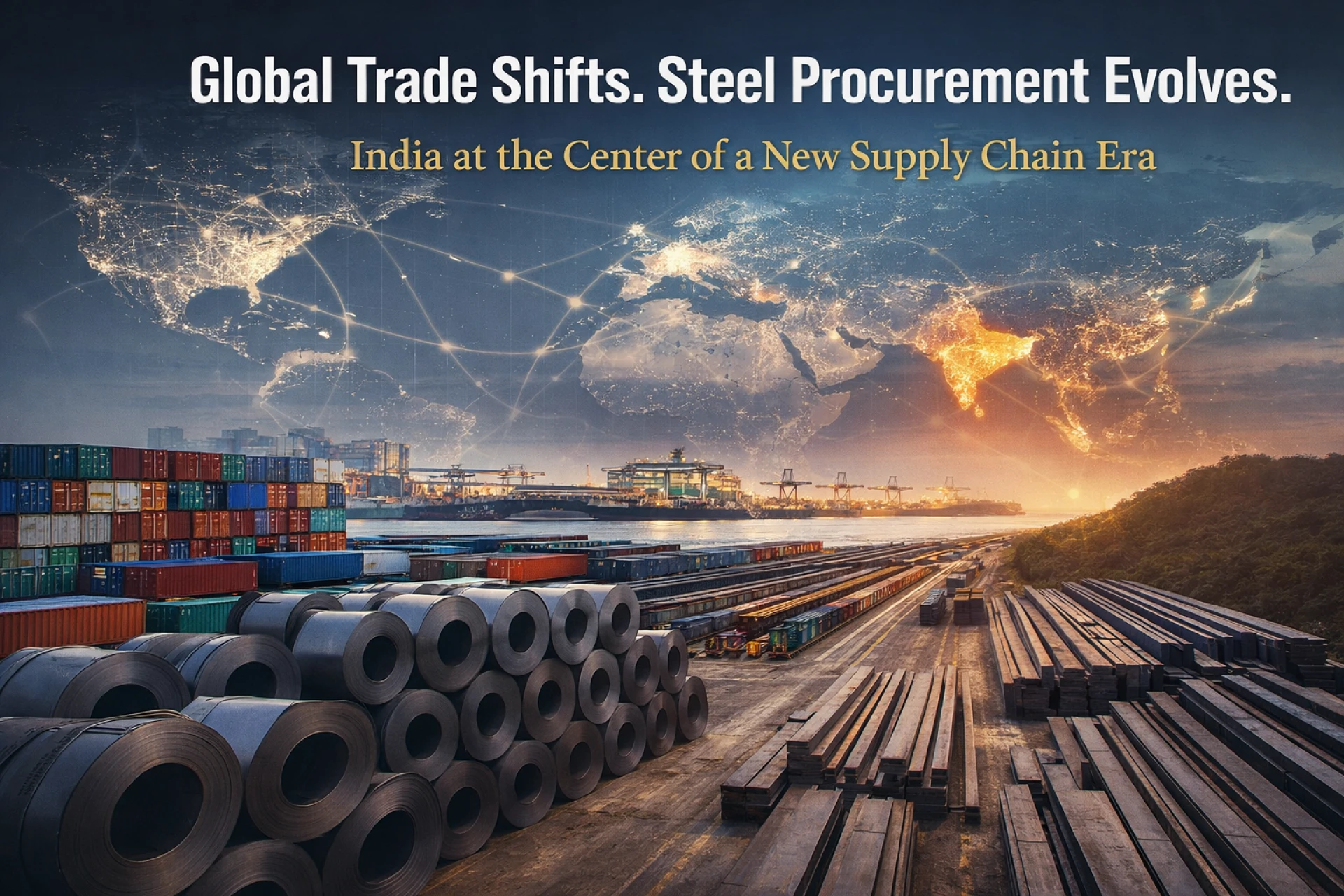

From Lowest-Cost Buying to Risk-Adjusted Sourcing
India’s steel procurement landscape is undergoing a quiet but significant transformation. For decades, purchasing decisions across construction, infrastructure, and manufacturing sectors were primarily influenced by one dominant factor — price competitiveness. However, evolving global trade relationships, supply chain disruptions, and increasing scrutiny around quality and compliance are gradually shifting procurement strategies toward a more risk-adjusted approach.
Recent geopolitical developments, including trade negotiations between India and Western economies, along with changing tariff environments, are reshaping how businesses evaluate steel sourcing. These shifts are not only affecting pricing structures but also influencing supplier selection, compliance expectations, and long-term risk assessment across projects.
Industry observers suggest that the transition is less about abandoning cost efficiency and more about recognizing hidden risks associated with purely price-driven procurement models.
Trade Realignments Are Reshaping Supply Dynamics
Global steel markets have experienced multiple disruptions in recent years — from pandemic-era supply bottlenecks to geopolitical conflicts impacting raw material flows. As countries attempt to secure supply chains and reduce strategic dependence, trade agreements and protective measures have become more prominent.
For India, this environment presents both opportunities and challenges. Increased access to global steel sources can introduce competitive pricing, but it also creates variability in quality standards, certification practices, and traceability frameworks. Procurement teams now face a more complex decision landscape where cost advantages must be balanced against reliability and compliance considerations.
As a result, companies are increasingly evaluating supplier credibility alongside pricing — a trend that reflects broader global procurement behavior.
The Shift Toward Risk-Adjusted Procurement
Large infrastructure developers, EPC contractors, and manufacturing firms are gradually adopting procurement frameworks that incorporate lifecycle risk rather than focusing solely on upfront expenditure. Several factors are driving this shift:
- Rising project financing scrutiny from lenders
- Insurance requirements tied to material traceability
- Long-term maintenance cost considerations
- Increasing accountability for structural performance
In this evolving environment, supplier evaluation is expanding beyond quotations and delivery timelines to include manufacturing standards, certification transparency, and consistency of supply.
Businesses working with an experienced structural steel distributor often gain advantages in documentation reliability, sourcing clarity, and logistical coordination — factors that can influence long-term project outcomes more than marginal price differences.
Procurement Leaders Are Becoming Risk Managers
The role of procurement teams is also changing. Traditionally viewed as cost negotiators, procurement professionals are increasingly functioning as risk managers responsible for safeguarding project viability.
This transition is particularly visible in sectors with long asset lifecycles such as:
- Infrastructure and transportation
- Renewable energy projects
- Industrial facilities
- Commercial real estate
In these sectors, material performance over decades directly impacts operational stability, maintenance expenditure, and financial returns. Consequently, procurement decisions now carry strategic implications beyond immediate budget considerations.
Documentation and Traceability Are Emerging Priorities
Another noticeable trend is the growing importance of documentation and traceability. Buyers are placing higher value on:
- Material test certifications
- Manufacturing batch traceability
- Compliance with recognized standards
- Quality assurance processes
These factors help reduce uncertainty during audits, insurance assessments, refinancing, or asset transfers. In a globalized market where sourcing channels are diverse, documentation credibility can significantly influence procurement confidence.
A Structural Shift, Not a Temporary Trend
Experts believe this transition toward risk-adjusted sourcing is not temporary. Instead, it reflects a broader maturation of India’s industrial and infrastructure ecosystem.
As projects become larger and capital commitments increase, stakeholders are less willing to accept uncertainty arising from inconsistent material quality or unclear supply chains. Procurement strategies are therefore evolving to align with long-term performance expectations rather than short-term savings alone.
The Road Ahead for Indian Steel Procurement
India’s integration into global trade networks will continue to shape steel sourcing patterns in the coming years. Companies that adapt procurement frameworks to account for risk, compliance, and lifecycle performance are likely to achieve greater stability in project execution.
While price competitiveness will always remain important, the definition of value in steel procurement is expanding. Increasingly, value is being measured not just by cost per ton, but by confidence per project lifecycle.


























Sign in to leave a comment.