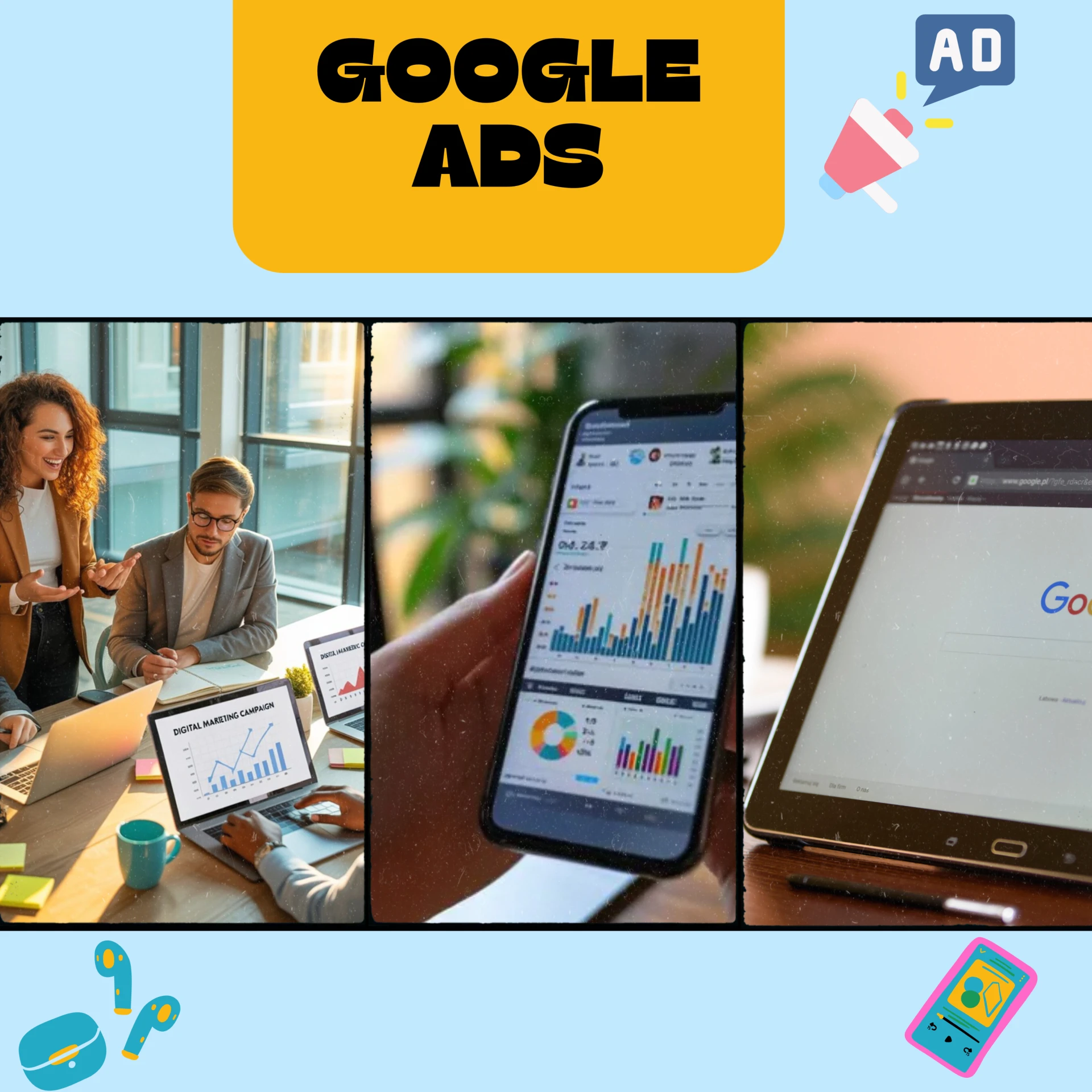

In today’s fast-paced digital world, businesses are constantly looking for ways to reach customers at the exact moment they are searching for a product or solution. Google Ads has emerged as one of the most powerful advertising platforms, enabling brands to appear directly in front of potential buyers when their intent is highest. Whether you are a small business or an established enterprise, Google Ads gives you the ability to drive targeted traffic, boost leads, and increase sales with measurable results.
This blog explores how Google Ads works, why it remains essential for businesses in 2025, and how you can create high-performing campaigns that deliver maximum ROI.
Why Google Ads Matters in 2025
With increasing competition and evolving customer behavior, Google Ads remains a critical element of digital marketing strategies. Here are the key reasons:
1. High User Intent
People come to Google with a purpose—whether they want to buy, learn, compare, or decide. Advertising at this moment captures attention at the perfect time, leading to higher conversions than most social platforms.
2. Massive Reach
Google processes over 8.5 billion searches per day. This gives your business access to a global audience with diverse interests and needs.
3. Measurable and Transparent
Every action—clicks, conversions, impressions, keywords, and costs—is tracked in real time. This transparency helps businesses analyze performance and optimize campaigns continuously.
4. Flexible Budget Options
From ₹200 per day to lakhs per month, Google Ads supports every budget. You choose how much to spend and can increase, decrease, or pause anytime.
5. AI-Powered Optimization
Google Ads in 2025 relies heavily on machine learning. Features like Smart Bidding, Responsive Search Ads, and Performance Max campaigns help improve results automatically, even for beginners.
How Google Ads Works
To make your campaigns successful, it’s important to understand the core components of Google Ads:
1. Keywords
These are the search terms users type on Google. Choosing the right keywords determines who sees your ad.
2. Bidding
You set the maximum amount you’re willing to pay for a click. Google’s auction system then decides which ads appear based on bid amount and quality.
3. Quality Score
Google uses this metric to determine ad relevance. It evaluates:
- Keyword relevance
- Landing page experience
- Expected click-through rate (CTR)
A higher Quality Score means you pay less per click and achieve better ad positions.
4. Ad Rank
This decides where your ad appears on the search results page. It’s based on:
- Your bid
- Quality Score
- Ad extensions
- Competition
5. Landing Page
A well-optimized landing page improves user experience, increasing conversions and lowering costs.
Types of Google Ads Campaigns
Google Ads offers multiple campaign formats, each designed for different goals. Here are the major types:
1. Search Campaigns
Text-based ads that appear on Google Search results. Best for:
- Lead generation
- Service-based businesses
- High-intent customers
2. Display Campaigns
Visual banner ads across millions of websites. Suitable for:
- Brand awareness
- Retargeting
- Reaching new audiences
3. Video Campaigns
Ads that run on YouTube. Ideal for:
- Storytelling
- Product promotions
- Increasing brand recall
4. Shopping Campaigns
Product-based listings that appear for e-commerce searches. Perfect for:
- Online stores
- Retail businesses
5. App Campaigns
Designed to promote mobile apps on Google Play, YouTube, and search.
6. Performance Max Campaigns
A newer AI-driven campaign type that runs ads across all Google platforms with a single setup. Best for businesses seeking automated optimization.
How to Create a High-Converting Google Ads Campaign
To make Google Ads cost-effective, follow these strategic steps:
1. Conduct Keyword Research
Use tools like Google Keyword Planner to identify:
- High-intent keywords
- Long-tail keywords
- Negative keywords (to avoid irrelevant clicks)
2. Write Compelling Ad Copy
Your ad copy should be:
- Clear
- Benefit-driven
- Keyword-rich
- Action-oriented
Include strong CTAs like:
- “Get a Free Quote”
- “Shop Now”
- “Book a Demo”
3. Use Ad Extensions
Extensions improve your ad visibility and CTR by adding details like:
- Phone numbers
- Site links
- Promotions
- Address
4. Optimize Your Landing Page
Make sure your landing page is:
- Mobile friendly
- Fast loading
- Relevant to the ad
- Clear in its call-to-action
5. Set Up Conversion Tracking
Track actions like:
- Calls
- Purchases
- Form submissions
- Downloads
This is essential for measuring ROI.
6. Monitor and Optimize
Regularly analyze:
- Keyword performance
- Ad CTR
- Cost per conversion
- Search terms report
Make adjustments based on results.
Common Mistakes to Avoid in Google Ads
Even experienced advertisers make mistakes that waste budget. Avoid the following:
- Running ads without negative keywords
- Targeting broad keywords without filters
- Ignoring Quality Score
- Not optimizing landing pages
- Forgetting to track conversions
- Using only automated strategies without monitoring
Conclusion
Google Ads remains one of the most effective and reliable digital advertising platforms for businesses of all sizes. Its ability to reach high-intent customers, combined with AI-driven optimizations, makes it a must-have tool in 2025 and beyond. By choosing the right keywords, creating compelling ads, optimizing landing pages, and tracking results, businesses can achieve exceptional ROI.
If you're looking to grow your business, increase leads, or boost e-commerce sales, Google Ads is a powerful platform that can deliver measurable results within days. With the right strategy and continuous optimization, it has the potential to transform your online marketing performance
























Sign in to leave a comment.