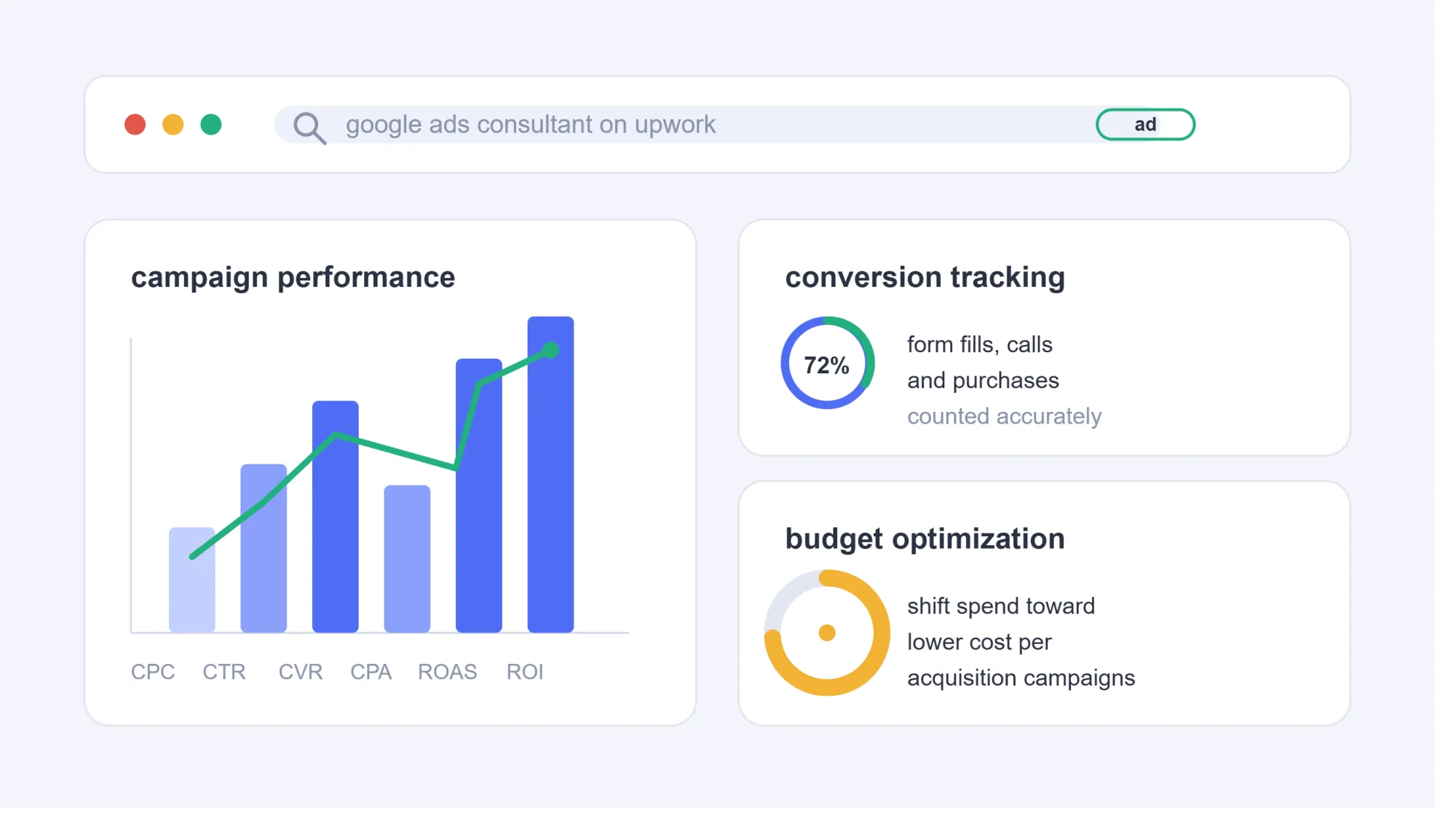

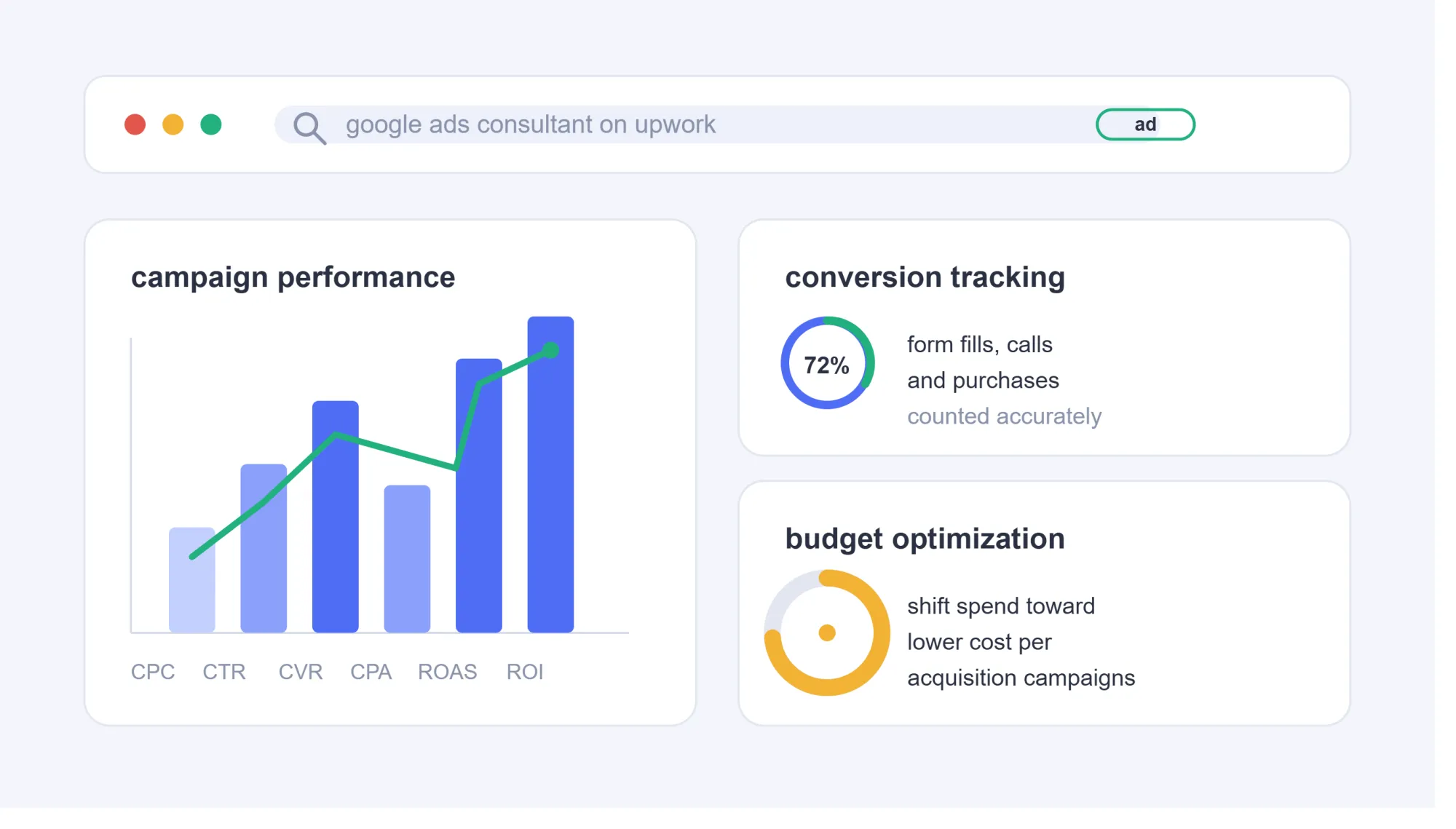
Search for a Google Ads Consultant on Upwork and you'll find hundreds of profiles, all claiming to grow revenue and cut wasted spend. The real difference isn't the pitch - it's what happens after the account gets handed over. Google Ads rewards accounts that get consistent attention: search terms appear daily, competitors adjust bids, and Quality Score shifts as ads and landing pages stay relevant or fall behind. A consultant's job isn't switching campaigns on and checking back monthly - it's reading account data and adjusting strategy before a small inefficiency becomes a real budget problem.
What a Google Ads Consultant Actually Does
A Google Ads specialist typically handles the full lifecycle of an account: campaign planning, keyword research, ad copy, conversion tracking, and ongoing bid adjustments. This differs from simply "running ads" - pay-per-click advertising means every click costs money whether it converts or not. Managing accounts through Google Ads Manager means reviewing search terms for irrelevant traffic, trimming budget from weak ad groups, and testing new copy against what already works.
Why Businesses Use Upwork to Find PPC Professionals
A full-time in-house PPC specialist is expensive, and many businesses don't have enough ad spend to justify one. Upwork lets a business review a Google Ads freelancer's work history and client feedback before committing to anything. It also makes cross-time-zone hiring easier - a business in the US can hire a Google Ads expert on Upwork based in India or elsewhere and still get daily monitoring, often at a lower cost than a local agency retainer.
Google Ads Consultant on Upwork: What the Working Relationship Looks Like
Once hired, the engagement usually starts with an account audit - checking campaign structure, wasted spend, tracking setup, and account history before making changes. Rebuilding from scratch is rarely the right move; most accounts have usable data worth preserving. From there, the consultant sets a baseline for cost per click, conversion rate, and cost per acquisition, so future performance can be measured against something real, not guesswork.
Building a PPC Strategy That Fits the Account
Search campaigns work best for capturing existing demand - someone already searching for a product or service. Display campaigns and remarketing serve a different purpose: staying visible to people who've visited the site but haven't converted yet. Performance Max campaigns blend several inventory types together, which can work well but make it harder to see where budget is going without close monitoring. Audience targeting refinements, like layering in remarketing lists, often matter as much as keyword choice. The right mix depends on what the business sells and how long its buying decision takes.
Keyword Targeting, Bidding, and Budget Optimization
Keyword research usually starts with Google Keyword Planner, but the real optimization happens after launch, once search term reports show what people actually typed before clicking. Negative keywords get added continuously to filter out irrelevant traffic - this alone can improve click-through rate and lower cost per click over time. Bid strategies need adjusting as an account gathers data; a strategy that made sense with ten conversions a month often needs revisiting once that triples. Budget should follow performance, shifting spend toward campaigns with lower cost per acquisition rather than spreading it evenly.
Conversion Tracking and Performance Measurement
None of this works without accurate conversion tracking. This typically runs through Google Tag Manager, connected to Google Analytics 4, making sure the right actions - purchases, form fills, calls - are counted as conversions, not just page visits. Without this, decisions get made on incomplete data, and metrics like conversion rate or return on ad spend end up misleading. Landing page relevance matters too: an ad promising one thing and a page delivering another quietly kills conversion rate no matter how well the campaign is targeted.
How Ongoing Optimization Improves ROI
Google Ads accounts don't improve on autopilot. Ongoing optimization - reviewing search terms weekly, testing ad copy, adjusting bids, and pausing underperforming keywords - turns an average account into a profitable one. ROAS and CPA should be reviewed regularly, not just at month-end, since a budget leak is cheaper to catch early than to fix after weeks of wasted spend. Ad extensions and assets, like sitelinks and callouts, are a low-effort way to improve CTR and give Google's algorithm more relevance signals.
What to Check before You Hire a Consultant
Before you hire Google Ads consultant support, ask to see anonymized examples of account structure or past reporting, not final revenue numbers, since those depend on industry and budget. Ask how they approach the first 30 days, how often they report on performance, and whether they'll set up conversion tracking correctly before spending a dollar on ads. Someone who explains their reasoning clearly, rather than promising guaranteed results, is usually the safer choice.
A Google Ads consultant isn't a magic fix for a struggling account, but a good one brings structure, consistent monitoring, and measurable optimization to a channel that punishes neglect. For businesses without budget for a full in-house team, that combination of expertise and flexibility is often the more practical path to a profitable PPC channel.



























Sign in to leave a comment.