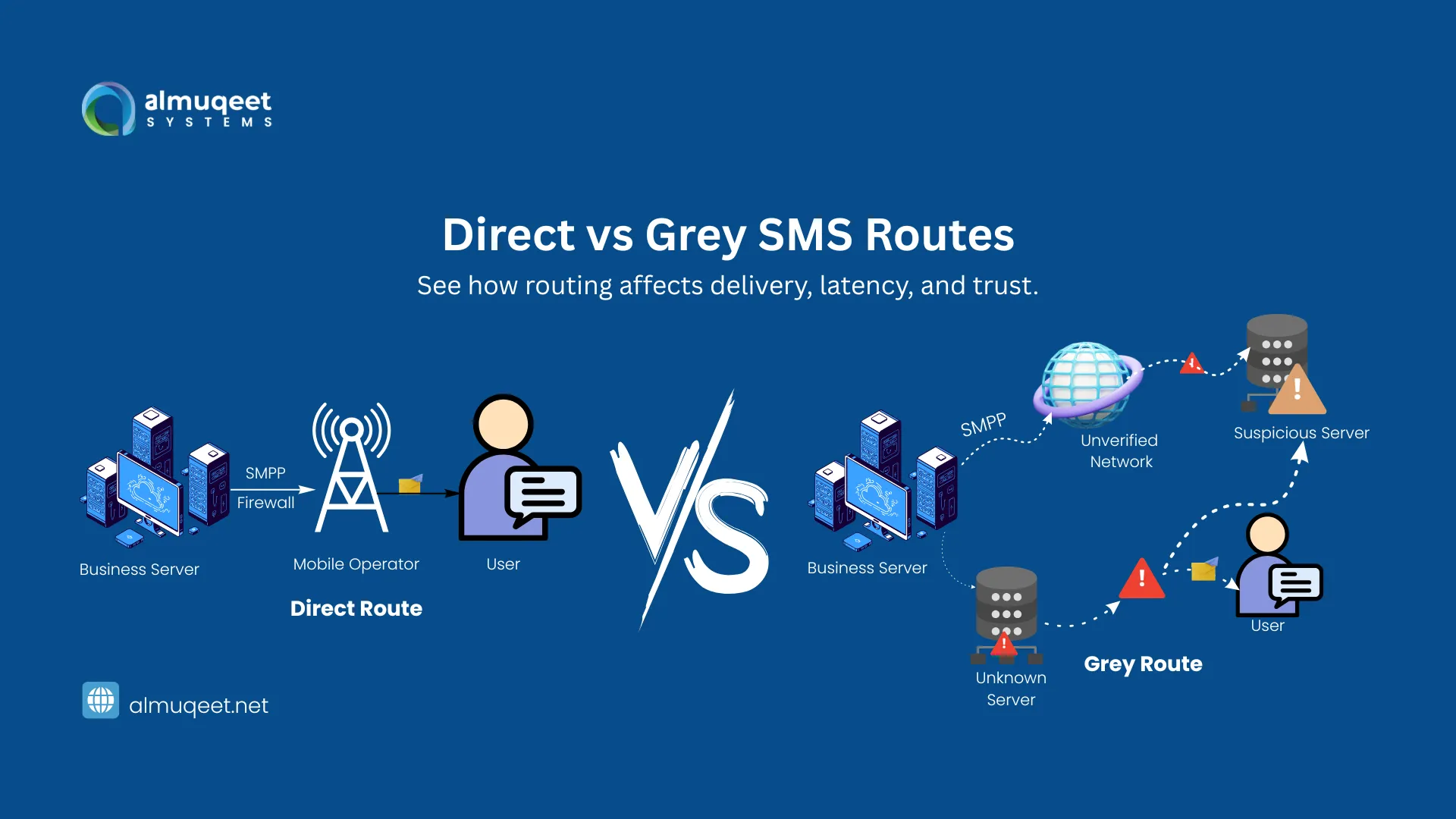

Routing usually stays out of sight until something feels off. At first, it’s not obvious. Messages that normally land in a few seconds start taking longer in certain regions. Delivery reports say one thing, but users experience something else. OTP success drops slightly. Not enough to break the system, but enough to create friction. That’s typically when teams start digging. And more often than not, the issue leads back to routings, specifically the gap between Grey Routes vs Direct Routes.
This isn’t just a technical distinction. It affects how messages behave when volume increases, when networks get congested, or when operators tighten controls. By 2026, messaging sits much closer to core infrastructure than most teams expect, so these differences don’t stay theoretical for long.
What Are Grey Routes in Telecom Messaging?
Grey routes are essentially workarounds. They use unofficial or loosely regulated paths to deliver SMS traffic outside formal operator agreements. These paths exist because telecom networks aren’t perfectly sealed, there are always pricing gaps, routing inconsistencies, or legacy interconnects that can be leveraged.
In practice, messages might move through international loops, SIM-based setups, or channels that weren’t really designed for A2P traffic in the first place.
At first glance, grey routes can look perfectly fine. Delivery seems acceptable. Costs are lower. For teams trying to optimize margins, that’s hard to ignore. But things start to shift when conditions change.
As volume increases or operators begin filtering more aggressively, the cracks show up. Messages arrive late, or not at all. Sender IDs behave strangely. Delivery reports stop lining up with reality.
This is where concepts like grey route filtering come into play—because operators are actively trying to detect and shut down these unofficial paths. And when they do, the impact isn’t always immediate or obvious. It’s uneven.
That’s what makes grey routes tricky. They don’t always fail cleanly.
What Are Direct Routes?
Direct routes are the opposite approach. They’re built on formal agreements between operators and messaging providers designed specifically for A2P traffic. The path a message takes is known, controlled, and most importantly, expected. There’s structure here. Sender IDs are registered. Traffic is classified properly. Throughput limits are defined. Delivery reports are consistent enough to trust.
That structure can feel restrictive, especially if you’re used to moving quickly. Costs are higher. In some markets, you have to deal with templates, approvals, and compliance layers that slow things down. But under pressure, that structure starts to make sense.
When traffic spikes during a login surge or a high-volume campaign, direct routes don’t behave unpredictably. Messages may queue. They may slow down slightly. But they don’t disappear or behave erratically.
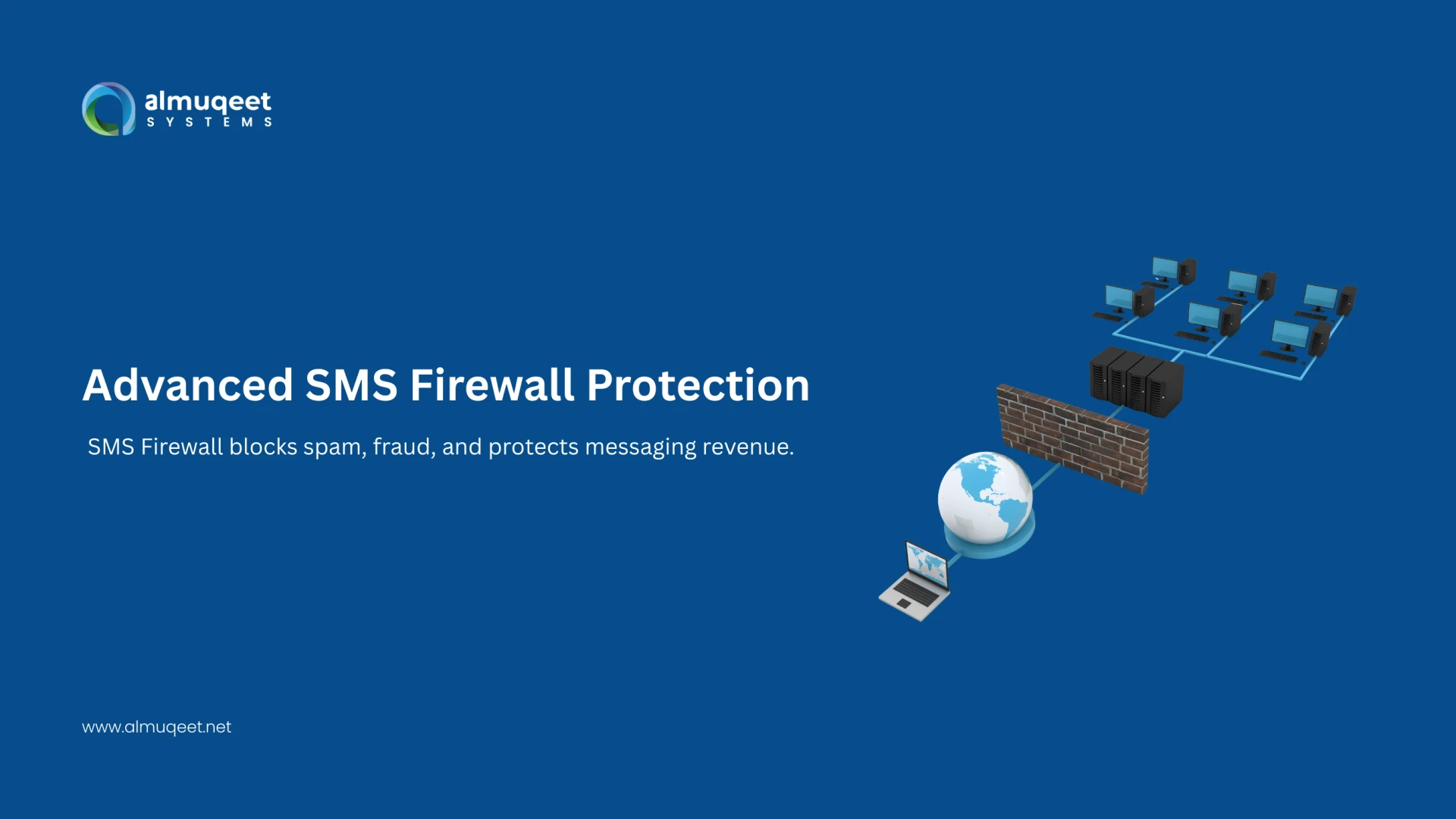
If you’ve ever looked closely at A2P SMS delivery rates, you’ll notice that routing integrity plays a bigger role than most people expect. In many cases, maintaining this consistency depends on using a reliable SMS firewall solution from Almuqeet Systems. It’s not just about sending messages, it’s about how consistently they arrive when the system is under load. Direct routes aren’t necessarily faster. They’re just more consistent in how they respond.
Grey Routes vs Direct Routes: What Actually Sets Them Apart
Most comparisons focus on cost. That’s not where the real difference shows up. The bigger distinction is in how each route behaves when things aren’t ideal, when traffic increases, when networks get congested, or when operators start enforcing rules more strictly.
| Aspect | Grey Routes | Direct Routes |
| Core Nature | Flexible but unpredictable | Controlled and stable |
| Primary Focus | Cost optimization | Delivery reliability & compliance |
| Behavior Under Normal Conditions | Can perform well initially | Consistent and predictable |
| Behavior Under High Traffic | Degrades inconsistently | Slows down in a controlled way (queuing/throttling) |
| Delivery Speed | Sometimes faster at low volumes | Stable, but may be slightly slower due to controls |
| Delivery Consistency | Fluctuates across regions and time | Remains steady across conditions |
| DLR (Delivery Reports) | Can be unreliable or manipulated | Accurate and traceable |
| Routing Path | Dynamic, often unknown or indirect | Fixed, operator-approved paths |
| Failure Pattern | Silent failures, delays, partial delivery | Transparent delays, rarely silent failures |
| Troubleshooting | Difficult due to lack of visibility | Easier due to structured reporting |
| Dependency on Network Conditions | Highly sensitive to filtering & congestion | Managed within operator frameworks |
Where This Starts Affecting Real Systems
The impact of routing choices depends a lot on how messaging is being used. In fintech, even a small delay in OTP delivery can interrupt login flows. Users retry, sessions expire, and suddenly a minor delay becomes a bigger operational issue.
In logistics, timing matters in a different way. Notifications that arrive late can throw off coordination between warehouses and drivers. Healthcare is less forgiving. Appointment reminders and alerts need to arrive when they’re supposed to. Delays don’t just reduce efficiency; they create real-world consequences.
Even in retail, where there’s a bit more tolerance, inconsistent delivery affects engagement. Messages that arrive late or not at all tend to show up in conversion numbers eventually. What’s interesting is that these problems rarely point directly to routing at first. They show up as general “delivery issues” or system inefficiencies. But underneath, routing is often part of the story.
When Grey Routes Start Becoming a Problem
Grey routes still have their place, that hasn’t changed completely. They can work for low-priority traffic or scenarios where cost matters more than consistency. But the environment around them has shifted.
Operators are stricter now. Compliance frameworks are tighter. Detection systems are better. In markets with strong regulation, grey route performance can vary from one day to the next without much warning. The bigger issue isn’t total failure, it’s inconsistency.
Messages that get delayed occasionally. Delivery reports that don’t quite match. Small issues that don’t trigger alerts immediately but build up over time. Those are harder to catch and harder to fix quickly.
Why Most Setups End Up Mixing Both
In reality, most systems don’t rely entirely on one type of route, they mix. Critical traffic OTPs, alerts, and anything time-sensitive usually run through direct routes. That’s where reliability matters most.
Less critical traffic might still use alternative paths to keep costs under control. The challenge is keeping visibility over how that traffic is being routed. Because once routing becomes dynamic, and it always does at scale, you’re not just sending messages anymore. You’re managing how those messages behave across different conditions.
Final Perspective
The conversation around Grey Routes vs Direct Routes isn’t really about picking one and ignoring the other. It’s about understanding trade-offs. Grey routes can be efficient, but they come with uncertainty.
Direct routes are more predictable, but require structure and investment. As messaging becomes more embedded in core systems, that trade-off becomes harder to ignore. At that point, routing stops being a background decision. It becomes part of how reliably your system actually works.
FAQs
1. What is the main difference between grey routes and direct routes?
Grey routes use unofficial paths to reduce costs, while direct routes rely on operator-approved channels that provide more consistent and reliable delivery.
2. Are grey routes suitable for OTP messaging?
Not really. OTPs depend on timing and reliability, and grey routes can introduce delays or inconsistencies.
3. Why do direct routes cost more?
They involve formal agreements, infrastructure, and compliance layers, which increase costs but also improve delivery stability.
4. Can both routing types be used together?
Yes. Many systems use a hybrid approach, sending critical traffic through direct routes and less sensitive traffic through alternative paths.
5. How do operators detect grey routes?
Through traffic pattern analysis, sender validation, and filtering systems designed to identify unauthorized routing.
6. Why is routing more important now than before?
Because messaging is tied to critical functions like authentication and transactions, making delivery reliability much more important than it used to be.

























Sign in to leave a comment.