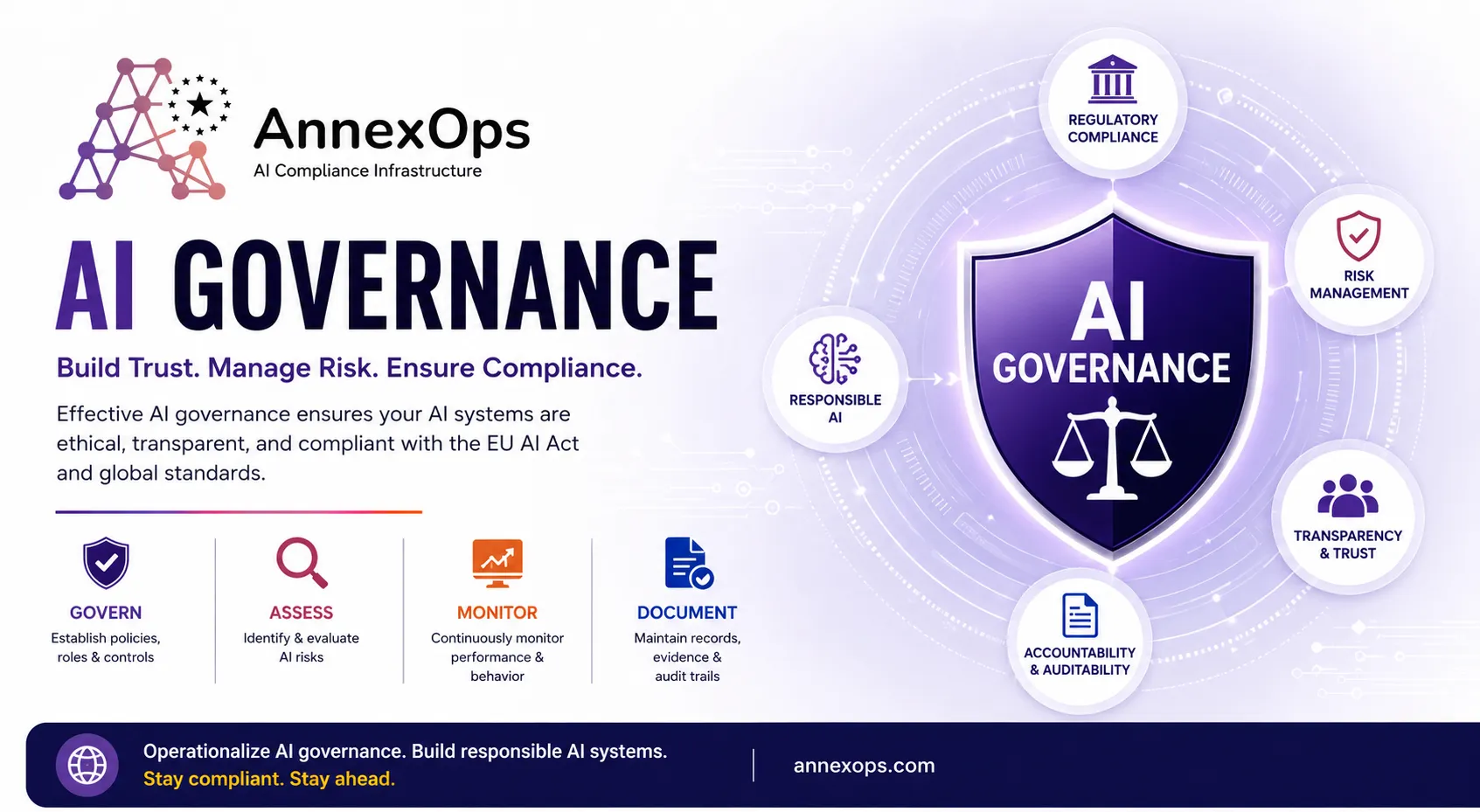

Introduction: Why AI Governance is Now a Business Requirement
AI systems are no longer experimental tools inside SaaS companies—they are core product infrastructure. With the rise of regulation such as the EU AI Act for SaaS companies, governance is becoming a mandatory capability rather than a compliance afterthought.
Modern SaaS platforms that use AI for decision-making, automation, personalization, or analytics must now ensure that their systems are transparent, traceable, and safe by design. This is where AI Governance becomes a critical operational layer.
Organizations that fail to implement structured governance risk not only regulatory penalties but also loss of enterprise customers who demand compliance readiness before procurement.
Why AI Governance Matters for SaaS Companies
SaaS companies operate at scale, which means AI decisions often impact thousands or millions of users in real time. Under the EU AI Act for SaaS companies, this creates direct accountability for how AI systems behave.
Key expectations include:
- Transparency in automated decisions
- Explainability of model outputs
- Continuous monitoring of system behavior
- Documentation of model lifecycle decisions
- Risk classification for deployed AI systems
Without structured governance, SaaS platforms struggle to maintain compliance as systems evolve rapidly.
High-Risk AI Systems and Regulatory Pressure
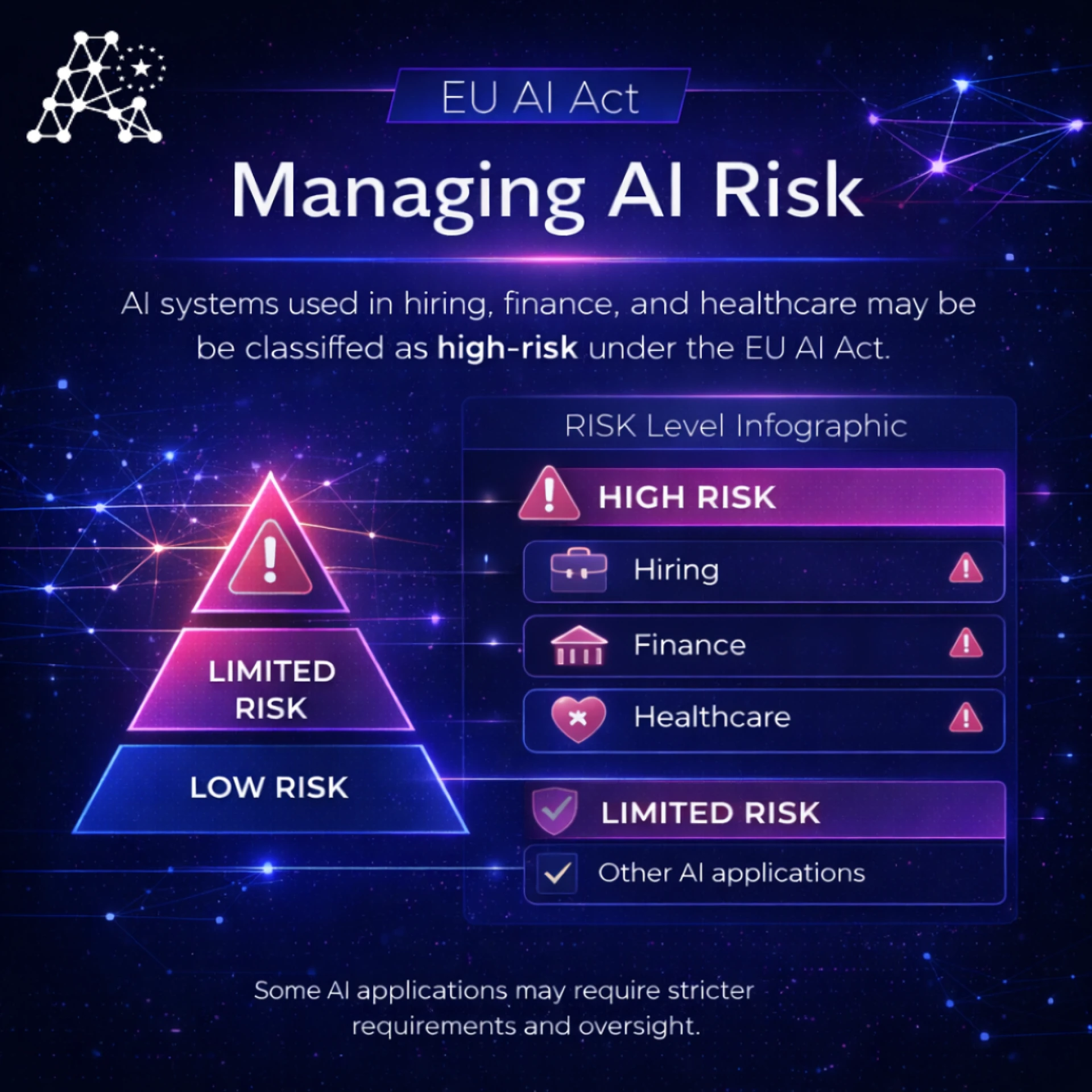
One of the most important categories under the EU AI Act is high-risk AI systems.
These include AI used in:
- Credit scoring and financial decisions
- Hiring and recruitment tools
- Healthcare diagnostics
- Legal or administrative decision systems
- Critical infrastructure automation
For SaaS providers building tools in these areas, compliance becomes significantly more complex.
High-risk systems require:
- Pre-deployment risk assessments
- Continuous post-deployment monitoring
- Human oversight mechanisms
- Detailed audit logs and traceability
- Strong documentation frameworks
This is where many SaaS companies face operational gaps—not in model performance, but in governance maturity.
AI Governance as a Competitive Advantage
Beyond compliance, AI Governance is becoming a market differentiator.
Enterprise customers now evaluate SaaS vendors based on:
- Audit readiness
- Risk management maturity
- Transparency of AI systems
- Regulatory alignment (EU AI Act readiness)
- Data governance practices
Companies that implement strong governance systems gain:
- Faster enterprise procurement approvals
- Higher customer trust
- Reduced legal and compliance friction
- Better scalability in regulated markets
Governance is no longer overhead—it is a growth enabler.
Building Scalable Governance for SaaS AI Systems
To comply with the EU AI Act for SaaS companies, organizations need structured governance systems that operate continuously, not periodically.
A scalable approach includes:
1. Lifecycle-based AI Governance
Governance should cover:
- Data ingestion
- Model training
- Deployment
- Monitoring
- Retirement
2. Automated Documentation Systems
Manual documentation cannot keep up with SaaS iteration cycles. AI systems must generate:
- Model cards
- Risk reports
- Audit logs
- Change histories
3. Continuous Risk Monitoring
Instead of periodic audits, SaaS companies must implement:
- Drift detection
- Bias monitoring
- Performance tracking
- Compliance alerts
4. High-Risk Classification Controls
Each AI system should be mapped to regulatory categories, especially identifying high-risk AI systems early in development.
How AnnexOps Supports AI Governance
Platforms like AnnexOps help SaaS companies operationalize AI Governance by transforming compliance from documentation into infrastructure.
AnnexOps enables:
- Structured governance workflows
- Centralized AI system documentation
- Continuous risk tracking
- Audit-ready compliance reporting
- Support for EU AI Act requirements
This allows engineering and compliance teams to focus on building AI systems while maintaining regulatory alignment.
Conclusion: Governance is the New Foundation of SaaS AI
The shift brought by the EU AI Act for SaaS companies is clear: AI systems must be governed as continuously evolving infrastructure, not static models.
As AI adoption increases and high-risk AI systems become more common in SaaS products, governance will define which companies scale safely and which face regulatory friction.
Organizations that invest early in AI Governance will not only remain compliant but also build stronger, more trusted, and enterprise-ready AI products.
Frequently Asked Questions
What is AI Governance and why is it important for SaaS companies?
AI Governance refers to the structured approach to managing AI systems to ensure they are transparent, traceable, and safe. It's crucial for SaaS companies because regulatory frameworks like the EU AI Act mandate compliance, and failure to implement governance can lead to penalties and loss of enterprise customers.
How does the EU AI Act impact high-risk AI systems?
The EU AI Act categorizes certain AI systems as high-risk, which includes applications in areas like financial decisions and healthcare diagnostics. These systems require stringent measures such as pre-deployment risk assessments, continuous monitoring, and detailed documentation to ensure compliance and mitigate risks.
What are the key elements of structured AI Governance?
Key elements of structured AI Governance include transparency in decision-making, explainability of model outputs, continuous monitoring of system behavior, and comprehensive documentation of the model lifecycle. These practices help organizations maintain compliance and build trust with users.
Can AI Governance provide a competitive advantage for SaaS companies?
Yes, implementing strong AI Governance can serve as a competitive advantage. It can lead to faster procurement approvals, higher customer trust, and reduced legal friction, making the company more appealing to enterprise customers who prioritize compliance and transparency.
What role do platforms like AnnexOps play in AI Governance?
Platforms like AnnexOps support AI Governance by transforming compliance into a structured infrastructure. They provide tools for centralized documentation, continuous risk tracking, and audit-ready compliance reporting, allowing teams to focus on developing AI systems while ensuring regulatory alignment.
How should SaaS companies approach building scalable AI Governance?
SaaS companies should adopt a lifecycle-based approach to AI Governance that includes data ingestion, model training, deployment, monitoring, and retirement. Additionally, they should implement automated documentation systems and continuous risk monitoring to keep pace with rapid iterations.
What challenges do SaaS companies face in implementing AI Governance?
Many SaaS companies struggle with operational gaps in governance maturity rather than model performance. Challenges include keeping up with regulatory requirements, maintaining thorough documentation, and ensuring continuous monitoring of high-risk AI systems.























Sign in to leave a comment.