
Why Enterprises Need AI Compliance Software to Navigate the EU AI Act
Artificial intelligence is now a core component of enterprise technology infrastructure. Organizations across industries use AI to automate decision-making, optimize supply chains, detect fraud, and deliver personalized customer experiences.
However, as AI systems begin to influence critical decisions that affect individuals and society, governments are introducing new regulatory frameworks to ensure these technologies are used responsibly.
The European Union has taken the lead with the EU AI Act, the first comprehensive regulatory framework designed specifically to govern artificial intelligence.
For enterprises operating in the European market, compliance with this regulation is becoming a strategic priority. The challenge is that AI governance is far more complex than traditional compliance areas such as data protection or financial reporting.
This is why many organizations are now adopting AI compliance software to manage regulatory requirements efficiently.
The Growing Complexity of AI Governance
Over the past decade, the number of AI systems deployed within large organizations has increased dramatically.
A typical enterprise may operate dozens or even hundreds of AI systems across different business units. These systems may include:
- fraud detection algorithms in financial services
- predictive maintenance models in manufacturing
- recommendation engines in e-commerce
- automated recruitment screening tools in HR
- customer service chatbots powered by machine learning
In addition, organizations frequently integrate third-party AI services through APIs or cloud platforms.
Because these systems are distributed across multiple environments, maintaining visibility and governance can be extremely difficult.
Without centralized oversight, companies may struggle to answer basic questions such as:
- Where are AI systems deployed?
- Which systems are considered high-risk under the EU AI Act?
- Are compliance controls implemented for those systems?
- Is monitoring and logging in place?
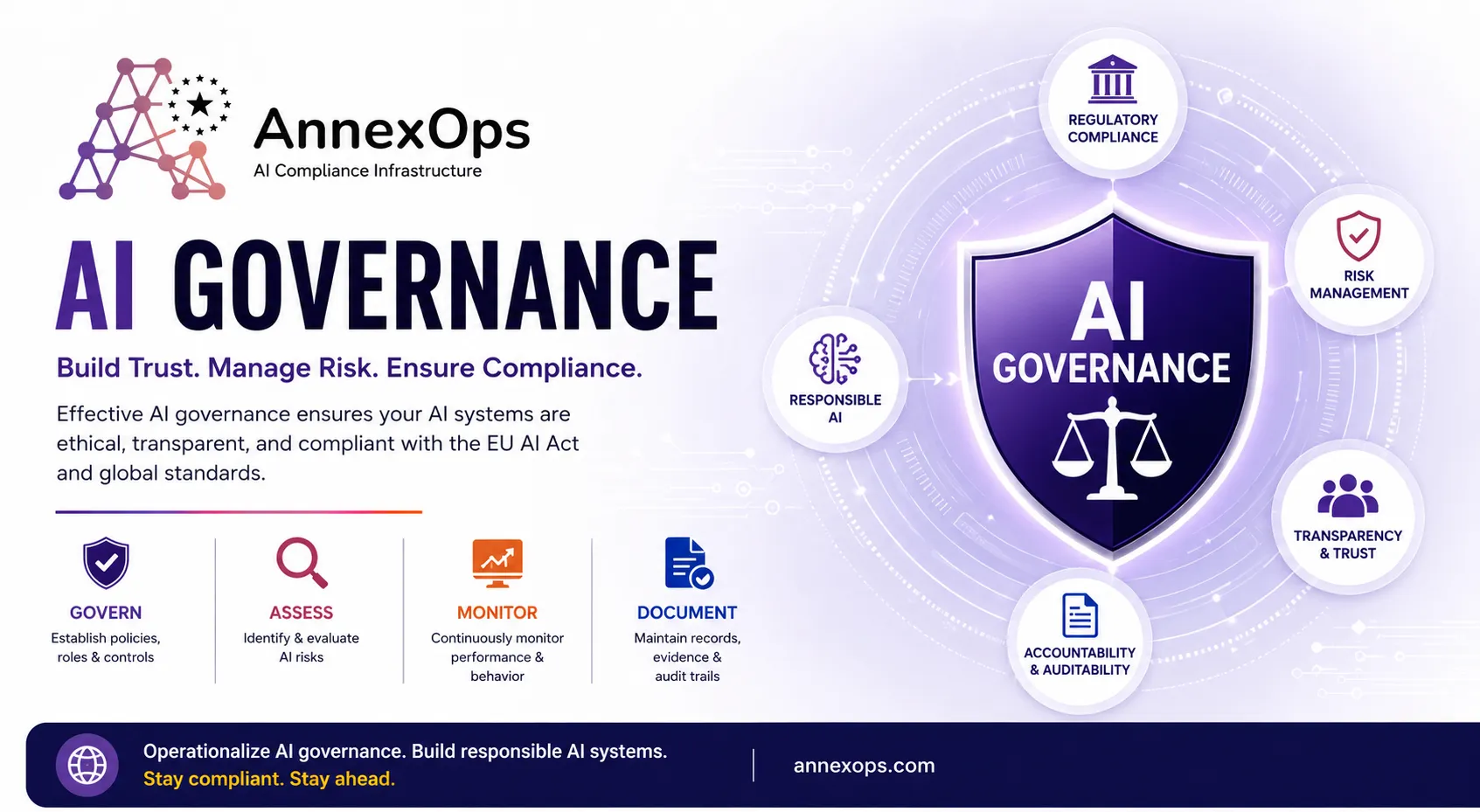
AI compliance software helps organizations answer these questions by providing centralized governance infrastructure.
EU AI Act Compliance Requirements
The EU AI Act introduces several obligations for organizations that develop or deploy AI systems.
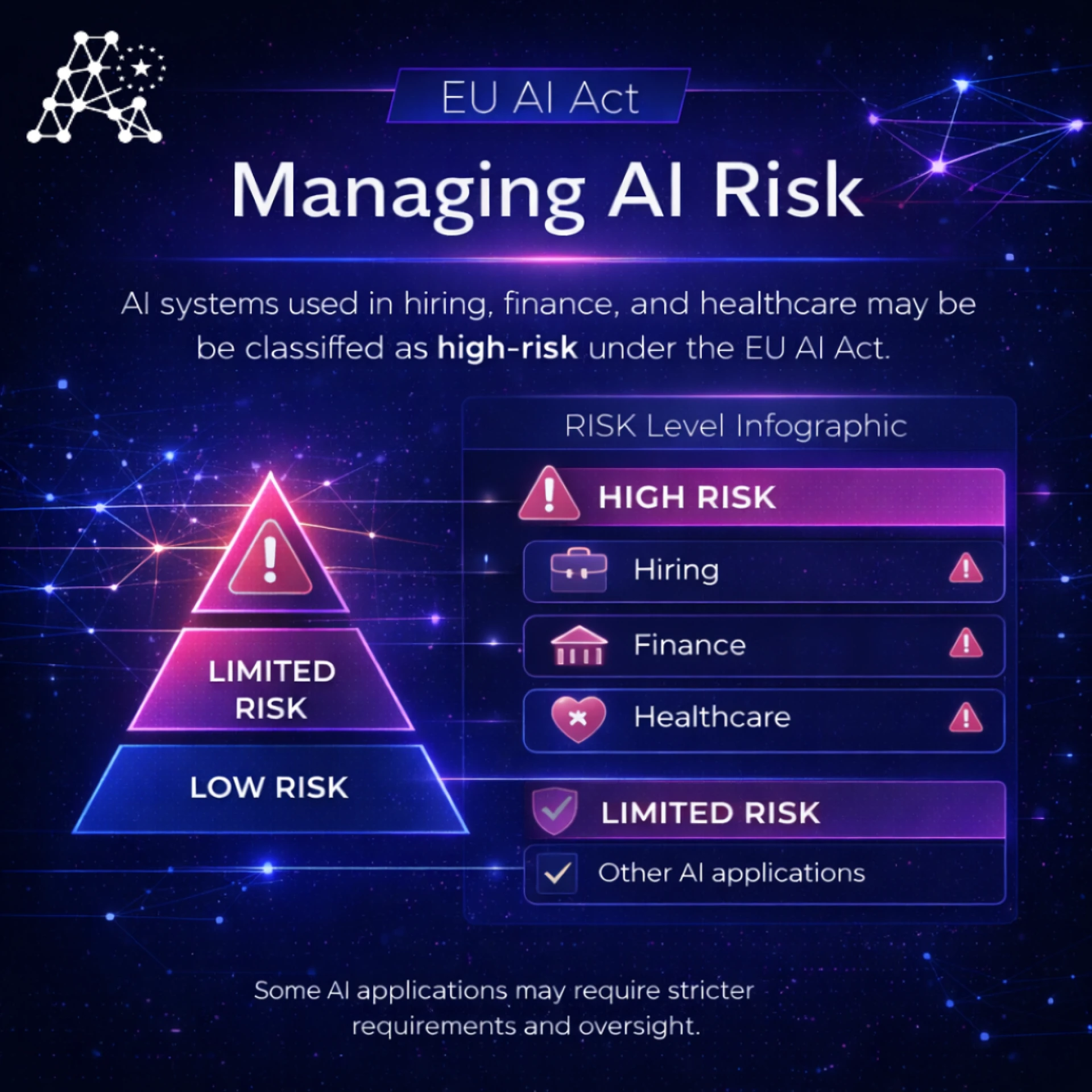
The regulation is built around a risk-based model that classifies AI systems into categories based on their potential impact.
High-risk systems must comply with several safeguards, including:
- risk management frameworks
- data governance controls
- technical documentation
- logging and monitoring mechanisms
- human oversight capabilities
Organizations must also maintain evidence demonstrating compliance with these requirements.
For enterprises managing multiple AI systems, implementing these safeguards manually can be extremely challenging.
AI compliance software helps automate many of these tasks.
Core Capabilities of AI Compliance Software
AI compliance platforms are designed to help organizations manage regulatory obligations across the AI lifecycle.
Below are some of the most important capabilities.
AI System Discovery
The first step in compliance is identifying AI systems within the organization.
Many enterprises underestimate the number of AI systems they operate. AI may be embedded in applications, analytics tools, or external services.
AI discovery tools scan infrastructure, development pipelines, and APIs to identify systems that use artificial intelligence.
Platforms like AnnexOps automatically detect AI systems and create a centralized inventory.
This visibility is essential for managing regulatory obligations.
AI Risk Classification
Once AI systems are identified, organizations must classify them according to the EU AI Act’s risk categories.
These categories include:
- unacceptable risk
- high risk
- limited risk
- minimal risk
Risk classification determines which compliance controls apply to each system.
AI compliance software automates this process by evaluating system metadata and use cases against regulatory criteria.
Compliance Control Management
High-risk AI systems must implement governance controls that address risks related to fairness, transparency, and accountability.
These controls may include:
- dataset governance procedures
- risk management processes
- human oversight mechanisms
- model monitoring systems
Compliance software helps organizations track whether these controls are implemented across AI systems.
Monitoring and Logging
The EU AI Act requires organizations to maintain logs that enable traceability of AI decisions.
Monitoring systems track AI performance and detect issues such as:
- model drift
- accuracy degradation
- unexpected outcomes
AI compliance software centralizes monitoring data, enabling organizations to maintain continuous oversight.
Documentation and Evidence Management
Regulators may require organizations to demonstrate compliance with AI governance requirements.
This requires maintaining documentation such as:
- technical system descriptions
- risk assessments
- dataset governance records
- monitoring reports
AI compliance platforms store these documents in centralized repositories that simplify regulatory audits.
Why Manual Compliance Is Not Scalable
Many organizations initially attempt to manage AI compliance using spreadsheets or internal documentation tools.
While this approach may work for a small number of systems, it quickly becomes impractical at scale.
Manual compliance processes often lead to:
- incomplete AI system inventories
- inconsistent risk classifications
- outdated documentation
- limited visibility into system performance
As AI adoption grows, organizations need automated governance infrastructure.
AI compliance software enables companies to manage compliance efficiently while minimizing administrative overhead.
The Role of Developer-Friendly Compliance
Another important trend in AI governance is the integration of compliance capabilities into development workflows.
Instead of treating compliance as a separate legal process, organizations are embedding governance tools directly into engineering environments.
Developer-friendly compliance tools can integrate with:
- CI/CD pipelines
- machine learning platforms
- cloud infrastructure
- model monitoring systems
This approach ensures that compliance checks occur automatically during development and deployment.
Platforms like AnnexOps provide APIs and SDKs that enable developers to integrate compliance telemetry directly into AI systems.
This reduces the burden on compliance teams while improving transparency.
Strategic Benefits of AI Compliance Software
Beyond regulatory compliance, AI governance platforms offer several strategic advantages.
Improved Risk Management
Centralized governance provides visibility into AI systems and potential risks.
Greater Transparency
Organizations can demonstrate responsible AI practices to regulators and stakeholders.
Faster Innovation
Automated compliance processes allow companies to deploy AI systems more quickly while maintaining regulatory alignment.
Future Regulatory Readiness
As AI regulations expand globally, governance platforms help organizations adapt to new requirements.
Preparing for the Future of AI Regulation
The EU AI Act is widely expected to influence AI regulation worldwide.
Other governments are already exploring similar frameworks for regulating artificial intelligence.
Organizations that build AI governance infrastructure today will be better positioned to navigate future regulations.
Investing in AI compliance software is therefore not only about meeting current regulatory requirements—it is about preparing for the long-term future of AI governance.
Conclusion
Artificial intelligence is transforming industries, but it also introduces new responsibilities for organizations that develop and deploy these technologies.
The EU AI Act establishes clear expectations for responsible AI governance.
For enterprises managing multiple AI systems, meeting these expectations requires more than policies or documentation. It requires technical infrastructure capable of managing AI systems, classifying regulatory risk, and maintaining compliance evidence.
AI compliance software provides the tools needed to implement this infrastructure.
Platforms like AnnexOps help organizations automate AI discovery, risk classification, compliance monitoring, and documentation management.
By adopting AI governance infrastructure early, organizations can innovate confidently while maintaining alignment with emerging regulatory frameworks.

























Sign in to leave a comment.