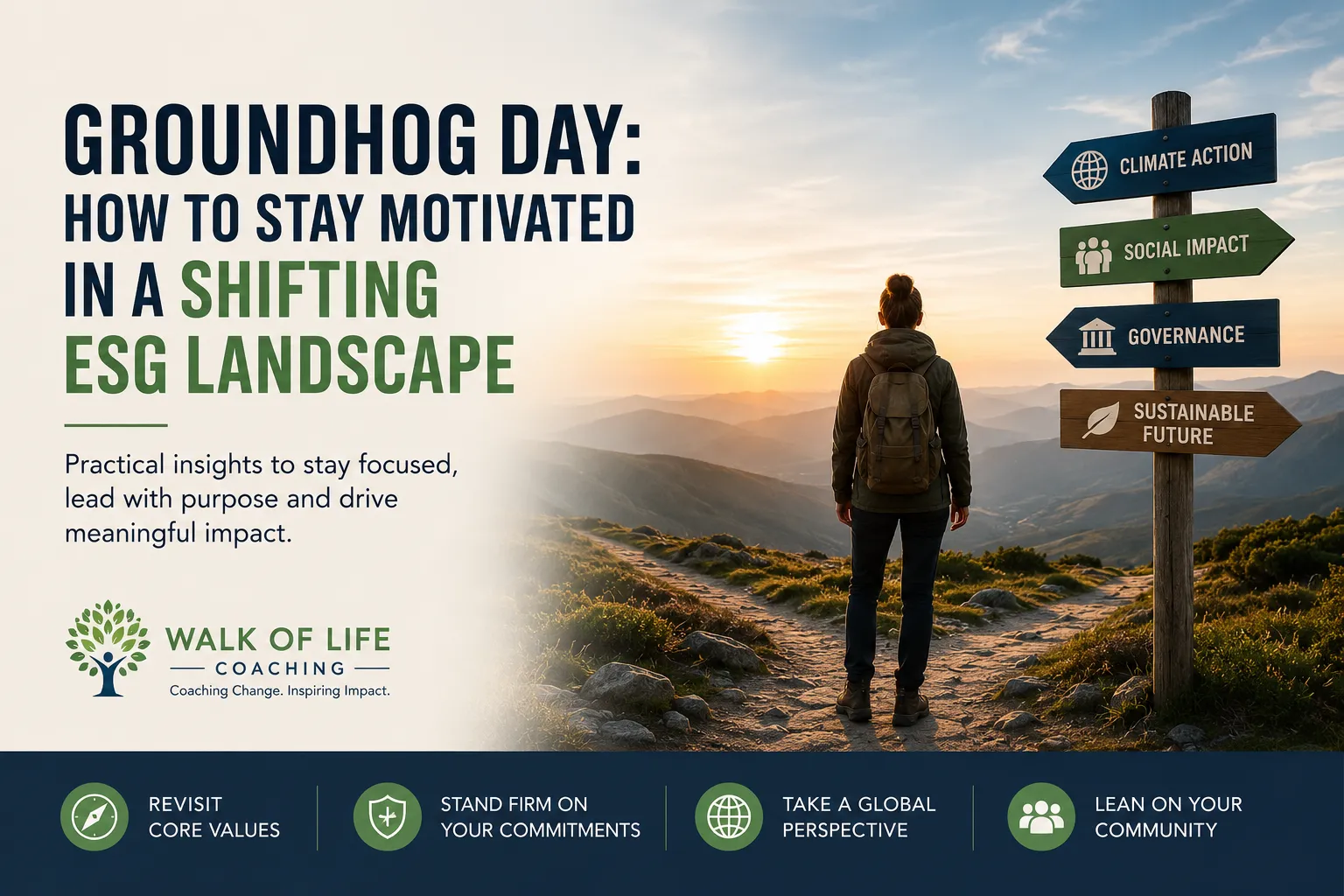

Insights from Tim Mohin, Partner and Director at Boston Consulting Group
After years of strong progress, the sustainability sector now appears to be facing new obstacles. Climate action and diversity, equity, and inclusion (DEI) have become politically charged topics in the United States, while investor resistance is increasing and many organizations are prioritizing compliance over innovation. For professionals in the ESG space, this shift can feel discouraging.
So how can sustainability leaders remain focused and motivated when progress seems to stall? In an exclusive conversation, Tim Mohin shared practical guidance on staying resilient in a changing ESG landscape.
Revisit Your Core Values
Many organizations position sustainability as an extension of their wider corporate values, usually centered around four key groups: investors, customers, employees, and brand reputation.
With political and regulatory priorities constantly changing, now is the right time to revisit those values. Leaders should assess whether their commitments still reflect today’s realities and whether they can withstand deeper scrutiny.
Tim Mohin explained that this does not mean abandoning previous goals, but rather reviewing past commitments in light of present circumstances and updating them where necessary.
For some businesses, this process is straightforward. For example, companies whose models are built around renewable resources or sustainable materials already have ESG deeply embedded into operations.
For others, especially those without sustainability integrated into sourcing or supply chains, the process may require fresh data, stronger measurement systems, and supply-chain mapping. After all, what cannot be measured cannot be effectively managed.
Take time to reflect on what your company stands for and ensure those values remain relevant, even during uncertain times.
Stand Firm on Your Commitments
Once corporate values are clearly defined, maintaining consistency is essential.
As Mohin noted, companies cannot afford to shift direction with every political trend. Changing course simply to avoid controversy may provide short-term comfort, but it risks long-term reputational damage and loss of trust.
The backlash against DEI is one example. Scaling back inclusion efforts in response to political pressure can undermine values many organizations publicly support.
True leadership requires standing by commitments, even when external pressures increase.
Think Beyond Local Politics
Although ESG debates in the U.S. may seem intense, sustainability progress continues globally.
In Europe, regulators have proposed measures to simplify reporting requirements and reduce unnecessary administrative burdens. The goal is to move attention away from box-ticking exercises and back toward innovation and real impact.
Carbon pricing is also expanding worldwide. According to Mohin, a growing share of global trade is expected to operate under carbon tax systems in the coming years. These developments could significantly accelerate meaningful change.
The key lesson: short-term political noise in one market does not define the global future of sustainability.
Lean on Your Community
Despite changing public narratives, climate risks remain real and costly. Rising temperatures and extreme weather events continue to impact economies, industries, and communities worldwide.
That is why collaboration within the sustainability community matters more than ever. Leaders should connect with peers, share progress, exchange ideas, and celebrate milestones together.
Mohin emphasized the importance of supporting one another and protecting morale in a profession that often faces criticism despite its importance.
There are also many major companies continuing to publicly support climate action and DEI initiatives, even when doing so carries reputational or political risk.
Reasons for Optimism
While the current ESG environment may feel frustrating, there is still plenty of reason for hope.
Progress may not always move in a straight line, but meaningful change is still happening. The most important step for leaders is to pause, reconnect with their purpose, and remain grounded in the values that drive long-term impact.
Headlines will continue to shift. Strong values should not.
Shannon Houde, founder of Walk of Life Coaching and an ICF-certified career and leadership coach, has dedicated her career to helping change leaders transform passion into action and create scalable social and environmental impact globally.




























Sign in to leave a comment.