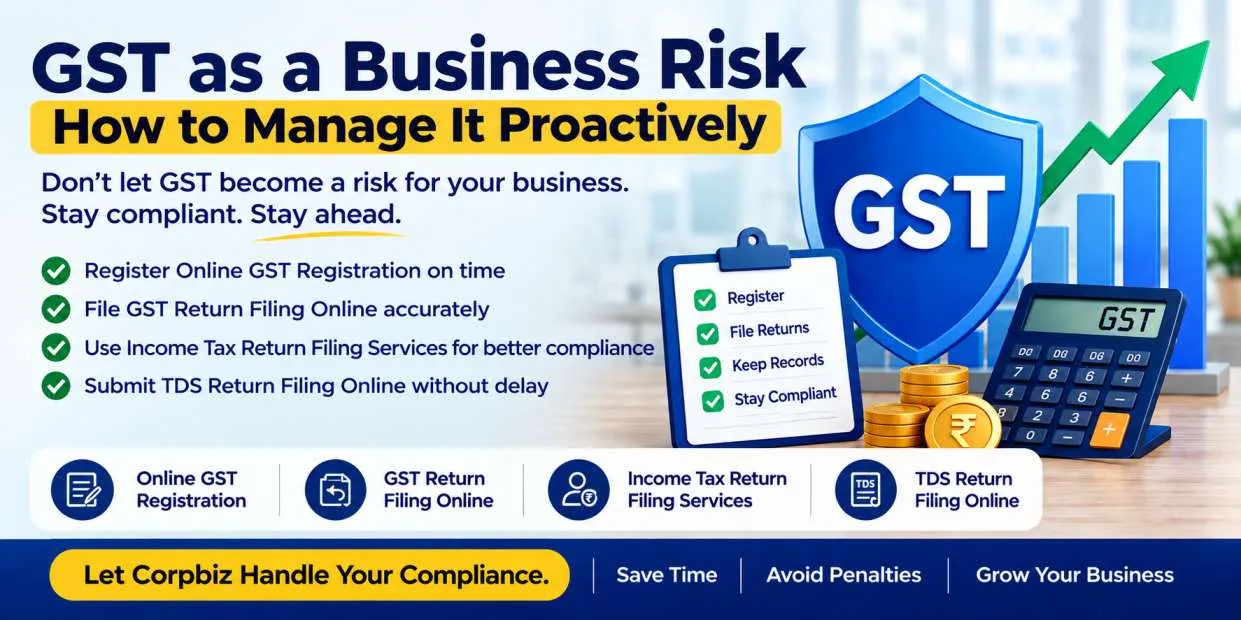

Running a business is not only about making sales and earning profits. It is also about following tax laws correctly. One of the biggest compliance responsibilities for businesses in India is Goods and Services Tax (GST).
Many business owners think GST is just about paying taxes. However, GST is also a business risk. Missing deadlines, filing incorrect returns, claiming wrong Input Tax Credit (ITC), or making invoice mistakes can lead to penalties, interest, and legal notices.
The good news is that these risks can be managed with proper planning and regular compliance.
In this blog, we will understand GST risks and learn how businesses can manage them proactively.
What is GST Risk?
GST risk means the possibility of facing financial losses, penalties, legal action, or business disruptions because of non-compliance with GST rules.
GST risks may arise due to:
- Late GST registration
- Incorrect GST returns
- Wrong tax calculations
- Missing invoices
- Fake Input Tax Credit claims
- Delayed tax payments
- Poor record keeping
- Frequent changes in GST laws
Every business, whether small or large, should identify these risks before they become serious problems.
Why Managing GST Risk is Important
Ignoring GST compliance can affect your business in many ways.
Some major impacts include:
- Heavy penalties
- Interest on delayed tax payment
- GST notices from the department
- Cancellation of GST registration
- Loss of Input Tax Credit
- Reduced business reputation
- Delays in business expansion
Managing GST properly helps businesses avoid unnecessary legal and financial issues.
Common GST Risks Businesses Face
1. Delay in Online GST Registration
Many businesses continue operating without obtaining GST registration even after crossing the turnover limit.
This can result in:
- Late registration penalties
- Tax liabilities
- Difficulty working with large clients
Applying for Online GST Registration on time keeps your business legally compliant from the beginning.
2. Incorrect GST Return Filing
Filing GST returns with incorrect figures is one of the most common mistakes.
Common errors include:
- Wrong GSTIN
- Incorrect invoice details
- Wrong tax rates
- Duplicate invoices
- Missing sales entries
These mistakes may result in notices from the GST department.
Using professional GST Return Filing Online services reduces such errors.
3. Missing GST Return Deadlines
GST returns must be filed on time every month or quarter, depending on your business category.
Late filing can result in:
- Late fees
- Interest charges
- Loss of Input Tax Credit
- Compliance issues
Creating a compliance calendar helps businesses avoid missed deadlines.
4. Wrong Input Tax Credit (ITC) Claims
Input Tax Credit helps businesses reduce their tax burden.
However, claiming ITC incorrectly may lead to:
- ITC reversal
- Penalties
- Department scrutiny
Always verify supplier invoices before claiming ITC.
5. Invoice Errors
GST invoices should contain correct information like:
- GSTIN
- Invoice number
- HSN/SAC code
- Tax amount
- Customer details
Incorrect invoices create compliance issues and affect ITC claims.
6. Poor Record Keeping
Businesses must maintain proper records of:
- Sales
- Purchases
- Expenses
- Tax payments
- E-way bills
- GST invoices
Good documentation makes audits and return filing much easier.
7. Frequent GST Rule Changes
GST rules keep changing from time to time.
Businesses that do not stay updated may accidentally violate compliance requirements.
Regular professional guidance helps businesses remain compliant.
How to Manage GST Risk Proactively
Register Your Business on Time
If your business is eligible, complete Online GST Registration without delay.
Timely registration prevents future legal complications.
File GST Returns Before the Due Date
Never wait until the last day.
Professional GST Return Filing Online services help ensure:
- Accurate filing
- Timely submission
- Reduced compliance risks
Maintain Proper Accounting Records
Use accounting software to maintain:
- Purchase records
- Sales records
- GST invoices
- Tax payments
Accurate records reduce errors during filing.
Reconcile GST Data Regularly
Compare your:
- Sales records
- Purchase records
- GSTR-1
- GSTR-3B
- Supplier invoices
Regular reconciliation helps identify mismatches early.
Verify Vendor Compliance
Your Input Tax Credit depends on your suppliers as well.
Before dealing with vendors, verify:
- GST registration
- Return filing status
- Invoice accuracy
Reliable vendors reduce compliance risks.
Conduct Internal GST Audits
Businesses should review GST compliance every few months.
An internal audit can identify:
- Filing mistakes
- Missing invoices
- ITC mismatches
- Incorrect tax payments
Early correction prevents future notices.
Stay Updated with GST Changes
Government notifications may change:
- GST rates
- Filing procedures
- Compliance rules
- Return formats
Businesses should regularly monitor updates or consult experts.
GST Risk Management Checklist
Follow this checklist regularly:
- Complete Online GST Registration on time
- File GST returns before due dates
- Maintain proper invoices
- Verify supplier compliance
- Reconcile GST data monthly
- Keep digital tax records
- Conduct internal compliance reviews
- Stay updated with GST notifications
- Consult GST professionals whenever required
GST Compliance Beyond GST Returns
Many businesses focus only on GST returns.
However, tax compliance also includes:
Income Tax Return Filing
Every eligible business must file income tax returns every financial year.
Professional Income Tax Return Filing Services ensure:
- Correct tax calculation
- Timely filing
- Better compliance
- Reduced chances of notices
TDS Return Filing
Businesses deducting TDS must file quarterly returns.
Using TDS Return Filing Online services helps:
- Avoid penalties
- Ensure accurate reporting
- Meet statutory deadlines
- Maintain tax compliance
Benefits of Proactive GST Risk Management
Businesses that manage GST risks early enjoy several advantages:
- Better legal compliance
- Fewer penalties
- Improved cash flow
- Smooth tax audits
- Strong business reputation
- Better vendor relationships
- Easier business expansion
- Peace of mind
Compliance should be seen as an investment rather than an expense.
How Corpbiz Helps Businesses Stay GST Compliant
Corpbiz® provides complete compliance support for startups, SMEs, and large businesses across India.
Our services include:
- Online GST Registration
- GST Return Filing Online
- Income Tax Return Filing Services
- TDS Return Filing Online
- GST notices and advisory support
- Tax compliance management
- Business registration assistance
Our experienced professionals help businesses reduce compliance risks while ensuring timely and accurate filings.
Conclusion
GST compliance is more than filing returns—it is an important part of business risk management. Delays, incorrect filings, poor documentation, and changing tax rules can create financial and legal challenges.
By maintaining proper records, filing returns on time, verifying invoices, and seeking professional support, businesses can stay compliant and avoid unnecessary penalties.
A proactive approach to GST compliance protects your business, builds trust with customers and vendors, and supports long-term growth.
Frequently Asked Questions (FAQs)
1. What is GST risk?
GST risk refers to the possibility of penalties, notices, financial losses, or legal issues due to non-compliance with GST laws.
2. Why is Online GST Registration important?
Online GST Registration ensures your business operates legally and allows you to collect GST and claim Input Tax Credit where applicable.
3. Why should GST returns be filed on time?
Timely GST Return Filing Online helps avoid late fees, interest, penalties, and compliance notices.
4. What happens if GST returns are filed incorrectly?
Incorrect returns may lead to GST notices, ITC mismatches, additional tax liability, penalties, and interest.
5. What records should businesses maintain for GST?
Businesses should keep invoices, purchase records, sales records, tax payment details, e-way bills, and other supporting documents.
6. How do Income Tax Return Filing Services help businesses?
Professional Income Tax Return Filing Services ensure accurate tax calculations, timely filing, and compliance with income tax laws.
7. Who should file TDS returns?
Businesses and entities that deduct Tax Deducted at Source (TDS) are required to file TDS returns within the prescribed due dates.
8. Why choose professional GST compliance services?
Professional experts help reduce errors, ensure timely filings, manage notices, and keep businesses updated with changing tax regulations.
Author Profile
Atul Shukla
Legal Compliance & Business Registration Expert
Atul Shukla is a legal compliance professional specializing in GST, company registration, tax compliance, and regulatory approvals in India. He writes practical, easy-to-understand articles that help entrepreneurs, startups, and businesses navigate legal requirements confidently.




























Sign in to leave a comment.