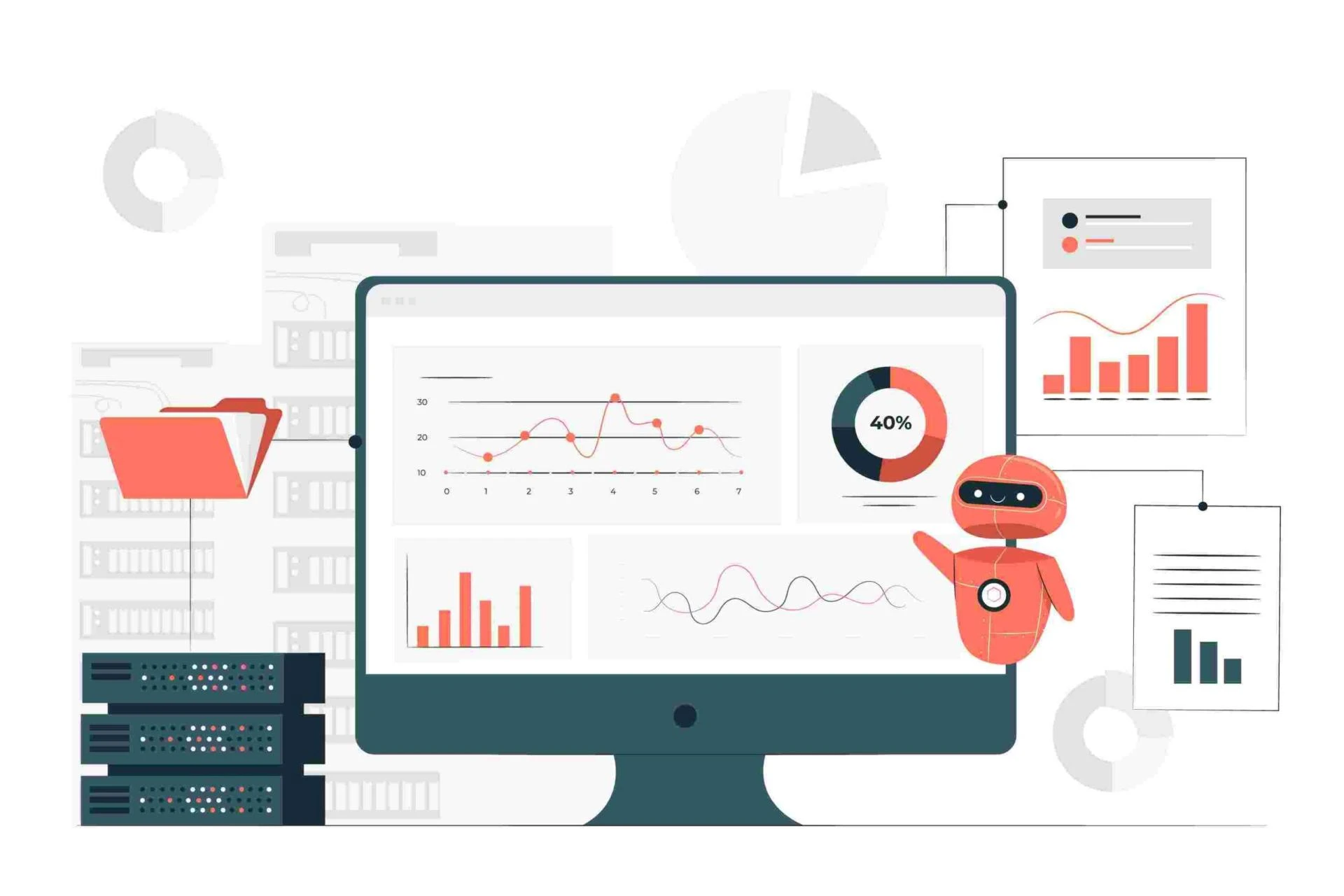

Business intelligence (BI) tools leverage research methods, techniques, apps, channels, different configurations, and other tech breakthroughs to convert raw data into intelligent data. The purpose is to enable businesses to make tactical, more informed decisions to scale and increase ROI. Power BI systems, for example, have increased in popularity in the last decade, and increasingly more organizations use solutions such as Microsoft Power BI Consultant to make data relevant and useful to employees.
Although the benefits are undisputed, implementing a BI program comes with numerous challenges. In general, budget and strategy design are the two main concerns. The goal of a business intelligence system is to deliver a promised ROI, which in many cases doesn’t happen due to increased implementation complexity or BI administration. But there are ways to overcome traditional challenges with modern solutions.
Outdated BI strategy
Prior to making any upgrades, companies must realize that their BI strategy is outdated. Increasingly more C-level executives don’t know that their business intelligence solution needs a makeover. As a consequence, they can’t really pinpoint what’s wrong with their ROI and why aren’t their processes working anymore. A good approach would be to review and assess current business processes. This way, leaders can collect fundamental data necessary for creating a better, more efficient business roadmap. Next, they should define a data management strategy, followed by a PoC (proof-of-concept) so that their solution can be validated.
Data quality concerns
Business intelligence applications rely on data accuracy. Prior to engaging in any type of BI project, access to high-quality data is critical. In general, company leaders rush to segment and aggregate the data; they often ignore quality or believe that errors can be easily fixed once the data has been gathered. To overcome data quality concerns, the key is to acknowledge the importance of data management accuracy. Deploying BI tools automatically involves creating a data collection process. To ensure quality from the beginning, the solution is to build a solid data management strategy that can work as a foundation for tracking the data lifecycle.
Inconsistent information and siloed systems
Although data completeness is fundamental for BI efficiency, numerous businesses still deal with siloed systems. For modern business intelligence tools, it’s challenging to access old, siloed information without impacting security or permission levels. To break down silos, data management and BI teams must collaborate and work together in harmony. But in the absence of well-defined internal data standards, business departments become confused as each department has its own version of KPIs and additional business metrics. To overcome this challenge, companies should work towards building clearer definitions for KPIs and an aligned data modeling layer.
Slow adoption of modern BI tools
End users often take the easy way out when it comes to BI tools. Most of them prefer to keep working with familiar tools, like Saas applications or even Excel. Instead of leveraging modern BI tools to assess the data and get more accurate insights, users prefer to export the information and assess it outside of the system. This approach doesn’t just jeopardize security; it results in unanticipated use patterns that decrease the adoption of modern BI tools. To overcome this challenge, the first step would be to monitor user activity to find out if there are any adoption concerns. Following this step, all concerns must be addressed so that end users can truly acknowledge the benefits of new-age BI solutions.
Due to the common challenges associated with traditional business intelligence tools, businesses might start questioning the value of the BI technology stack. In the beginning, it can be challenging to adapt the business model, train employees, and truly understand the underlying benefits. However, just like any advanced technology, BI takes time to implement. Also, it should be seen as an improvement initiative and not an IT-oriented approach. Proper guidance and a solid strategy can help organizations overcome their concerns so that they can harness the genuine power of business intelligence to improve business results.
Looking for Power-bi, Business Intelligence Consulting, ios App Developers, Android App Developers, Digital Transformation Experts, Reach Out Maisters Today.
0


























Sign in to leave a comment.