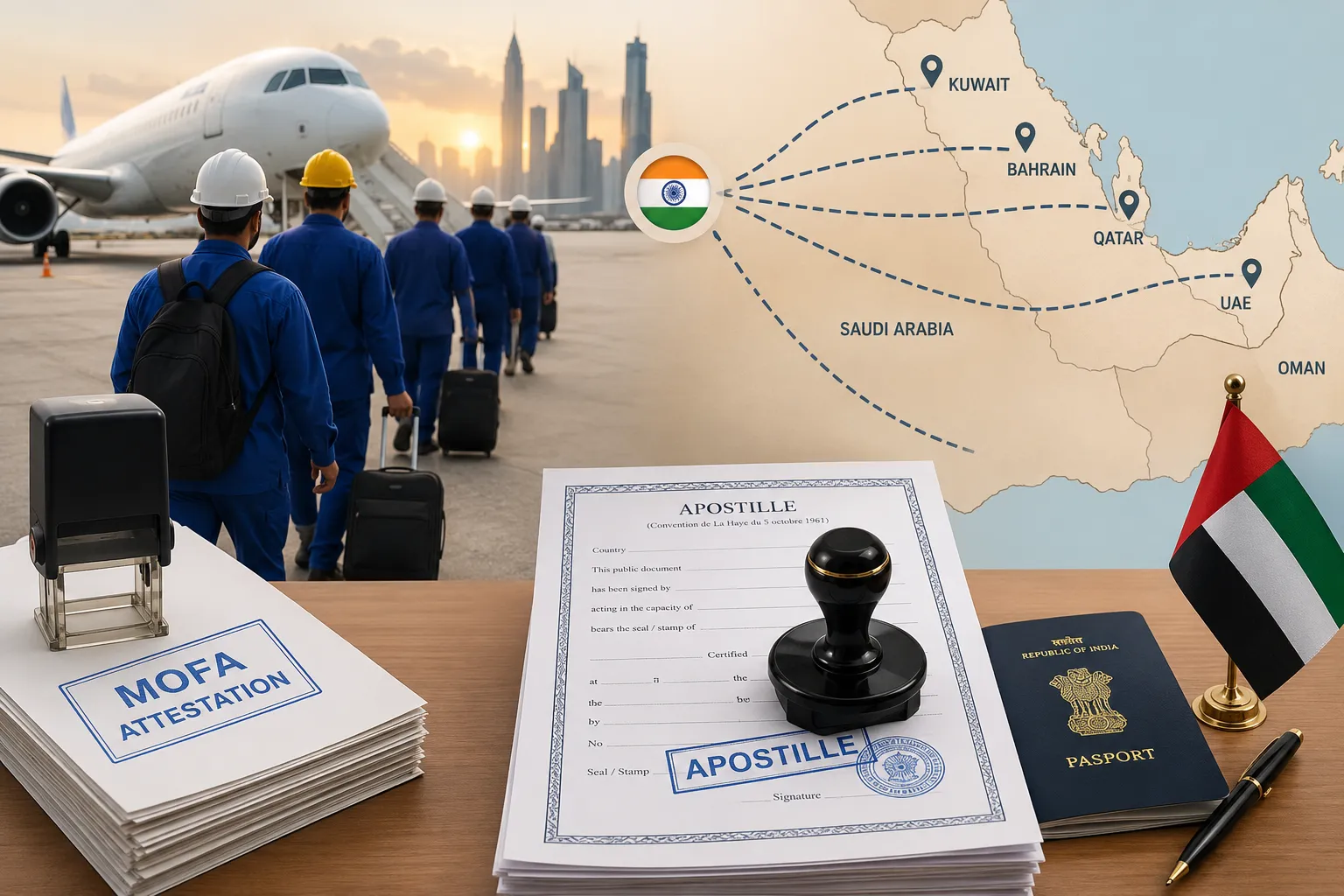

If you're packing your bags for a job in Doha, Dubai, or Kuwait City, there's one piece of paperwork that can make or break your move, document attestation. Most first-time applicants assume "attestation" and "apostille" mean the same thing. They don't. And confusing the two can cost you weeks of delay, extra fees, or worse, a rejected visa application.
Let's break down exactly why Gulf-bound professionals need to understand this difference before they even think about booking a flight.
Apostille: The One-Stamp Shortcut
An apostille is a single-step certification recognized by countries that are part of the 1961 Hague Convention. If you're moving to a member country, say, for higher studies in Germany or a job in France, a single apostille sticker from the designated authority is usually enough to make your documents legally valid abroad.
In India, the Ministry of External Affairs (MEA) is the only body authorized to issue apostilles, and it's a relatively quick process once your document is verified at the state level. This is why so many people search for reliable Apostille Services In India, the process, while simple in theory, involves multiple verification layers (notary, state Home Department or HRD, and finally MEA) before the final stamp is applied.
MOFA Attestation: A Different Ballgame Entirely
Here's the catch, none of the Gulf Cooperation Council (GCC) countries, including Qatar, UAE, Kuwait, Saudi Arabia, Oman, and Bahrain, are signatories to the Hague Apostille Convention. That means an apostille stamp holds zero legal value there. Instead, your documents need MOFA attestation, certification from the Ministry of Foreign Affairs of the destination country, done through their embassy in India.
This isn't a one-step process. It's a chain of verifications:
- Notarization at the local level
- State-level attestation (Home Department or HRD, depending on document type)
- MEA attestation in India
- Embassy attestation of the destination Gulf country
- MOFA attestation once the document reaches the destination country
Each link in this chain confirms the authenticity of the one before it. Skip a step, and the entire attestation becomes invalid, no exceptions.
Why Embassy-Specific Attestation Matters
This is where things get country-specific, and it's a detail many applicants overlook. Every Gulf nation has its own embassy protocols, document checklists, and processing timelines.
- If you're headed to Doha for work, you'll need Qatar Embassy Attestation Services to validate your educational or employment documents before they're accepted by Qatari authorities.
- Planning a career move to Dubai or Abu Dhabi? UAE Embassy Attestation is mandatory for degree certificates, marriage certificates, and commercial documents alike, especially for those applying for family or employment visas.
- Heading to Kuwait for a corporate role? Kuwait Embassy Attestation Services follow their own document format and verification order, often requiring additional translation certification for non-English documents.
Missing even one embassy-specific requirement can send your file back to square one.
The Real-World Impact
Think of apostille as a passport-sized stamp that works in certain countries' "trusted network," while MOFA attestation is more like a manually verified handshake between two nations that don't automatically trust each other's paperwork. For Gulf-bound workers, this handshake isn't optional, it's the very thing that makes your degree, experience letter, or marriage certificate legally usable for visas, job contracts, and residency permits.
Final Word
Before you finalize your Gulf relocation plans, get absolute clarity on which process your documents need. Apostille simply won't work for GCC nations, and attempting to use it will only delay your move. Working with professionals who understand embassy-specific requirements, from notarization to final MOFA sign-off, saves you the guesswork, the run around, and most importantly, the time you'd rather spend preparing for your new life abroad.






























Sign in to leave a comment.