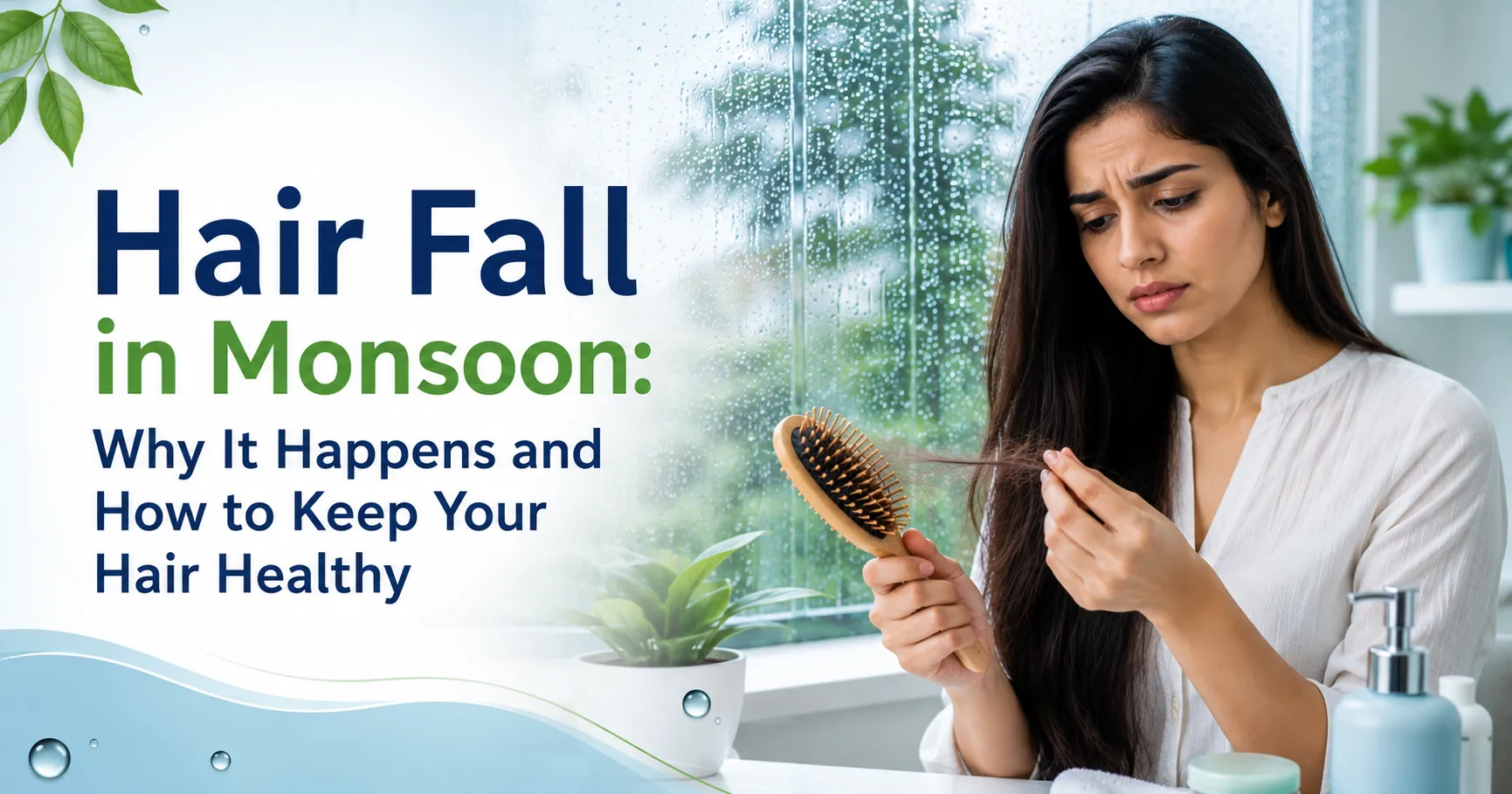

As soon as the monsoon arrives, many people notice more hair strands on their pillow, in the shower drain, or on their hairbrush. While losing a few strands every day is completely normal, seasonal changes can make hair shedding appear more noticeable.
The rainy season creates a humid environment that affects both the scalp and hair. Excess moisture, sweat, pollution, and fungal growth can weaken the scalp's natural balance, making hair more prone to breakage and temporary shedding. Fortunately, simple hair care habits can help reduce these seasonal effects and keep your hair healthier throughout the monsoon.
Why Does Hair Fall Seem Worse During the Monsoon?
Many people believe rainwater directly causes hair fall, but that's rarely the real reason.
During the rainy season, humidity levels increase significantly. The scalp becomes oilier, sweat mixes with dust and pollutants, and moisture remains trapped for longer periods. These conditions can irritate the scalp, encourage dandruff, and weaken hair strands, making normal hair shedding feel much more excessive.
In most cases, this increase is temporary and improves once the season changes or proper scalp care is maintained.
What Causes Hair Fall During the Rainy Season?
Several seasonal factors can contribute to increased hair shedding:
- Increased humidity leading to excess oil production
- Sweat and dirt clogging the scalp
- Dandruff and fungal scalp infections
- Frequent wet hair and poor scalp hygiene
- Nutritional deficiencies becoming more noticeable
- Existing hair loss conditions worsening during seasonal changes
Understanding the underlying cause is important because not all hair fall requires medical treatment. Sometimes, improving daily hair care is enough to restore scalp health.
7 Practical Tips to Reduce Hair Fall During Monsoon
Keeping your scalp clean is one of the most effective ways to minimize seasonal hair fall.
Some simple habits include:
- Wash your scalp regularly using a gentle shampoo.
- Dry your hair properly after getting wet.
- Avoid tying wet hair tightly.
- Eat a balanced diet rich in protein, iron, and vitamins.
- Massage your scalp gently to improve circulation.
- Reduce excessive heat styling during humid weather.
- Stay hydrated to support healthy hair growth.
Consistency is often more important than using multiple expensive products.
When Should Hair Fall Become a Concern?
Seasonal shedding is usually temporary, but persistent hair fall shouldn't be ignored.
Consider consulting a qualified specialist if you notice:
- Hair fall lasting beyond the rainy season
- Visible thinning or widening of the hair part
- Bald patches
- Persistent dandruff or scalp itching
- Hair breaking easily despite proper care
Early evaluation can help identify whether the issue is related to seasonal changes, nutritional deficiencies, hormonal imbalance, or another underlying condition.
Final Thoughts
The rainy season may temporarily affect your hair, but healthy scalp care and simple lifestyle habits can often reduce excessive shedding. Paying attention to early signs and maintaining a consistent hair care routine can make a noticeable difference.
If you're looking to understand seasonal hair fall in greater detail, including its causes, prevention strategies, and available treatment options, you can explore the expert resources shared by Facematic Aesthetics.























Sign in to leave a comment.