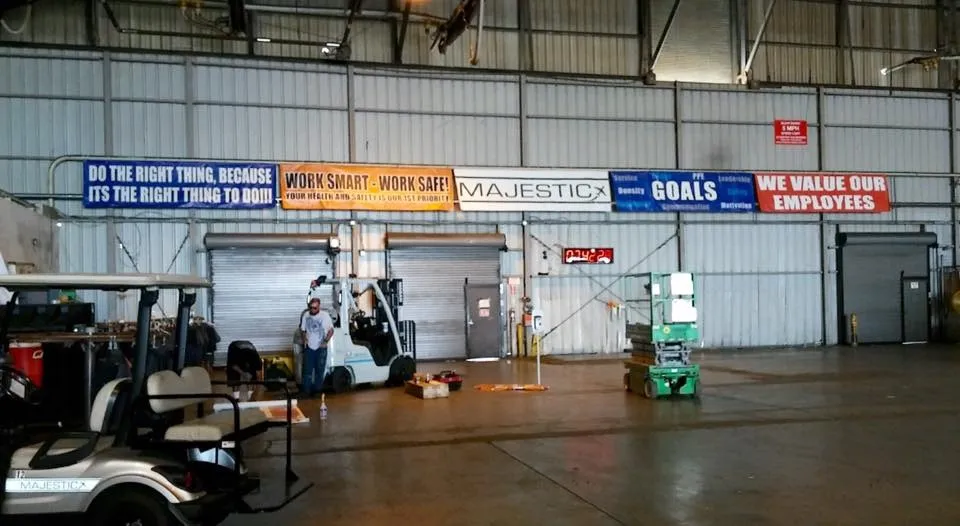

Industrial warehouses are fast-paced environments where safety, organization, and operational efficiency go hand in hand. From manufacturing plants and distribution centers to logistics hubs, every facility relies on clear communication to keep employees informed and workflows running smoothly. One of the most effective tools for achieving this is the use of heavy-duty warehouse signs.
Unlike standard signage, heavy-duty warehouse signs are designed to withstand harsh industrial conditions while remaining highly visible and easy to understand. Investing in durable, professionally designed signage not only improves workplace safety but also enhances productivity and supports regulatory compliance.
Why Heavy-Duty Warehouse Signs Matter
Warehouses experience constant activity involving forklifts, pallet jacks, heavy machinery, and frequent foot traffic. In these demanding environments, signs must remain legible despite dust, moisture, temperature fluctuations, and occasional impacts.
Heavy-duty warehouse signs help facilities:
- Improve employee and visitor safety
- Reduce workplace accidents
- Streamline navigation throughout the warehouse
- Support OSHA and industry safety standards
- Protect valuable equipment and inventory
- Improve operational efficiency
Well-placed signage provides instant visual communication, allowing workers to make informed decisions quickly without disrupting productivity.
Key Types of Heavy-Duty Warehouse Signs
Every industrial facility has unique operational requirements, but several categories of signage are considered essential.
Safety Signs
Safety signs communicate hazards and remind employees of required precautions. Examples include:
- Hard hat required
- Eye protection mandatory
- High voltage warnings
- Forklift crossing
- Emergency exits
- Fire extinguisher locations
These signs help reduce risk and encourage compliance with workplace safety procedures.
Directional Signs
Large warehouses can be difficult to navigate. Directional signs identify:
- Shipping departments
- Receiving docks
- Inventory zones
- Loading bays
- Employee entrances
- Visitor parking
Clear wayfinding minimizes confusion and saves valuable time.
Aisle and Rack Identification
Inventory management becomes much more efficient when shelves, racks, and aisles are clearly labeled.
Warehouse identification signs assist employees by:
- Reducing picking errors
- Speeding up inventory retrieval
- Improving order fulfillment accuracy
- Supporting warehouse management systems
Large-format aisle markers are especially useful in facilities with high ceilings.
Equipment Identification Signs
Heavy machinery and specialized equipment should be clearly marked for both operators and maintenance personnel.
Examples include:
- Machine identification numbers
- Operating instructions
- Lockout/tagout procedures
- Maintenance schedules
- Equipment capacity labels
These signs help improve accountability and reduce operational mistakes.
Materials Designed for Industrial Conditions
Industrial warehouses require signage that performs reliably for years, even under demanding conditions.
Popular heavy-duty materials include:
Aluminum
Aluminum signs resist corrosion, moisture, and chemicals, making them ideal for indoor and outdoor industrial applications.
High-Density PVC
PVC provides excellent durability while remaining lightweight and cost-effective. It's commonly used for warehouse safety and informational signage.
ACM (Aluminum Composite Material)
ACM combines lightweight construction with outstanding durability. It resists warping and is suitable for large-format warehouse signs.
Reflective Materials
Reflective warehouse signs improve visibility in low-light areas and during nighttime operations, particularly around loading docks and exterior traffic routes.
Protective Laminates
Scratch-resistant laminates help preserve graphics in areas where signs may experience frequent contact or cleaning.
Improving Workplace Safety
Warehouse injuries often result from poor communication, obstructed pathways, or unclear hazard identification.
Heavy-duty signs contribute to safer operations by clearly marking:
- Restricted access areas
- Emergency evacuation routes
- Chemical storage locations
- Forklift travel lanes
- Pedestrian walkways
- First aid stations
Consistent, highly visible signage helps reinforce employee training and reduces the likelihood of accidents.
Enhancing Operational Efficiency
Effective signage isn't only about safety—it also improves productivity.
Employees spend less time searching for inventory, equipment, or workstations when facilities use standardized warehouse signs. Organized signage also simplifies onboarding for new staff and temporary workers.
Benefits include:
- Faster order picking
- Improved inventory accuracy
- Better workflow organization
- Reduced downtime
- Increased employee confidence
Over time, these operational improvements can significantly reduce costs.
Design Considerations for Heavy-Duty Warehouse Signs
Creating effective warehouse signage requires more than simply printing large text.
Best practices include:
- Use high-contrast colors for maximum visibility.
- Select large fonts readable from long distances.
- Follow standardized safety color conventions.
- Include universally recognized symbols whenever possible.
- Choose materials appropriate for the environment.
- Install signs at consistent heights and viewing angles.
Professional design ensures employees can understand important information instantly—even in busy, high-noise environments.
Maintenance and Long-Term Performance
Even durable warehouse signs should be inspected regularly.
Facilities should periodically:
- Replace damaged signs
- Clean dirty or dusty surfaces
- Update outdated information
- Verify visibility after warehouse layout changes
- Ensure mounting hardware remains secure
Routine maintenance helps preserve both appearance and effectiveness.
Choosing the Right Signage Partner
Industrial signage is an investment that directly impacts safety and efficiency. Working with an experienced sign company ensures every sign meets your facility's operational requirements.
A professional signage provider can assist with:
- Facility assessments
- Custom sign design
- Material recommendations
- Code and safety compliance
- Professional installation
- Long-term signage planning
Customized solutions ensure signage integrates seamlessly with your warehouse layout and daily operations.
Conclusion
Heavy-duty warehouse signs play a critical role in creating safer, more organized, and more productive industrial environments. From safety warnings and directional signs to aisle identification and equipment labeling, durable signage helps employees navigate complex facilities with confidence while supporting efficient operations.
By investing in high-quality materials, thoughtful design, and strategic placement, businesses can reduce workplace risks, improve workflow, and extend the lifespan of their signage. Whether managing a manufacturing plant, distribution center, or logistics warehouse, heavy-duty warehouse signs are an essential component of a well-run industrial facility that delivers long-term value.



























Sign in to leave a comment.